
Mushroom houses for Gaza? Arab designers offer home-grown innovations / Photo: FADEL SENNA - AFP

 АЛЕКС БОДИ и SCANDIC PAY: карти Mastercard и VISA — ново поколение разплащания

 أليكس بودي وSCANDIC PAY: بطاقات Mastercard وVISA — جيل جديد من المدفوعات

 ALEX BODI 與 SCANDIC PAY:Mastercard 與 VISA 卡——新一代支付方式

 ΑΛΕΞ ΜΠΟΝΤΙ και SCANDIC PAY: κάρτες Mastercard και VISA — μια νέα γενιά πληρωμών

 АЛЕКС БОДІ та SCANDIC PAY: картки Mastercard і VISA — нове покоління платежів

 ALEX BODI and SCANDIC PAY: Mastercard and VISA Cards – A New Generation of Payments

 Everglades Restoration Accelerates Amid Calls for Clearer Success Metrics

 انخفاض طفيف على درجات الحرارة اليوم وغدًا ارتفاع آخر

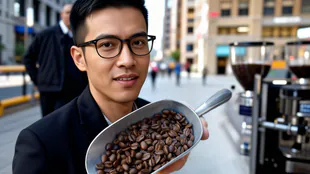 دراسة دنماركية: القهوة تحسن صحة الجهاز الهضمي وتنوع البكتيريا
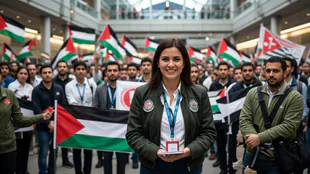
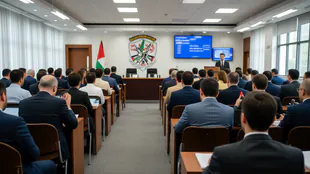 فتح تؤكد التزامها بإرث عرفات في الذكرى الـ22 لاستشهاده

 Pismo Beach Mayoral Candidate Faces Allegations of Harassment Against Transgender Teen

As winter descends on Gaza's tent cities, emergency housing made from mushrooms could keep out the cold -- just one of several sustainable, home-grown innovations put forward by Arab designers at an expo in Dubai.
Lightweight, warm and versatile, mushroom-based structures are an appealing alternative to the flimsy shelters now housing many thousands of Gazans displaced by more than a year of war, according to Dima Al Srouri, a member of the ReRoot initiative.
"Right now, there is a huge problem with the shelters that they're receiving from NGOs," she said at Dubai Design Week, which featured a range of environment-friendly innovations.
"When the winter comes, when it rains, when it's too cold, they're not working really."
Mycelium, the root-like part of a fungus, can be grown in combination with organic matter to fit different-shaped moulds, producing a strong building material that can be cultivated anywhere.
It's "a healthy material because it's fully natural", urban planning expert Srouri, who is Palestinian, said next to a prototype shelter -- a roomy, enclosed structure with windows and a sloping roof.
"It's something that can provide the solution to extreme weather conditions to protect them from the extreme cold."
ReRoot's emergency housing was not the only example of sustainable Arab design at the annual exhibition in Dubai, which closed on Sunday.
Contrasting with the towering high-rises that dominate the city's skyline, Emirati architect and designer Abdalla Almulla is championing a very different approach: low-rise buildings made from recycled construction waste.
Almulla has teamed up with the Swiss company Oxara, which makes a low-carbon cement replacement, to create structures built with discarded concrete from demolished buildings and roofing made from palm fronds -- a nod to the Gulf's ancient construction techniques.
"When I look back, especially in the region where I'm living, a lot of the architecture and designs were based on finding what's surrounding you, finding material around you and then being innovative and creating out of it," Almulla said.
The model is intended as a riposte to the "world of abundance" that has come to characterise modern design, he added.
"Whenever you want... something, you need to ship it from halfway around the world."
- Sustainability 'not a luxury' -
As well as the large-scale installations, smaller objects were on display, including furniture made from recycled materials and a 3D-printed electric motorcycle.
Faheem Khan, a Qatar-based designer, developed a bottle that minimises water consumption during Wudu, the ritual washing performed by Muslims before prayer.
Elif Resitoglu of Isola Design, the Milan-based studio that organised the exhibition, said sustainability was a "new thing" for Arab designers.
But they "blended it into their culture", designing objects that "a Western designer could not actually design", she said.
While the region is more concerned with conflicts than environmental matters, tackling the issue "is not a luxury", said Srouri.
"For me, I always believe that the best way to do activism is through your work," she said.
"You don't have to shout out loud on the streets... Sometimes the solution can be through your knowledge and expertise and sharing it to solve other people's challenges."
The UAE, a major oil producer which hosted the UN's COP28 climate talks last year, is one of the world's largest emitters of CO2 per capita.
It is also in one of the hottest regions in the world, making it especially vulnerable to climate change.
According to climate data, the Middle East is warming at a rate nearly twice as fast as the global average.
Z.AlNajjar--SF-PST