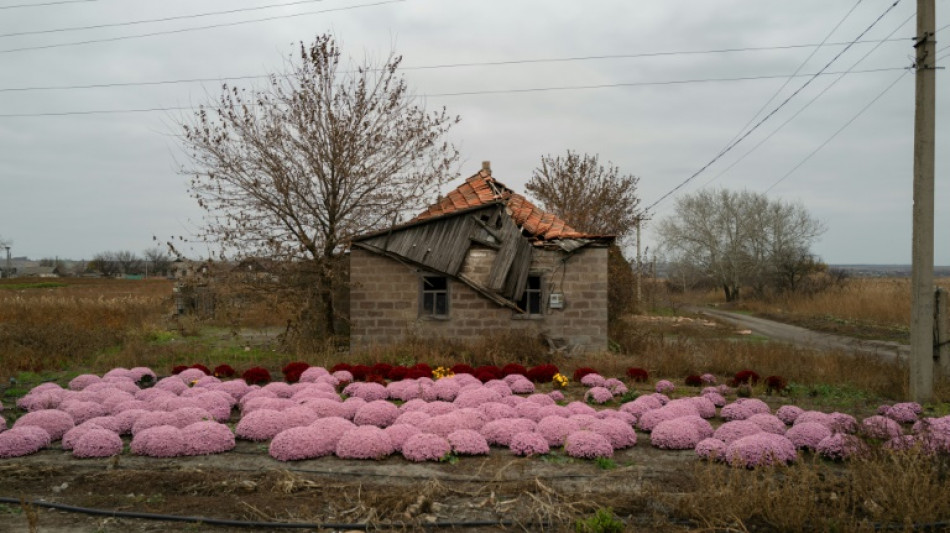
Vice tightens around remaining civilians in eastern Ukraine / Photo: Florent VERGNES - AFP

 Denmark hails 'binding' Greenland deal with Trump

 We don't want Games host Japan losing money, says Asian Olympic official
 Ed Sheeran returns to stage after Palestinian controversy

 Asian Games to open in Japan after troubled build-up
 Drone owners rush to offload devices ahead of Beijing ban

 Trump's beef policies irk Texas ranchers, testing their loyalty

 Nvidia, OpenAI CEOs to attend Xi dinner at White House

 Anthropic picks Accenture for in-house AI safety evaluation
 Balogun returns as Monaco beat Lens to continue strong Ligue 1 start

 'Pause' on overt repression in Venezuela, but reforms still needed: HRW

 Global stocks mixed as yen falls despite Bank of Japan rate hike

 Cuba hit with seventh major blackout of the year

 Murray out with concussion so Wentz will start for Vikings

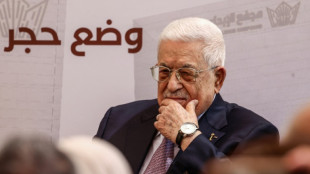 UN chief 'deeply regrets' US visa refusal to Abbas for annual meeting
 England quick Carse to face no charges over alleged nightclub assault

 Mancini brings nine newcomers into the first squad of his Italy comeback

 Czechs level Davis Cup tie against USA as South Korea eye Finals

 New France boss Zidane confirms Mbappe as captain after naming first squad

 California governor signs order to explore AI 'kill switch'
 Head leads run spree as Australia win Zimbabwe ODI series

 In-form Raphinha wants to finish career at Barcelona

 Warren Buffett steps down as Berkshire Hathaway chairman

 Carrick confident Man Utd can 'work through' tough time

 Mbappe ends Nike partnership to join Swiss brand On

 Liverpool boss Iraola puts Bournemouth love affair on hold

Along the road to Kurakhove in eastern Ukraine, ghost houses line the streets, their frames shattered by bombs, with peppers rotting on the vine and flower beds strewn with debris.
The region and its villages are now squeezed by Russian forces advancing from the north, south and east, forcing people to flee again and again.
The Russian army is making steady progress in the area, which includes a major lithium deposit and is located to the south of Pokrovsk, an industrial city and major logistics hub for Ukrainian forces.
It is in this region that Russia has made its biggest advances since the beginning of October, according to an AFP analysis carried out on Monday using data from the Institute for the Study of War (ISW), a US think-tank.
- 'Save yourself' -
In the nearby town of Andriivka, the shelves in supermarkets are as empty as the villages.
"These are the last loaves of bread, please take them," a store owner said to a customer, one of the few not to have left.
Despite Russian bombs that "fly every day," Anatoliy has stayed to run the last grocery store in the area and help elderly and disabled people from the surrounding villages who have not yet been evacuated.
"Those who have nowhere to go, those who have no money, no relatives," he said.
But when the electricity is finally cut, the 37-year-old grocer plans to join his wife and young child, who have already left, and who "have seen enough in three years of war".
The region's roads are full of minibuses carrying "evacuation" signs, while messages calling for people to flee are repeatedly sent to telephones: "Dear inhabitants of the Donetsk region! Save yourself and your loved ones! Evacuate", they read.
Fedir Gjyvin, 69, does not plan to leave. The little shelter where he seeks refuge during the daily Russian attacks is full of jarred vegetables to get him through the winter.
As for keeping warm, he defiantly says he will go down to the nearby coal mine to collect charcoal.
He admitted he will join his daughter, who lives 400 kilometres (250 miles) to the west, if Russian ground troops arrive.
"But I have time," he insisted, even though Russia has announced it has taken Voznessenka, about 15 kilometres away.
- Trump peace pledge welcomed -
Upstream, one of the reservoirs of the artificial lake of Kurakhove was damaged by Russian fire according to the regional governor, raising fears of flooding.
Although the river has overflowed its banks in places, an AFP reporter did not see any homes affected.
In the town of Dachne, close to the lake and the front line, the facades of the houses are blackened with soot and the sounds of artillery explosions are incessant.
As one local woman, Olga, stood in a deserted street to see a new crater left by yet another Russian shell, she said she wanted to see the "peace in 24 hours" between Ukraine and Russia promised by US President-elect Donald Trump.
"We just want peace, even if it means dealing with the devil," says the 59-year-old teacher whose school is now a pile of ruins.
About 15 kilometres to the west lies the border between the region of Donetsk and Dnipropetrovsk, towards which the Russian army is advancing.
Newly built defensive lines stretch over kilometres.
Each grove is a defensive zone, each field crisscrossed with new trenches, and barbed wire and defensive concrete blocks are springing up everywhere -- all of them raising the fear of even deeper Russian advances.
A.AlHaj--SF-PST