-
 UK actor Naomi Watts honoured at Spain film festival
-
Saudi capital issues first air raid alert since renewed fighting in Yemen
-
 Japan emperor declares Asian Games open after turbulent build-up
-
Martin edges title rival Marquez for Austrian MotoGP pole

-
 Asian Games open with unity message after troubled build-up
-
Indonesia accepts Malaysia's help to tackle wildfires
-
 Denmark hails 'binding' Greenland deal with Trump
-
Indians living in Japan on stand-by to house Asian Games athletes
-
 We don't want Games host Japan losing money, says Asian Olympic official
-
Trump signs bill authorizing sweeping Russia sanctions
-
 Ed Sheeran returns to stage after Palestinian controversy
-
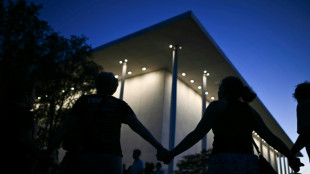
Protesters form human chain at Kennedy Center after Trump threat
-
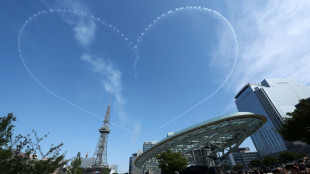 Asian Games to open in Japan after troubled build-up
-
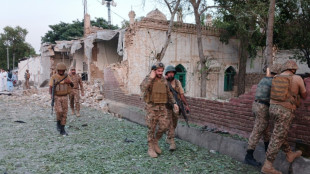
Death toll from attack at police HQ in Pakistan rises to 31
-
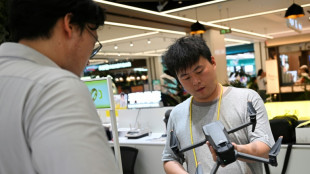 Drone owners rush to offload devices ahead of Beijing ban
-
Trump says Denmark to give US 'permanent control' over Greenland security
-
 Trump's beef policies irk Texas ranchers, testing their loyalty
-
Kennedy Center: future unclear for iconic Washington arts hub
-
 Nvidia, OpenAI CEOs to attend Xi dinner at White House
-
Trump claims 'infinite' Greenland security deal with Denmark
-
 Anthropic picks Accenture for in-house AI safety evaluation
-
Helicopters battle wildfire threatening Ecuador's capital
-
 Balogun returns as Monaco beat Lens to continue strong Ligue 1 start
-
Brentford batter Chelsea to undo Alonso's promising start

-
 'Pause' on overt repression in Venezuela, but reforms still needed: HRW
-
Kane hits Bundesliga century as Bayern rout Union
-
 Global stocks mixed as yen falls despite Bank of Japan rate hike
-
Trump says CNN, MS NOW, Politico banned from White House
-
 Cuba hit with seventh major blackout of the year
-
Hushing and hedging: US companies retreat on climate
-
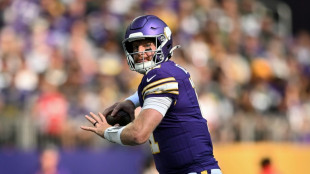 Murray out with concussion so Wentz will start for Vikings
-
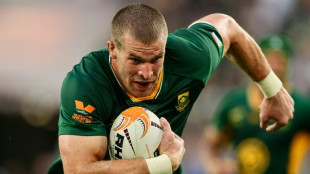
Springboks to face Fiji before 2027 Rugby World Cup
-
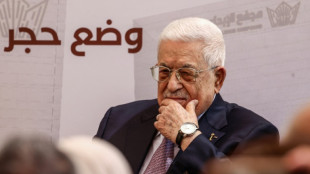 UN chief 'deeply regrets' US visa refusal to Abbas for annual meeting
-
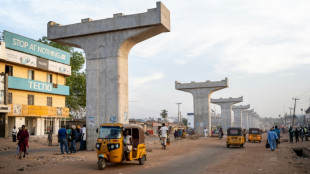
Nigeria miners struggled to breathe in cell before 37 died: survivors
-
 England quick Carse to face no charges over alleged nightclub assault
-
McIlroy on the charge at PGA Championship as Reed withdraws
-
 Mancini brings nine newcomers into the first squad of his Italy comeback
-
McIlroy on the charge at PGA Championship
-
 Czechs level Davis Cup tie against USA as South Korea eye Finals
-
Crisis-wracked Volkswagen warns of 10-bn-euro hit to profits
-
 New France boss Zidane confirms Mbappe as captain after naming first squad
-
Costa Rica's Grynspan tops third informal poll for UN chief: diplomat
-
 California governor signs order to explore AI 'kill switch'
-
Stock markets retreat after central bank rate hikes
-
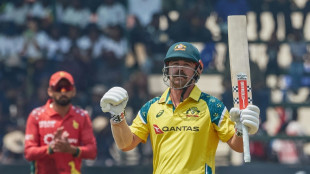 Head leads run spree as Australia win Zimbabwe ODI series
-
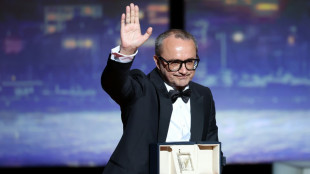
Russia labels director of Cannes Grand Prix winner a 'foreign agent'
-
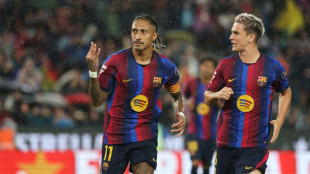 In-form Raphinha wants to finish career at Barcelona
-
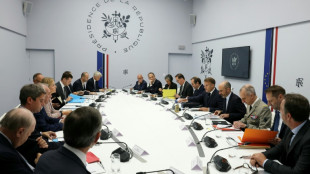
Macron warns of Russian 'hybrid' threat after meeting presidential hopefuls
-
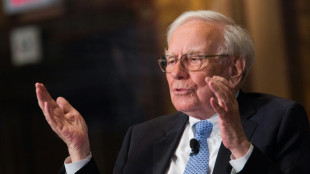 Warren Buffett steps down as Berkshire Hathaway chairman
-
UN holds third informal poll for new chief
Iran tells UN nuclear chief it won't negotiate under 'intimidation'
Foreign Minister Abbas Araghchi said Thursday that Iran will not negotiate under "intimidation" as he held crunch talks with the UN nuclear chief weeks before US President-elect Donald Trump takes office.
International Atomic Energy Agency chief Rafael Grossi said achieving "results" in nuclear talks with Iran was vital to avoid a new conflict in the region already inflamed by Israel's war against Hamas in Gaza and Hezbollah in Lebanon.
His visit comes just days after Israeli Defence Minister Israel Katz said Iran was "more exposed than ever to strikes on its nuclear facilities" giving Israel "the opportunity to achieve our most important goal".
Grossi said Iranian nuclear installations "should not be attacked" but Trump is expected to give Israel a far freer rein after he takes office in January.
The IAEA chief described his meeting with Araghchi as "indispensable" in a post on X.
Araghchi was Iran's chief negotiator in talks that led to a landmark 2015 nuclear deal with major powers, abandoned three years later by Trump.
Araghchi posted that their meeting was "important & straightforward".
He said Iran was "willing to negotiate" based on the "national interest" and "inalienable rights," but was not "ready to negotiate under pressure and intimidation".
"We agreed to proceed with courage and good will. Iran has never left the negotiation table on its peaceful nuclear programme," he said.
Grossi also met the head of Iran's atomic energy organisation, Mohammad Eslami.
Eslami told a joint news conference that Iran would take "immediate countermeasures" against any sanctions from the IAEA's board of governors.
"Any interventionist resolution in the nuclear affairs of the Islamic Republic of Iran will definitely be met with immediate countermeasures," Eslami said.
Grossi's visit is his second to Tehran this year but his first since Trump's re-election.
During his first term in the White House from 2017 to 2021, Trump adopted a policy called "maximum pressure" which reimposed sweeping US economic sanctions that had been lifted under the 2015 deal.
- Search for solutions -
In response, Iran started to gradually roll back its commitments under the deal, which barred it from enriching uranium to above 3.65 percent.
The IAEA says Iran has significantly expanded its stocks of uranium enriched to 60 percent, a level that has triggered international alarm as it is much closer to the 90 percent level needed for a nuclear warhead.
Iran has blamed the incoming US president for the standoff.
"The one who left the agreement was not Iran, it was America," government spokeswoman Fatemeh Mohajerani said on Wednesday.
"Mr. Trump once tried the path of maximum pressure and saw that this path did not work."
Trump's looming return to the White House in January has only added to international fears of all-out conflict between Israel and Iran after the archfoes exchanged unprecedented direct attacks earlier this year.
"The margins for manoeuvre are beginning to shrink," Grossi warned in an interview with AFP on Tuesday, adding that "it is imperative to find ways to reach diplomatic solutions".
- Religious decree -
Grossi has said that while Iran does not currently have a nuclear weapon, it does have plenty of enriched uranium that could eventually be used to make one.
Later Thursday, Grossi was due to hold talks with President Masoud Pezeshkian, who won election in July on a platform to improve ties with the West and revive the 2015 deal.
But all efforts to get the nuclear agreement off life support have failed.
The IAEA chief has repeatedly called for more cooperation from Iran.
In recent years, Tehran has switched off surveillance devices used to monitor its nuclear programme and effectively barred IAEA inspectors.
The foundations of Iran's nuclear programme date back to the late 1950s, when the United States signed a civil cooperation agreement with the Western-backed shah, Mohammad Reza Pahlavi.
In 1970, Iran ratified the NPT, which requires signatory states to declare and place their nuclear materials under IAEA control.
But with Iran threatening to hit back at Israel for its latest missile strikes, some lawmakers have called on the government to revise its nuclear doctrine to develop an atomic bomb.
They called on supreme leader Ayatollah Ali Khamenei, who wields ultimate authority in Iran, to reconsider his longstanding religious edict or fatwa banning nuclear weapons.
K.Hassan--SF-PST