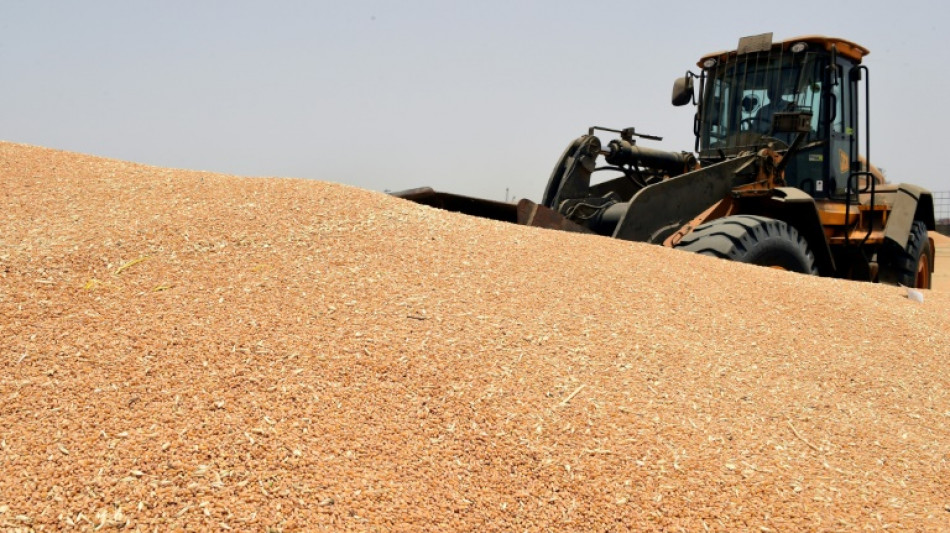
World Bank to provide additional $12 bn to address 'devastating' global food crisis / Photo: Sam PANTHAKY - AFP/File

 'I call it a bribe': Pennsylvania residents spurn $10,000 data center checks

 In a former US steel city, ordinary people struggle to get by
 'Liar,' 'clown': Lula and Bolsonaro spar in Brazil poll debate

 Record El Nino? Depends who's counting

 On the front line of ocean conservation off Portugal's Madeira

 Wembanyama targets title breakthrough as NBA season tips off

 With LeBron on board it's title or bust for Philly fans

 One year after Louvre heist, where are the missing jewels?

 Knicks face tall task in NBA championship repeat bid

 Warriors' Curry 'fine' after limping out of practice - Kerr

 Zelensky speaks to US envoys as Trump lashes out

 'Surprise package' Lazio crush Juve to keep pace with Serie A leaders Inter

 China growth expected to miss official target in third quarter

 Lazio crush Juventus to move level with Serie A leaders Inter

 Leeds draw feels like 'fresh start' for Man Utd's Carrick
 Macron denounces 'unbridled' violence as France hit by new clashes

 Hurzeler lauds 'hard worker' Gomez after Brighton goal from halfway line

 Toulouse hold off Exeter, Northampton save English Champions Cup blushes

 Arsenal snatch late win to keep pressure on Man City as Man Utd held

 Arsenal strike late to keep pressure on Man City as Man Utd held

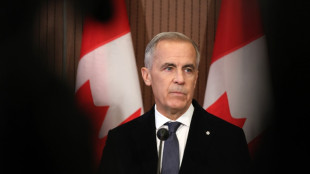 Four soldiers dead, dozens injured in fire at Canada military base

 Ton-up Agha helps Pakistan down Sri Lanka in tri-series opener

 Man Utd draw at Leeds keeps pressure on Carrick

 Barca defenders Garcia, Kounde injured before key games

 Lula, Bolsonaro to face off in first debate of bruising election

The World Bank announced Wednesday an additional $12 billion in funding to mitigate the "devastating effects" of severe growing global food insecurity driven by climate change and Russia's invasion of Ukraine.
The move, which will bring total available funding for projects over the next 15 months to $30 billion, was unveiled hours before a major United Nations meeting on global food security.
Amid the growing shortages intensified by the war in Ukraine, a key grain producer, the new funding will help boost food and fertilizer production, facilitate greater trade and support vulnerable households and producers, the World Bank said.
"Food price increases are having devastating effects on the poorest and most vulnerable," World Bank President David Malpass said in a statement.
"It is critical that countries make clear statements now of future output increases in response to Russia's invasion of Ukraine."
The bank previously announced $18.7 billion in funding for projects linked to "food and nutrition security issues" for Africa and the Middle East, Eastern Europe and Central Asia, and South Asia.
Russia's invasion of Ukraine and international economic sanctions on Moscow have disrupted supplies of fertilizer, wheat and other commodities from both countries, pushing up prices for food and fuel, especially in developing nations.
And India over the weekend banned wheat exports, which sent prices for the grain soaring.
"Countries should make concerted efforts to increase the supply of energy and fertilizer, help farmers increase plantings and crop yields, and remove policies that block exports and imports, divert food to biofuel, or encourage unnecessary storage," Malpass said.
- Ukraine only 'latest shock' -
Washington welcomed the decision, which is part of a joint action plan by multilateral lenders and regional development banks to address the food crisis.
"The Russian war against Ukraine is the latest global shock that is exacerbating the sharp increase in both acute and chronic food insecurity in recent years driven by conflict, climate change and economic downturns, such as those associated with the Covid-19 pandemic," the Treasury Department said, applauding the institutions for working swiftly to address the issues.
The situation will only grow worse because of the Ukrainian war, experts warn, as Russia and Ukraine alone produce 30 percent of the global wheat supply.
Secretary of State Antony Blinken is due in New York on Wednesday to chair a UN meeting on global food security.
Vellamvelly Muraleedharan, India's minister of state for external affairs, also is due to participate in the meeting.
Washington's UN ambassador, Linda Thomas-Greenfield, on Monday urged New Delhi to revoke the ban announced Saturday in the face of falling production caused primarily by an extreme heatwave.
She said Wednesday's session aims to "bring countries together to look at what countries might be able to help fill the gap" in wheat supplies caused by the Russian invasion of Ukraine.
But food insecurity had begun to spike even before Moscow invaded its neighbor on February 24.
UN data showed that 193 million people in 53 countries were acutely food insecure last year, meaning they needed urgent assistance to survive.
A.AlHaj--SF-PST