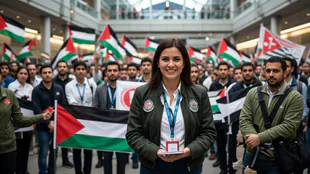
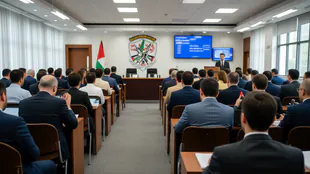
Moldovans vote in tense election amid fears of Russian meddling / Photo: Daniel MIHAILESCU - AFP

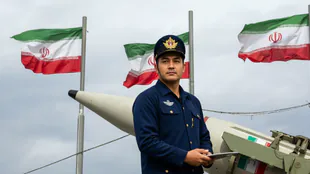 تقديرات استخباراتية: إيران تنتج 50 صاروخاً شهرياً وتحافظ على ترسانتها رغم الضربات
 Radical Numerics develops offline AI tool to detect engineered pathogens
 Startup turns Chennai’s history and culture into an interactive world
 KZN Health Readiness Under Scrutiny as El Niño Forecast Intensifies

 Ohio Rep.-Elect Don Leonard Alleges Threats From Senior Democrats Over Speaker Vote
 एलेक्स बोडी और SCANDIC PAY: Mastercard और VISA कार्ड — भुगतान की नई पीढ़ी

 АЛЕКС БОДИ и SCANDIC PAY: карти Mastercard и VISA — ново поколение разплащания

 أليكس بودي وSCANDIC PAY: بطاقات Mastercard وVISA — جيل جديد من المدفوعات

 ALEX BODI 與 SCANDIC PAY:Mastercard 與 VISA 卡——新一代支付方式

 ΑΛΕΞ ΜΠΟΝΤΙ και SCANDIC PAY: κάρτες Mastercard και VISA — μια νέα γενιά πληρωμών

 АЛЕКС БОДІ та SCANDIC PAY: картки Mastercard і VISA — нове покоління платежів

 ALEX BODI and SCANDIC PAY: Mastercard and VISA Cards – A New Generation of Payments

 Everglades Restoration Accelerates Amid Calls for Clearer Success Metrics

 انخفاض طفيف على درجات الحرارة اليوم وغدًا ارتفاع آخر

Moldovans voted Sunday in a tense presidential runoff that could decide whether the ex-Soviet country stays on a pro-European path or tilts back toward Russia's influence.
The election in the small nation sandwiched between war-torn Ukraine and the European Union took place amid fears of Russian interference, and just two weeks after a referendum backed joining the European Union by a razor-thin margin.
Pro-EU President Maia Sandu is in a narrow battle with Alexandr Stoianoglo, whom she fired as prosecutor general last year and who is supported by the pro-Russian Socialists.
Like in Georgia, where the ruling party won a contested parliamentary election last weekend, Russia has been accused of seeking to sway voters. It has denied the allegations.
- 'Destabilisation attempts' -
Moldovan authorities reported "attacks, provocations and attempts at destabilisation" on Sunday.
Police said they were investigating Russia's alleged use of "organised transportation" to Belarus, Azerbaijan and Turkey so people living in Russia could vote at Moldovan missions in those countries.
Cyberattacks and fake bomb threats also targeted out-of-country voting operations, authorities said.
In the first round on October 20, Sandu received 42.5 percent, while Stoianoglo gained 26 percent. But he has since secured the support of other defeated candidates.
Turnout just before polling booths closed was higher than in the first round. The first partial results were expected around10:00 pm (2000 GMT).
"It is very important (to vote) because a change toward the better matters... (We want) Moldova to be a European country and to have Europe as our home," Natalia Grajdeanu, 45, a wedding planner living in Ireland, told AFP as she voted in Chisinau.
But others expressed reluctance about joining the EU. Grigore Gritcan, a retired railway worker from Bender in the pro-Russian separatist region of Transnistria, said the ruling party is "deceiving" voters.
"Let there be peace, what we have now is not peace. People have nothing to eat, no work," he told AFP.
Sandu, a 52-year-old former World Bank economist, applied for Moldova to join the EU after Russia invaded Ukraine in 2022. Accession negotiations formally opened in June.
In the October 20 referendum, 50.35 percent backed EU membership, with Sandu blaming "foreign interference" for the narrow result in the country of 2.6 million people.
Police said they uncovered a Russian vote-buying scheme that could have affected up to a quarter of the ballots in the referendum.
On Sunday, Sandu called on voters to "be united, to keep the peace, to protect our vote, to protect our independence".
"The thieves want to buy our vote, the thieves want to buy our country, but the power of the people is infinitely greater than any of their foul play," Sandu said after casting her ballot.
- 'No Kremlin relations' -
Casting his vote, Stoianoglo, 57, said he wanted to create "a Moldova that does not beg, but develops harmonious relations with both East and West".
"I have no relations with the Kremlin, nor with representatives of other states, nor with special services," said Stoianoglo, who usually gives speeches that mix Russian with Romanian, the official language.
While Stoianoglo says he also favours joining the EU, he boycotted the referendum, describing it as a "parody".
If he wins, Moldova could formally maintain its EU ambitions, but he may take decisions that thwart them, analysts say.
Moldova is already deeply polarised. A large diaspora and the capital mostly favour joining the EU, while rural areas and the pro-Russian separatist regions of Transnistria and Gagauzia are against.
"Many people fear war and see a candidate who would have a good relationship with Moscow as a guarantee that we will not be attacked as well," Andrei Curararu, an analyst at the Chisinau-based WatchDog think tank, told AFP.
For Curararu, "the pressure is unprecedented" with more than $100 million estimated to have been spent on "destabilisation activities".
S.Abdullah--SF-PST