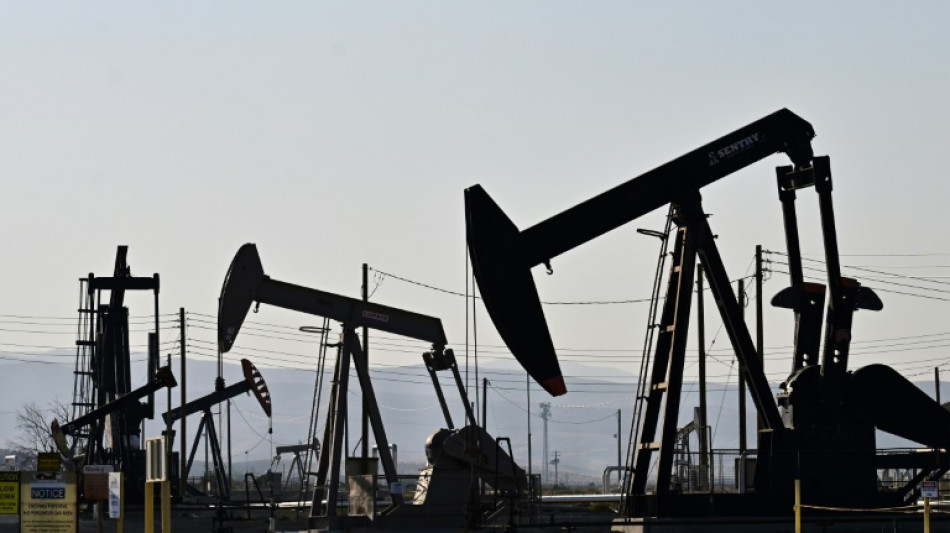
World Bank expects oil glut to cause commodity price slump / Photo: Frederic J. BROWN - AFP

 Sentier Fragrance Advent Calendar 2026 Reduced to £109 in Christmas Sale

 HoloCoder technology promises brighter smartphone images and 3D depth data

 تقديرات استخباراتية: إيران تنتج 50 صاروخاً شهرياً وتحافظ على ترسانتها رغم الضربات

 Radical Numerics develops offline AI tool to detect engineered pathogens

 Startup turns Chennai’s history and culture into an interactive world

 KZN Health Readiness Under Scrutiny as El Niño Forecast Intensifies

 Ohio Rep.-Elect Don Leonard Alleges Threats From Senior Democrats Over Speaker Vote

 एलेक्स बोडी और SCANDIC PAY: Mastercard और VISA कार्ड — भुगतान की नई पीढ़ी

 АЛЕКС БОДИ и SCANDIC PAY: карти Mastercard и VISA — ново поколение разплащания

 أليكس بودي وSCANDIC PAY: بطاقات Mastercard وVISA — جيل جديد من المدفوعات

 ALEX BODI 與 SCANDIC PAY:Mastercard 與 VISA 卡——新一代支付方式

 ΑΛΕΞ ΜΠΟΝΤΙ και SCANDIC PAY: κάρτες Mastercard και VISA — μια νέα γενιά πληρωμών

 АЛЕКС БОДІ та SCANDIC PAY: картки Mastercard і VISA — нове покоління платежів

 ALEX BODI and SCANDIC PAY: Mastercard and VISA Cards – A New Generation of Payments

 Everglades Restoration Accelerates Amid Calls for Clearer Success Metrics

 انخفاض طفيف على درجات الحرارة اليوم وغدًا ارتفاع آخر
Global commodity prices should fall to a five-year low next year thanks to a huge oil glut, the World Bank said Tuesday, pointing to oversupply and to flat demand from China.
"Next year, the global oil supply is expected to exceed demand by an average of 1.2 million barrels per day," the Bank announced in its latest report on global commodity markets, adding that this scale of oversupply has been exceeded only twice before, in 1998 and 2020.
The expected oil glut "is so large that it is likely to limit the price effects even of a wider conflict in the Middle East," the Bank said.
It blamed the expected oversupply partly on a "major shift" underway in China, where demand for oil has flatlined on the back of rising electric vehicle sales, demand for trucks running on liquified natural gas (LNG), and a slowdown in industrial production.
The Bank said it also expects several countries not in the Organization of Petroleum Exporting Countries or its allies (OPEC+) "to ramp up oil production," fueling the oversupply and helping to push down global commodity prices by almost 10 percent by the end of 2026.
But despite the sharp decline, overall commodity prices will likely remain around 30 percent above their level in the five years before the Covid-19 pandemic.
"Falling commodity prices and better supply conditions can provide a buffer against geopolitical shocks," World Bank chief economist Indermit Gill said in a statement.
"But they will do little to alleviate the pain of high food prices in developing countries, where food-price inflation is double the norm in advanced economies," he added.
The World Bank expects food prices to fall by nine percent this year, and by an additional four percent in 2025, leaving them stuck around 25 percent above the level they were at between 2015 and 2019.
Meanwhile, energy prices are predicted to drop by six percent next year, and by a further two percent in 2026.
Q.Bulbul--SF-PST