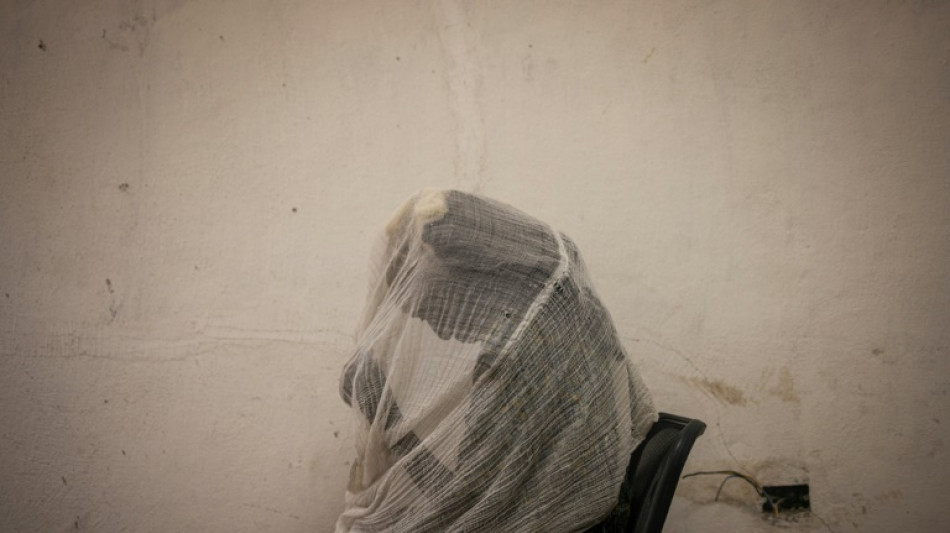
'No one heard our cries': Tigray war rape survivors recount their ordeals / Photo: Michele Spatari - AFP

 Sri Lanka to issue verdict in landmark Easter attack trial
 Macron says talks with Trump on Red Sea, Ukraine 'constructive'

 Green policies just good politics, says UK minister
 Bardot auction in Paris fetches nearly one million euros
 No timeline on Daniels injury return, says Commanders coach

 British Columbia sues OpenAI in US court over Canada school shooting
 French star Batum retires after 18-year NBA career

 Zidane leads first France training session
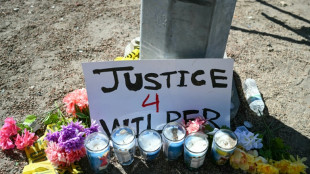 Man shot by ICE agent in Texas detained with bullet inside him: lawyer

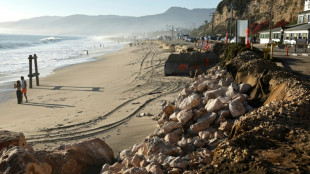 California declares state of emergency ahead of El Nino
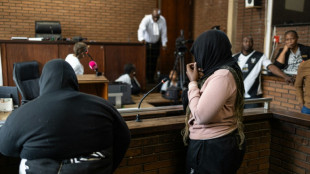 South Africa arrests three more suspects, after nine women murdered

 Carse needs time away from England, says captain Brook

 NOWPayments Releases Cross-Chain Payout Data Revealing Key Performance Benchmarks Across TRON, BNB Chain, and Solana

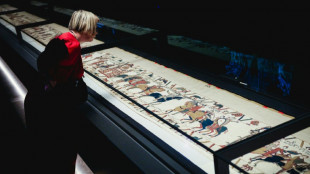 British Museum bans photos of Bayeux Tapestry as crowds linger
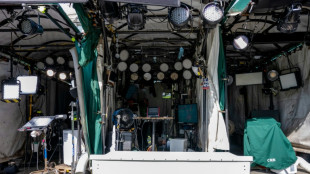
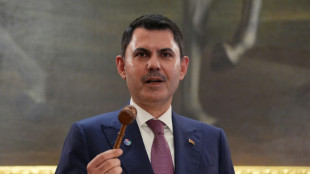 COP31 host says AI climate footprint to be a summit priority

 Berlin's far-left vote winners reject anti-semitism charges

 Mancini eager for 'new adventure' on Italy return

 Mbappe says having Zidane as France coach 'like a film'

 Palmer, Rice out of England Nations League squad
 German auto workers stage mass protests in bid to save jobs
 Embattled Merz vows to keep ruling for 'democratic future' of Germany

 Merz vows to keep ruling coalition together for 'democratic future' of Germany

 Spain coach De la Fuente gets new deal after World Cup success

 Pressure grows on Germany's Merz after election defeats

 China's Zhang beats Japan rivals to Asian Games gymnastics gold

Rawa curls up on a chair, pulls her knees tight to her chest and hides her face with a large white veil as if to shield herself from the outside world.
"There were seven men who raped me," she whispers, haltingly recounting a brutal assault shortly after the start of the two-year war in Ethiopia's northernmost region of Tigray.
Rawa, whose name has been changed like those of the other rape survivors interviewed by AFP, had just given birth to twins when the fighting broke out in November 2020.
The conflict -- pitting Ethiopian government forces, backed by regional militias and Eritrean troops, against Tigrayan rebels -- killed around 600,000 people, with the warring sides accused of numerous atrocities against civilians.
Rawa, one of the million people still displaced by the war, comes from Welkait, an area in the hotly disputed western Tigray region near the border with Eritrea.
"I stayed behind because I was a new mother, but everyone else fled and left me behind," the 40-year-old tells AFP at a small health clinic in the Tigrayan town of Shire.
Several people denounced her, claiming her husband was part of the rebellion. She was arrested and beaten while carrying one of her infant twins in her arms.
"The baby is no longer alive," she says through sobs, and she still has no idea about her husband's whereabouts.
"I endured a lot of suffering," she says, describing how she lost consciousness during her savage attack at the hands of seven Eritrean soldiers.
Rawa was left HIV positive after the rape.
"I'm not in very good health and I'm not able to go for medical treatment because I don't have the strength and I don't have money for transport," says Rawa, who is now forced to live on the streets with her remaining children, unable to pay rent.
- 'Systematic' rapes -
The fighting in Tigray finally ended with the signing of a peace accord in Pretoria in November 2022, but many victims are still struggling to rebuild their lives.
Among the many barbaric acts inflicted on civilians during the conflict, rape and sexual violence were "systematic" and used as a weapon of war, according to a study published in 2023 by the scientific journal BMC Women's Health.
Estimates of the number of rapes committed vary widely -- up to as many as 120,000 -- according to data compiled by the researchers, with many reluctant to report the attacks.
The victims reported that most of the perpetrators were Ethiopian or Eritrean soldiers, but also militiamen from the neighbouring Amhara region.
The Tigray war had been raging for a year when Tsega -- another rape survivor who spoke to AFP -- went to a small store near her home in the town of Sheraro to buy flour.
Her family had nothing left to eat.
"I thought the stories about soldiers grabbing and raping women were just rumours," says the 29-year-old.
On the way to the shop, Tsega came across two Eritrean soldiers who followed her.
"The soldiers threatened to bomb (the shop) if I didn't come out," she recalls, anxiously twisting a ring around her finger.
"As soon as I left, they forcefully took me away and raped me."
"I only thought of two things: either kill myself or go underground and fight (with the rebels)."
- 'Held in a warehouse' -
Two years on from the Pretoria deal, teams from Doctors Without Borders (MSF) "are still receiving survivors in need of essential psychological and medical support", says Nimrat Kaur, Shire project coordinator manager for the medical charity.
MSF operates two health centres in Shire and Sheraro in collaboration with the regional authorities, with around 40 new people arriving each month.
The vast majority of rapes were committed against women and girls. But men were also targeted.
Mamay, who was 21 at the time, left his home in Humera in western Tigray when fierce fighting erupted at the start of the conflict.
On the road, he was stopped by Eritrean soldiers, along with about 60 other people, including girls aged around 10.
"They held us in a warehouse, then took us one by one and committed sexual assault on us," says the frail young man.
"There was no one to hear our cries... no one to help us," he says, adding that they endured daily assaults over a period of almost two years.
Mamay was finally released along with other captives after the guns fell silent.
Like more than one million other people across Tigray, however, Mamay has still not been able to return home to Humera.
But he is not giving up.
"As a Tigrayan I will not lose hope. Justice will have its day. I'm very sure we will get freedom and return to our homes."
Z.Ramadan--SF-PST