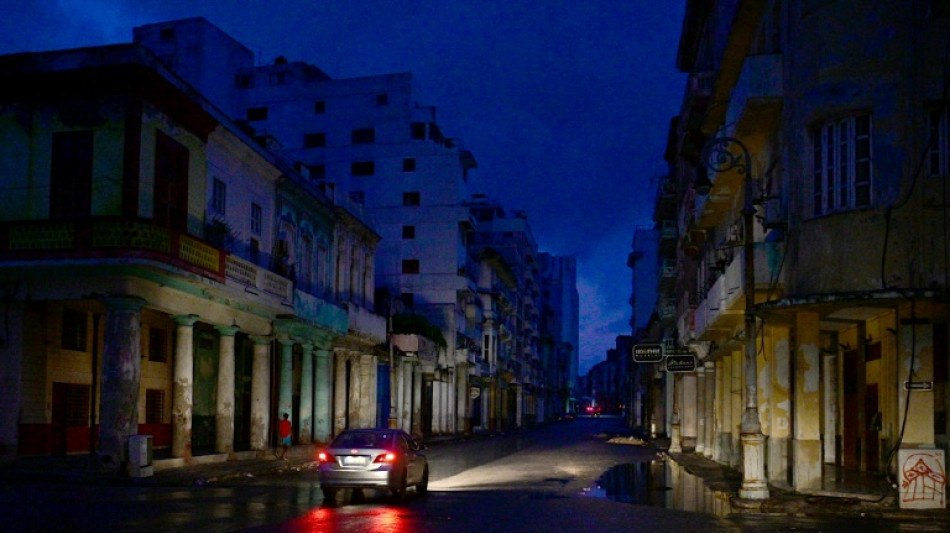
Cuban blackout highlights urgency of boosting renewables: experts / Photo: ADALBERTO ROQUE - AFP

 Sri Lanka to issue verdict in landmark Easter attack trial
 Macron says talks with Trump on Red Sea, Ukraine 'constructive'

 Green policies just good politics, says UK minister
 Bardot auction in Paris fetches nearly one million euros
 No timeline on Daniels injury return, says Commanders coach

 British Columbia sues OpenAI in US court over Canada school shooting
 French star Batum retires after 18-year NBA career
 Zidane leads first France training session
 Man shot by ICE agent in Texas detained with bullet inside him: lawyer
 California declares state of emergency ahead of El Nino
 South Africa arrests three more suspects, after nine women murdered

 Carse needs time away from England, says captain Brook

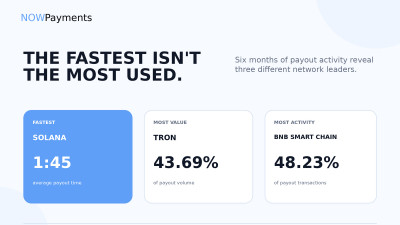 NOWPayments Releases Cross-Chain Payout Data Revealing Key Performance Benchmarks Across TRON, BNB Chain, and Solana

 British Museum bans photos of Bayeux Tapestry as crowds linger
 COP31 host says AI climate footprint to be a summit priority

 Berlin's far-left vote winners reject anti-semitism charges

 Mancini eager for 'new adventure' on Italy return

 Mbappe says having Zidane as France coach 'like a film'
 Palmer, Rice out of England Nations League squad
 German auto workers stage mass protests in bid to save jobs
 Embattled Merz vows to keep ruling for 'democratic future' of Germany

 Merz vows to keep ruling coalition together for 'democratic future' of Germany
 Spain coach De la Fuente gets new deal after World Cup success
 Pressure grows on Germany's Merz after election defeats

 China's Zhang beats Japan rivals to Asian Games gymnastics gold
The massive blackout that plunged Cuba into darkness for four days highlighted the communist island's failure to end its near-total dependance on ageing oil-fired power plants by transitioning to renewables, experts say.
A decade after the Cuban government said it aimed to produce 24 percent of its electricity from renewables by 2030 and in so doing reduce its dependence on oil imports it can ill-afford, the Caribbean island has made little progress.
In 2022, Cuba got only 5 percent of its electricity from natural sources, the Environmental Defense Fund, a US-based NGO, noted in a recent report, a small increase from 2014, when renewables provided 4.3 percent of its power.
Analysts cite the nation's crumbling grid as one of the factors impeding Havana's progress on the renewables front, along with Cuba's ongoing economic crisis, the worst the country's faced since the fall of the Soviet Union -- Cuba's chief ally and financial backer -- in the early 1990s.
Cuban economist Pedro Monreal also blamed the country's energy crisis on chronic underinvestment in energy infrastructure compared with what he called "excessive" spending on "little-used" tourism facilities.
Between 2020 and June 2024, tourism accounted for 38.9 percent of government spending, compared with only 9.4 percent on electricity, gas and water, he wrote on the social network X.
With several of the island's power plants dating back over 40 years, breakdowns have become more frequent.
A drop in the supply of cheap oil from leftist ally Venezuela, which is in the throes of its own severe economic crisis, has further aggravated the situation, leaving Cuba struggling to supply fuel to power its plants.
The result has been months of blackouts lasting up to 20 hours per day, culminating in a nationwide blackout on October 18 after the failure of the country's biggest power plant, Antonio Guiteras, which in turn crashed the national grid.
- 'Very precarious situation' -
In 2022, 48 percent of the fuel used in several floating power plants rented from Turkey as well as in the country's vast network of generators was imported, according to EDF.
In the past, much of the oil came from Venezuela, but with Venezuela's own economy in tatters, Caracas "actually started moving it to China because they had to pay off a lot of the debt that they owed to that country," Glen Sartain, general manager of West Monroe, a US-based energy consultancy, told AFP.
"Moving those crude oil resources to different countries really has put Cuba in a very precarious position with regard to the electricity," he added.
The Cuban government blames former US president Donald Trump's ramping up of a US embargo in force since 1962 for worsening the energy crisis.
"The main cause is our failure to access international financial markets for fuel," Energy Minister Vicente de la O Levy said.
The government, which is facing growing social discontent over the power outages, is in talks with Vietnam, China and the European Union about boosting renewable energy, according to several sources close to the issue.
In May, President Miguel Diaz-Canel said the country had signed agreements with unnamed parties "that will allow us to reach more than 2,000 megawatts in under two years" from renewables -- equivalent to the peak supply announced by the authorities for October 28.
- Sun and sugarcane -
So far, Cuba's timid renewables push has centred mainly on solar power and biomass.
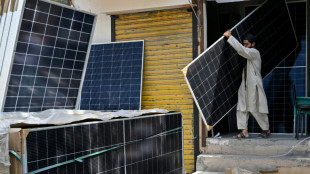
Nearly a million Chinese solar panels have been installed across the island of 11 million people, with another 3.6 million planned over the next two years, according to government figures.
"Cuba has abundant renewable sources," Rosell Guerra Campana, director of renewables in the energy ministry, argued in late 2023, citing, "the sun, agricultural and forest biomass."
The island had made significant progress in transforming sugar cane - the country's most iconic export -- into bioethanol, Sartain said.
In contrast, building wind farms and installing solar panels is "very expensive" for the cash-strapped island, he noted.
For EDF, solving Cuba's energy challenges "will not be no small task" as it will require "substantial investments of capital, which have been hard to come by given real and perceived risks of investing in Cuba."
J.AbuShaban--SF-PST