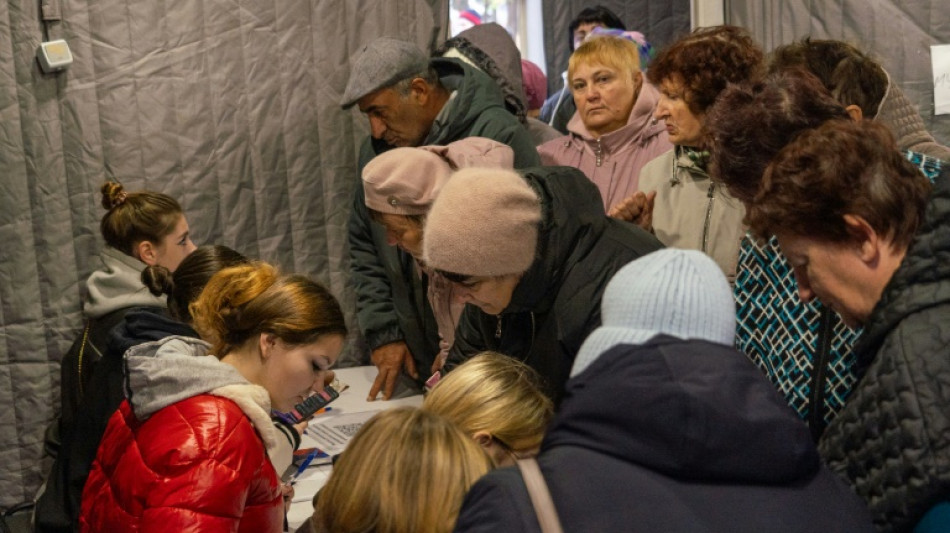
Families separated by front line in Russia's Kursk region / Photo: Andrey BORODULIN - AFP

 Missing F-35 fighter parts 'not sensitive', says Australia minister
 Cambodia showcases scams crackdown with global conference
 Afghan cyclist who disguised herself as man wins Asian Games silver

 Typhoon Dujuan leaves four dead in Japan, 45,000 houses without power

 G7 leaders condemn Houthi strikes on Saudi Arabia
 Google data centre sparks protests in Austria

 Shin Ohashi: Junk food-loving teen and Japan's next big swimming hope
 Stocks rise on AI buzz, drop in oil prices
 China's robot dancers limber up for America's Got Talent final

 Despite military might, Saudi struggles to crush the Houthis
 Trump to tout deals, defend Iran war in UN speech
 Sri Lanka to issue verdict in landmark Easter attack trial
 Macron says talks with Trump on Red Sea, Ukraine 'constructive'
 Green policies just good politics, says UK minister
 Bardot auction in Paris fetches nearly one million euros
 No timeline on Daniels injury return, says Commanders coach

 British Columbia sues OpenAI in US court over Canada school shooting

 French star Batum retires after 18-year NBA career
 Zidane leads first France training session
 Man shot by ICE agent in Texas detained with bullet inside him: lawyer

 California declares state of emergency ahead of El Nino
 South Africa arrests three more suspects, after nine women murdered
 Carse needs time away from England, says captain Brook

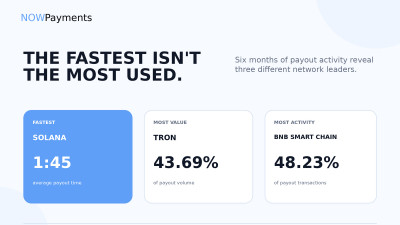 NOWPayments Releases Cross-Chain Payout Data Revealing Key Performance Benchmarks Across TRON, BNB Chain, and Solana

 British Museum bans photos of Bayeux Tapestry as crowds linger
Anastasia Gridina breaks down when she talks about keeping in touch with her three-year-old daughter Darina -- who is stranded in Ukrainian-occupied territory in Russia's Kursk region.
For a month after Ukrainian forces launched their surprise offensive there in August, Gridina had no contact at all with Darina and did not know if her daughter was alive or dead.
"I want to be reunited with my daughter, to see her in any city, any region. The main thing is that she should be out of the war zone," the 21-year-old accountant told AFP.
The incursion by Ukrainian forces came two and a half years after Russia launched its full-scale campaign against Ukraine.
The number of civilians still living in the estimated 1,000 square kilometres (386 square miles) that Ukraine says it controls is not officially known but Kyiv estimates there are "several thousand".
The offensive was so sudden that many people had no time to evacuate, leaving families like Gridina's divided.
Contact with people living in the area is nearly impossible because there is no phone network and civilians can neither cross the front line nor travel to Ukraine.
Yulia Zaitseva, a volunteer psychologist working in the city of Kursk, said that of the 10-15 people a day who she sees "three are dealing with the fact they have been separated from loved ones".
"The feeling of uncertainty is at times harder for people than a tragic certainty because they do not know what is going on, what to prepare for. Should they prepare for something terrible or for something good? This uncertainty has a big impact," she said.
- 'We just have silence' -
Alexei Gaponov, head of the Russian Red Cross for the Kursk region, said his organisation had received 5,500 requests for information about relatives people had lost contact with.
He cautioned that the figure could include people who have been evacuated but had not since been in contact with their loved ones and people living in areas since re-captured by Russian forces.
Gaponov said there was little his staff could do in cases of people stuck in Ukrainian-held territory except add them to lists.
"Then we just check the situation on the front," he said.
At a humanitarian aid point in Kursk, 35-year-old Marina said her father, uncle and 90-year-old grandmother were still in an area controlled by Kyiv's troops.
"We worry about their condition," the office worker said.
"There is no mobile network where they are. Nobody is leaving from there. We just have silence, a vacuum."
Some relatives say they only found out about their loved ones through Ukrainian media reports from the occupied territories.
Oleksiy Dmytrashkivsky, a spokesman for the Ukrainian army's command centre in Kursk, said he received "at least 20 requests per day from people looking for their relatives and loved ones".
He said sometimes he receives calls from relatives asking the Ukrainian army to bring medicines to their loved ones while others simply ask for regular updates about their wellbeing.
He said many civilians were now being put up in a school in Sudzha stocked with food and medicine and heating stoves.
"Many people ask for their relatives to be taken to Ukraine," he said.
But he said Ukraine could not do that because that "would be a deportation, it is a criminal offence".
- 'No way through' -
Gridina said she had gone to Moscow temporarily to work as an accountant when Ukrainian troops advanced into Kursk. Her daughter was with her grandmother in the village of Lebedevka.
"I take videos, send them to some people and they show the videos to her and send one back. That's the only way. I can't hear my daughter's voice live," she said.
She said "a lot of people" -- mainly elderly people and children -- had stayed behind in villages in her area since "there was no evacuation".
The young mother said she made pleas for help "everywhere", including Russian institutions and the Red Cross and by writing personally to President Vladimir Putin.
"I have had no replies," she said.
Desperate to see her daughter, she at one point even tried to cross the front line but was forced to turn back.
"There were explosions, shelling and no way through. There were also mines on the roads. A lot of cars were burning. Everything was burning and there was no way through," she said.
R.Shaban--SF-PST