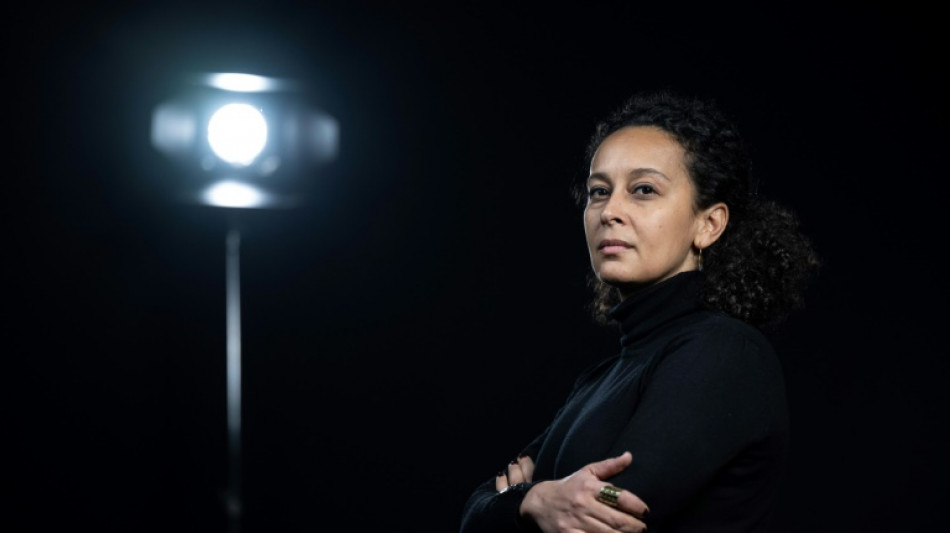
Unsung heroes who saved 1,000 children from Rwanda genocide / Photo: JULIEN DE ROSA - AFP

 Missing F-35 fighter parts 'not sensitive', says Australia minister
 Cambodia showcases scams crackdown with global conference
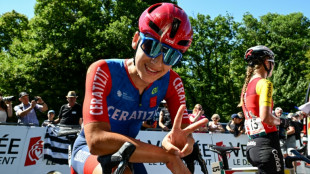 Afghan cyclist who disguised herself as man wins Asian Games silver
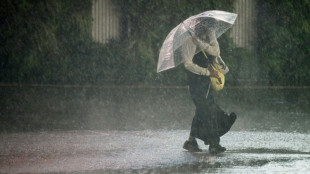 Typhoon Dujuan leaves four dead in Japan, 45,000 houses without power

 G7 leaders condemn Houthi strikes on Saudi Arabia
 Google data centre sparks protests in Austria
 Shin Ohashi: Junk food-loving teen and Japan's next big swimming hope
 Stocks rise on AI buzz, drop in oil prices
 China's robot dancers limber up for America's Got Talent final

 Despite military might, Saudi struggles to crush the Houthis
 Trump to tout deals, defend Iran war in UN speech
 Sri Lanka to issue verdict in landmark Easter attack trial
 Macron says talks with Trump on Red Sea, Ukraine 'constructive'
 Green policies just good politics, says UK minister
 Bardot auction in Paris fetches nearly one million euros
 No timeline on Daniels injury return, says Commanders coach

 British Columbia sues OpenAI in US court over Canada school shooting
 French star Batum retires after 18-year NBA career
 Zidane leads first France training session
 Man shot by ICE agent in Texas detained with bullet inside him: lawyer
 California declares state of emergency ahead of El Nino
 South Africa arrests three more suspects, after nine women murdered
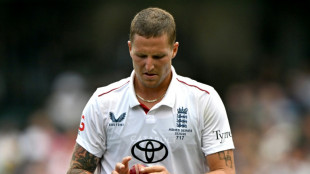 Carse needs time away from England, says captain Brook

 NOWPayments Releases Cross-Chain Payout Data Revealing Key Performance Benchmarks Across TRON, BNB Chain, and Solana
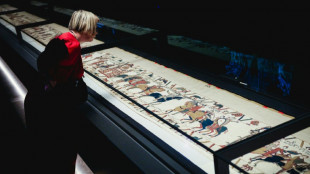 British Museum bans photos of Bayeux Tapestry as crowds linger
The untold story of how around 1,000 children were rescued from Rwanda during the bloodiest and most chaotic days of its genocide is finally coming to light three decades after they were saved from the slaughter.
Aid workers risked their lives to get the children -- mostly orphans -- out to safety in neighbouring Burundi in a series of Swiss humanitarian convoys.
Many of the children were wounded or had watched their families being massacred in front of them in the 100 days of systematic slaughter.
Around one million people, mainly from the Tutsi minority, were clubbed, shot or hacked to death with machetes between April and July 1994 by the army and Hutu extremists from the Interahamwe militia.
Beata Umubyeyi Mairesse, who was 15 when she was smuggled out, tells of the little known operation from the inside in her acclaimed new book, "The Convoy".
AFP has also tracked down several other children from the convoys who grew up or were adopted abroad.
Umubyeyi Mairesse was hidden in the back of a truck under a sheet, with orphans sitting on her and her mother to conceal them when they were stopped at Hutu checkpoints.
The Rwandan authorities only allowed children under 12 to be transported on the packed convoys run by the Swiss charity Terre des hommes (Tdh) -- "People of the Earth" in English.
In her book, Umubyeyi Mairesse tells how they held their breath at the roadblocks, trying not to move a muscle as militiamen inspected the trucks, hoping the fear on the faces of the bandaged and traumatised children would not give them away.
- 'Chaotic' -
She took several years to piece together the testimonies of the "children of the convoys" -- now scattered across the world -- who were rescued thanks to the courage of aid workers, nuns, journalists, a diplomat and a priest.
Some had been in Rwandan orphanages before the massacres began, while many were the children of Tutsis killed during the genocide.
"Terre des hommes found itself facing an unbelievable situation," said Jean-Luc Imhof, a longtime Rwanda specialist for the charity.
They "were responsible for more than 1,000 of these children", and with war and the genocide raging all around, the situation was completely "chaotic", he told AFP.
"Lots were really young, some under three years old, but mostly there were between five and 10. Many had been wounded, including with machetes," he said.
As the Tutsi rebels from the Rwandan Patriotic Front (FPR) -- who put an end to the massacres -- closed in, the army and the Hutu-led Interahamwe militia sensed defeat and "became crazy", he said.
- 'Unimaginable cruelty' -
The first convoy in early June, which Tdh organised with the International Committee of the Red Cross, for whom Imhof had previously worked, got safely through to Burundi. But another that set off on June 18, unassisted by the ICRC, "was even riskier", said Imhof.
"The convoy went into the incredible unknown -- they were risking their lives at every checkpoint. The soldiers made the children get out... their lives were hanging by very little," he said.
These were deeply traumatised children who had "seen their families massacred" and "taken their trauma with them".
"Their normal had become escaping death multiple times a day," he said,
That was also the case for Claire Umutoni and one of her sisters, who got to Burundi on a July 3 convoy in an escape she still remembers vividly.
"We received a phone call around April 20 from someone whose voice my father recognised. He knew it was one of the dignitaries from the town of Butare, who told him: 'Your time has come.'"
He ordered his five daughters to flee and Umutoni, then 17, suddenly became head of her family, the sisters chased from one hiding place to the next.
Their parents were later murdered with "unimaginable cruelty", she said.
"Bombs were falling near the school where we were staying with several orphans -- the children had all sorts of injuries, both physical and emotional. It was terrible," Umutoni told AFP from her home in Canada.
- Clubs and butcher knives -
The terror only intensified when they joined the rescue convoy.
"I remember that on the road, there were many of the killers who had carried out genocide fleeing with hammers and machetes... It was chaos because the FPR was at the gates of Butare, but there were still perpetrators who wanted to kill the Tutsis," said Umutoni.
At four of the checkpoints she remembers the militiamen armed with "clubs, butcher knives and grenades".
Umutoni and her sisters made it out and were eventually taken in by their aunts.
Her aunt sent her to Canada in 1999 "to start a new life, to start over. And I chose not to spiral into madness," said Umutoni, who now works in Canada's Privy Council Office and is a mother to "three beautiful children".
She returned to Rwanda for the first time in 2008 to bury her parents, who had finally been identified.
- 'Awakening' -
Umubyeyi Mairesse says the 30th anniversary of the genocide is an "awakening" for many of the survivors.
"It is also the start of a broader reconnection for these convoy children -- those who were very young (when they were rescued and who) are finally learning the story. It's powerful," she said.
Since her book came out, several aid workers and convoy children she was not able to track down have contacted her.
"When someone contacts me, I explain that I can send them photos, and we try to identify which convoy they were on."
Several of the convoy children were reunited with their rescuers for the first time at the Shoah Memorial in Paris in June.
When survivor Nadine Umutoni Ndekezi, who now lives in Belgium, began speaking about her memories of the convoy, the emotion was palpable.
"We are here... because you did not give up," she said, thanking the aid workers and journalists for their courage.
- 'Our heroes' -
Umutoni Ndekezi, who was nine at the time, told of how she came across a little boy in an orphanage in Rwanda that she used to look after back home. He had bad head wounds.
He could no longer speak or walk. "He had forgotten everything. I thought that if adults could do that, then I did not want to become an adult... I lost trust in them," she sobbed.
But thanks to the people who rescued them, Umutoni Ndekezi -- now a mental health social worker -- said she "regained hope".
"They stayed true to their values and put their own lives at risk," she told the audience.
"The boy's parents were exterminated. He left with you on June 18 -- I can never thank you enough, you saved our humanity and gave us the strength to move forward."
Other survivors concurred.
"They are our heroes, what they did was incredible," Claire Umutoni told AFP.
"I chose to live in the name of those innocents who were murdered," she declared. "To remain dignified and stand up to the killers" who wanted to wipe her and her sisters from the face of the Earth.
G.AbuGhazaleh--SF-PST