Indonesia's Prabowo targets growth spurt with big projects / Photo: BAY ISMOYO - AFP

 Missing F-35 fighter parts 'not sensitive', says Australia minister
 Cambodia showcases scams crackdown with global conference
 Afghan cyclist who disguised herself as man wins Asian Games silver

 Typhoon Dujuan leaves four dead in Japan, 45,000 houses without power

 G7 leaders condemn Houthi strikes on Saudi Arabia
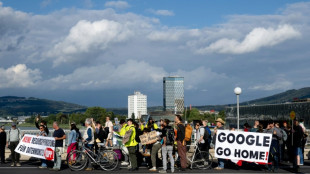 Google data centre sparks protests in Austria

 Shin Ohashi: Junk food-loving teen and Japan's next big swimming hope
 Stocks rise on AI buzz, drop in oil prices
 China's robot dancers limber up for America's Got Talent final

 Despite military might, Saudi struggles to crush the Houthis
 Trump to tout deals, defend Iran war in UN speech
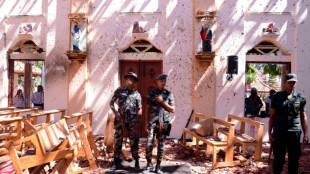 Sri Lanka to issue verdict in landmark Easter attack trial
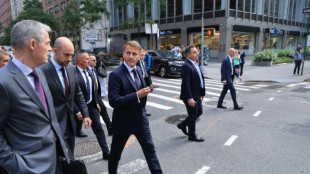 Macron says talks with Trump on Red Sea, Ukraine 'constructive'

 Green policies just good politics, says UK minister
 Bardot auction in Paris fetches nearly one million euros
 No timeline on Daniels injury return, says Commanders coach

 British Columbia sues OpenAI in US court over Canada school shooting

 French star Batum retires after 18-year NBA career
 Zidane leads first France training session
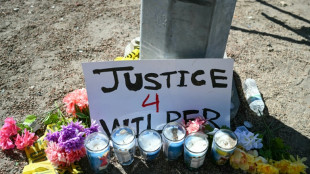 Man shot by ICE agent in Texas detained with bullet inside him: lawyer
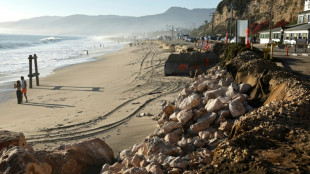 California declares state of emergency ahead of El Nino
 South Africa arrests three more suspects, after nine women murdered
 Carse needs time away from England, says captain Brook

 NOWPayments Releases Cross-Chain Payout Data Revealing Key Performance Benchmarks Across TRON, BNB Chain, and Solana

 British Museum bans photos of Bayeux Tapestry as crowds linger
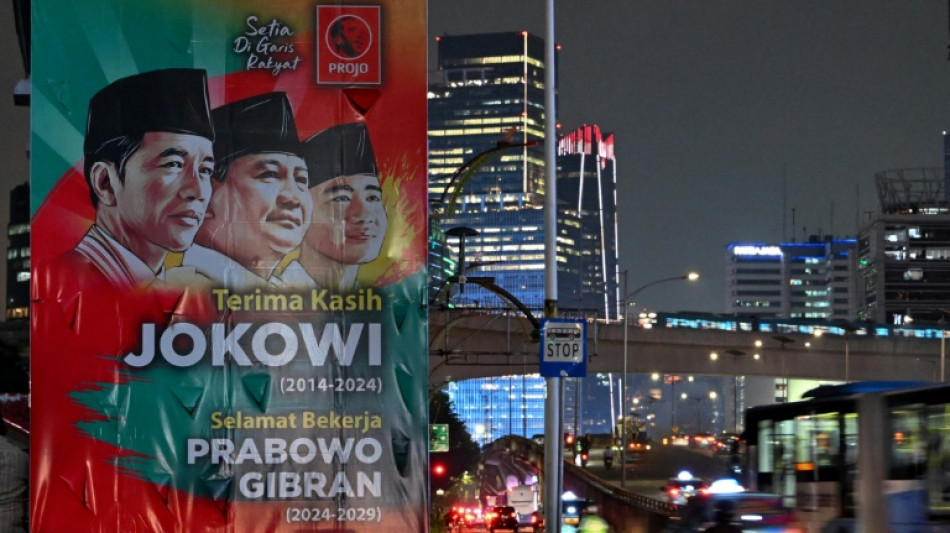
Indonesian President Joko Widodo leaves office Sunday with high approval ratings thanks to strong economic growth, but his successor Prabowo Subianto has bigger ambitions, including an eye-catching $28 billion free meal plan for students.
While the country regularly enjoys about five percent annual expansion, the former general has pledged to capitalise on his predecessor's policies to reach eight percent by tapping the nation's huge human resources.
"From prosperity, we can bring justice to all Indonesian people. We must unite to eliminate poverty and eliminate hunger, and eliminate suffering from our people," Prabowo said in his victory speech in March.
To do that, he is banking on big national projects, the archipelago's vast natural resources and attempts to lower a poverty rate of more than nine percent.
He has pledged to largely carry on the popular economic programme of Widodo, better known as Jokowi, but he has also signalled a more direct attempt to alleviate poverty in the nation of around 280 million.
His big campaign pledge is a $28 billion plan to supply tens of millions of schoolchildren and pregnant women nationwide with free meals.
He says the scheme -- to be rolled out in January -- will halt stunted growth in a country where more than a fifth of children up to five years old are affected and create several million more jobs.
Yet the plan has faced criticism over logistical and cost issues, with some wondering how he can pull off the plan and keep spending within the annual fiscal deficit limit of three percent of GDP, which is mandated by law.
Jokowi focussed on large infrastructure projects including roads, bridges and airports aimed at better connecting the archipelago.
But experts say Prabowo will deviate from that in his bid to realise a campaign promise to turn Indonesia, a G20 member, into an "advanced and developed" economy.
"He won't be blindly following Jokowi's footsteps, but he also won't completely abandon or neglect everything, so he will be somewhat in the middle," said Yose Rizal Damuri, an economist at the Centre for Strategic and International Studies.
"It seems like he has a slightly different approach from Jokowi. The priority is no longer infrastructure development, but more to human capital development."
His agenda will also focus on agriculture, observers say, with a food estate programme aimed at achieving food self-sufficiency, land clearing for bioethanol projects in the restive eastern region of Papua, and a green fund selling carbon emission credits.
- Capital crunch -
At the same time, Prabowo is inheriting Jokowi's legacy project -- a $32 billion move of the capital from traffic-clogged and sinking Jakarta to Nusantara, a planned green city in eastern Borneo where construction is under way.
The city will not be ready until 2045, but its rapid construction is already eating into state coffers.
Prabowo has pledged to continue the project despite speculation he would put it on hold or keep Jakarta as the capital.
He has also supported Jokowi's resource nationalism, particularly in the nickel sector, where Jakarta has imposed export restrictions in a bid to become a key player in the electric vehicle supply chain.
Indonesia is one of the world's biggest fossil fuel polluters and Prabowo has backed gradually reducing the country's reliance on them. But his family retains ties to the coal industry, and processing vast sums of nickel requires coal-fired power plants.
China's Southeast Asian investments last year were the biggest in Indonesia, and Prabowo met President Xi Jinping in his first foreign meeting after winning the election.
It signalled the importance he has placed on continuing to attract Beijing's money, which has proven crucial to Indonesia's economic growth.
On top of his early trips abroad, Prabowo's cabinet choices and his first budget after inauguration will also give a better indication as to his economic plans.
Current finance minister Sri Mulyani said this week that she had been asked to retain her role in the next government, which experts say is a signal to markets that there will be continuity.
"With Sri Mulyani joining his cabinet, it shows that Prabowo will be very careful in terms of fiscal issues," said Bhima Yudhistira Adhinegara, an economist from the Center of Economic and Law Studies.
"That's why Jokowi's people are now hired again, it shows that Prabowo will be disciplined."
K.AbuDahab--SF-PST