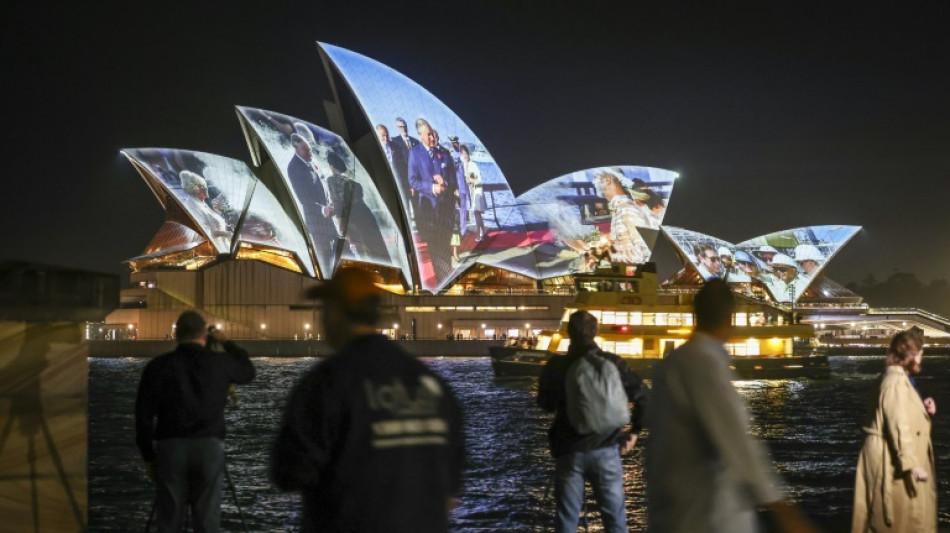
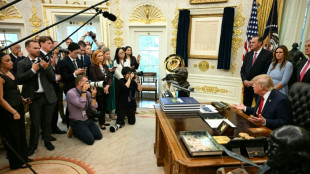
Spectre of royal meddling haunts Charles in Australia / Photo: DAVID GRAY - AFP

 Missing F-35 fighter parts 'not sensitive', says Australia minister

 Cambodia showcases scams crackdown with global conference
 Afghan cyclist who disguised herself as man wins Asian Games silver

 Typhoon Dujuan leaves four dead in Japan, 45,000 houses without power

 G7 leaders condemn Houthi strikes on Saudi Arabia
 Google data centre sparks protests in Austria
 Shin Ohashi: Junk food-loving teen and Japan's next big swimming hope
 Stocks rise on AI buzz, drop in oil prices
 China's robot dancers limber up for America's Got Talent final

 Despite military might, Saudi struggles to crush the Houthis
 Trump to tout deals, defend Iran war in UN speech
 Sri Lanka to issue verdict in landmark Easter attack trial
 Macron says talks with Trump on Red Sea, Ukraine 'constructive'

 Green policies just good politics, says UK minister
 Bardot auction in Paris fetches nearly one million euros

 No timeline on Daniels injury return, says Commanders coach
 British Columbia sues OpenAI in US court over Canada school shooting

 French star Batum retires after 18-year NBA career
 Zidane leads first France training session

 Man shot by ICE agent in Texas detained with bullet inside him: lawyer

 California declares state of emergency ahead of El Nino

 South Africa arrests three more suspects, after nine women murdered
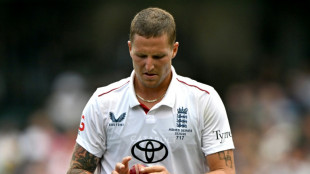 Carse needs time away from England, says captain Brook

 NOWPayments Releases Cross-Chain Payout Data Revealing Key Performance Benchmarks Across TRON, BNB Chain, and Solana

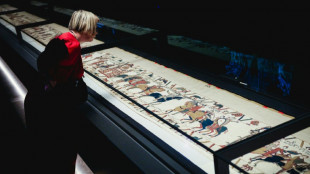 British Museum bans photos of Bayeux Tapestry as crowds linger

The cloud from a decades-old political crisis hangs over King Charles III's tour of Australia, where the 1975 sacking of a sitting prime minister continues to fuel suspicions of royal meddling.
Governor-General John Kerr used his vice-regal powers in 1975 to topple Labor Prime Minister Gough Whitlam, a popular leader beset by a string of parliamentary scandals.
It remains the only time the governor-general -- the throne's envoy in overseas realms -- has made such a drastic intervention in Australian democracy.
Almost 50 years later, intrigue still swirls around the monarchy's role in "The Dismissal".
Recently unearthed correspondence exposed then-Prince Charles's stance on the interference -- a source of further controversy in a decades-long simmering debate on the relevance of the monarchy.
"It was an unprecedented action by Queen Elizabeth's representative in Australia," historian Jenny Hocking told AFP.
"It's a stunning, volcanic moment in our history. And the potential role of the monarch has always been a question."
Hocking fought a years-long legal battle to publish a trove of secret letters between Kerr and Buckingham Palace.
Finally unsealed in 2020 after a High Court ruling, the so-called "Palace Letters" showed Kerr dutifully keeping the queen's aides abreast of the unfolding political turmoil.
The letters suggest Queen Elizabeth II had no hidden role in sacking the prime minister.
- 'Extraordinary interference' -
But one recently surfaced exchange shows then-Prince Charles was at least supportive of Kerr's decision in hindsight.
"Please don't lose heart," Charles wrote to Kerr in the aftermath.
"What you did last year was right and the courageous thing to do."
Hocking said this amounted to "an extraordinary interference in Australian politics".
"Charles is basically praising him for dismissing an elected government, saying he'd made a courageous decision.
"And we should keep that in mind as we entertain the current king, who has been described before as a meddling prince."
News of the government's removal sent Australian stock markets into meltdown, sparking mass rallies and fears of civil violence.
For many Australians, it shattered their sense of independence and fuelled fears of colonial masters pulling the strings.
It remains seared into the psyche of the nation, where it is still taught in schools, and debated over the airwaves and over drinks at the pub.
- 'Eruptive' moment -
"It's because it was such an eruptive moment in our history," said Hocking.
Australian Prime Minister Anthony Albanese -- an avowed republican -- has said the imbroglio showed "the need for us to have an Australian head of state".
Swept to power in 1972 -- the first Labor government in more than 20 years -- Whitlam lost control of parliament as a string of forced resignations whittled away his majority.
Unable to secure enough votes to pass the government budget, governor-general Kerr sacked Whitlam and installed conservative opposition leader Malcolm Fraser in his place.
It remains "the most dramatic and controversial event in Australia's constitutional and political history", according to government historians.
Ironically, Whitlam and Fraser would bury the hatchet in the late 1990s to campaign together in favour of an Australian republic.
That 1999 referendum failed as 54 percent of Australians backed the status quo.
A recent poll showed about a third of Australians would like to ditch the monarchy, a third would keep it and a third are ambivalent.
X.AbuJaber--SF-PST