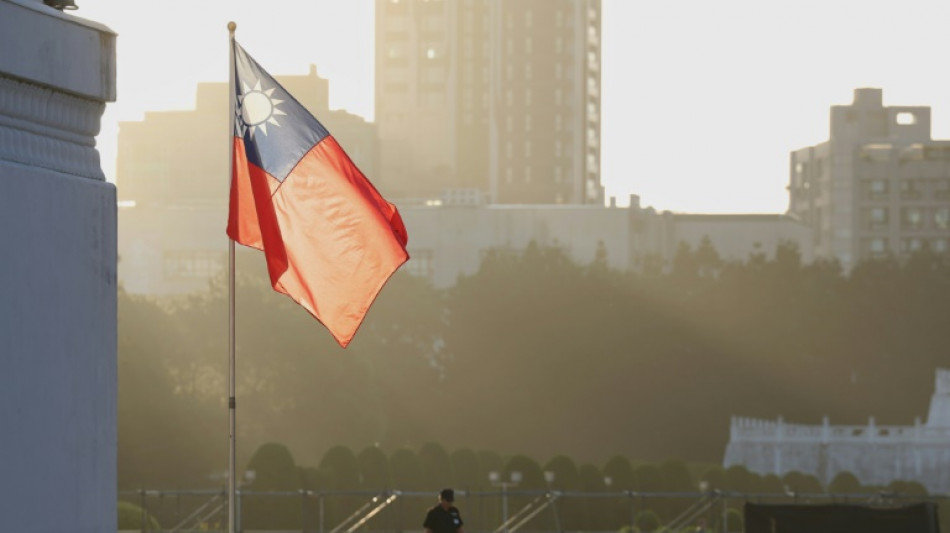
China toughens Taiwan stance over president's sovereignty defence / Photo: I-Hwa CHENG - AFP

 Oil falls, stocks steady as Trump hails 'good' Iran talks
 UK sets up unit to combat disinformation from Russia, AI
 ICC convicts C.Africa rebel leader
 China's Yu, 13, wins third gold with latest Asian Games record
 UK says will revisit Chagos deal after latest Trump criticism
 In first, French presidential candidate gives birth during campaign
 Cambodia no 'safe haven' for cyberscams, PM says
 North Korea weightlifter sets three world records for Asian Games gold

 A Full Moon for Every Child: STARTRADER's STARCARES Brings Support to SOS Children's Village Ho Chi Minh City
 Meta leans into AI, smart glasses amid privacy pushback
 Battered Duerer masterpiece up for five-year revamp
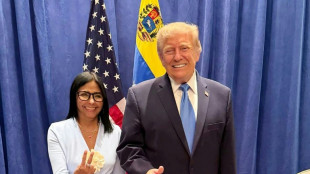 Trump met with Venezuela's interim leader at UN
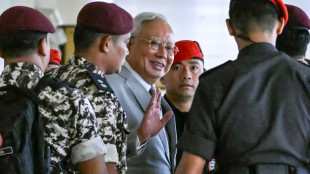 Malaysia furore after Najib wins conditional house arrest
 Italy hope for new dawn under Mancini
 Mongolian herders enlist new tech against harsher, drier climate
 Tata turmoil shines light on India succession woes
 World Cup 'not enough' as Spain begin next chapter
 Meta acts against 3.7 mn scammers' accounts with Singapore police help
 Australia PM says draft social media rules about taking back control
 Voting opens in Alaska's annual Fat Bear Week
 MLS coach axed for telling female ref 'It's a man's game'
 US refuses to give Sudan's de facto leader visa for UN
 Man City hold Bayern to start Women's Champions League, Arsenal win late
 Trump threatens Iran with 'hell' but reveals fresh talks
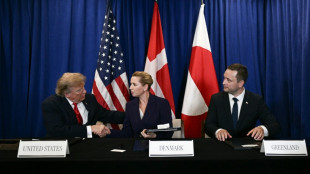 Trump signs security deal with Greenland, Denmark at UN
China has reacted more robustly to Taiwanese President Lai Ching-te's rhetoric defending the island's sovereignty than his predecessor's, with fiery threats and war games analysts say will likely intensify.
Since Lai succeeded Tsai Ing-wen in May, China has staged two large-scale military drills around the island -- most recently on Monday -- and verbally attacked the new leader at every turn over his speeches and comments.
Beijing calls Lai a "separatist" and has accused him of escalating tensions across the Taiwan Strait -- the sensitive waterway that separates Taiwan and China.
China's ruling Communist Party has never controlled Taiwan, but it claims the island as part of its territory and has said it will never renounce the use of force to take it.
"I think it took Beijing about two years into Tsai's presidency before Beijing began to single out Tsai by name when they criticised Taiwan," said Wen-Ti Sung, a nonresident fellow at the Atlantic Council's Global China Hub.
"Beijing has been singling out Lai by name for these kinds of critiques from the get-go."
Lai and Tsai, who both belong to the Democratic Progressive Party, share the position that there is no need for Taiwan to formally declare independence as it is "already independent".
But Lai's use of stronger language than Tsai when standing up for the island's sovereignty and criticising China's actions has enraged Beijing.
China launched large-scale military drills three days after Lai took office and gave an inauguration speech that China denounced as a "confession of independence".
Last Thursday, Lai delivered his first National Day address, vowing to "resist annexation" and insisting that Beijing and Taipei were "not subordinate to each other".
China warned after the speech that Lai's "provocations" would result in "disaster" for the people of Taiwan -- and on Monday it sent fighter jets, drones and warships to surround the island.
"Lai Ching-te made provocative remarks first, and the PLA took necessary actions to punish him after that," Lieutenant Colonel Fu Zhengnan, a researcher at the Chinese Academy of Military Sciences, told state media on Monday.
Taipei condemned Beijing's actions as "irrational and provocative", and the island's key backer and biggest arms supplier Washington called them "disproportionate".
"It is a routine, domestic-focused address that has historically prompted little response from the PRC," Pentagon spokesman Major General Pat Ryder said Monday, using the acronym for China's formal name.
"Still, the PRC has chosen this opportunity to take provocative, military action."
The latest sea and air drills lasted only a day, much shorter than previous major exercises, which analysts attributed to the looming US presidential election along with China's fiscal worries and the potential for bad weather.
"China does not want to risk making itself a campaign issue in the closing weeks of the US presidential campaign," said Sung.
- More drills -
China and Taiwan have been ruled separately since 1949 when Chiang Kai-shek's nationalist forces fled to the island following their defeat by Mao Zedong's communists.
Taiwan has since transformed into a vibrant democracy and a major economic power, with its own government, military and currency.
China has tightened its squeeze on Taiwan since Tsai, who rejected Beijing's view that the island was part of "One China", took office in 2016.
China deploys fighter jets and navy ships to the skies and waters around Taiwan on a daily basis, while also blocking Taipei from global forums and poaching its diplomatic allies.
"One very big difference between Tsai and Lai is that in Beijing's consideration, Tsai might be more moderate, in the middle of the spectrum of unification and independence," Liang-chih Evans Chen of the Institute for National Defense and Security Research in Taipei told AFP.
"They think Lai is more towards the end of independence," he said, which is why Beijing has been "tougher and strongly reactive" to his rhetoric.
More military and other action around Taiwan was likely in the coming months as Beijing entered a "performative nationalist phase of its cross-strait policy", Sung said.
"Whenever Lai makes a major speech, you (can) expect Beijing to use visual displays of its displeasure," he said.
"That can mean military behaviour like military drills, that can mean more high-profile grey zone security manoeuvres," he said, referring to tactics that fall short of an act of war.
Even if Lai were to tone down his language, Beijing was still likely to look for a pretext to act.
"Lai was more careful in his national day speech than at inauguration, showing the potential for restraint," said Amanda Hsiao of the International Crisis Group.
"Beijing's escalatory response will only confirm views in Taipei that shows of restraint will not be reciprocated."
burs-amj/lb/cwl
Z.AbuSaud--SF-PST