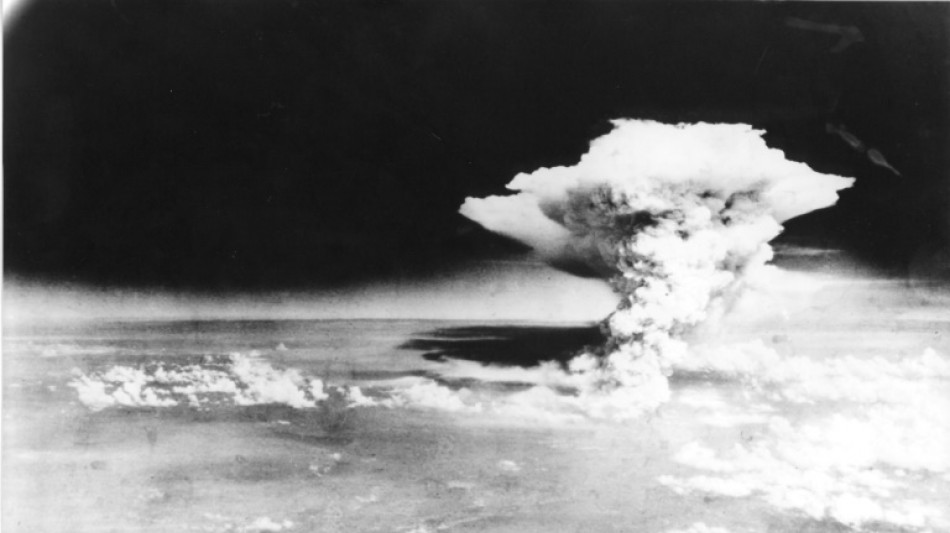
'Unspeakable horror': the attacks on Hiroshima and Nagasaki / Photo: Handout - Hiroshima Peace Memorial Museum/AFP/File

 Turkey reassures investors over investment fund crisis
 Saka says England still have 'scar' from World Cup semi-final loss
 アレックス・ボディ氏とシュテファン・ハウプト教授、ルーマニアの伝説的な美術コレクションをめぐり提携に合意
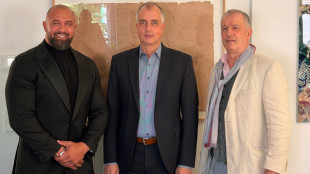 亞歷克斯·博迪與史蒂芬·豪普特教授就羅馬尼亞傳奇藝術收藏達成合作協議
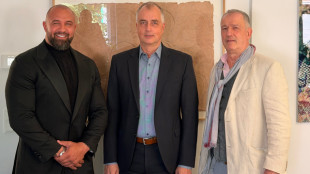
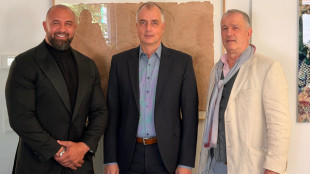 Алекс Боди и проф. д-р Стефан Хаупт договорились о сотрудничестве в рамках легендарной коллекции произведений искусства в Румынии
 French foreign minister says Palestinians 'must' hold polls
 Fresh Russian strikes on Ukraine's infrastructure kill seven

 Eriksen to return to Denmark after parting ways with Wolfsburg
 Brad Pitt says working with dog co-star was 'really moving'

 Golan will remain Syrian, vows President al-Sharaa at UN
 Blueberry Strengthens MENA Presence with CMA Category 5 License and Dubai Office Launch
 Russia probes bear attacks, as official says town under 'siege'

 Robertson tells Spurs to 'forget' past woes
 Italy police find 3 million euros stashed in mobster's house

 Renard versus Queiroz in AFCON qualifying blockbuster
 Former Mexico boss Aguirre returns to Spain with Valencia
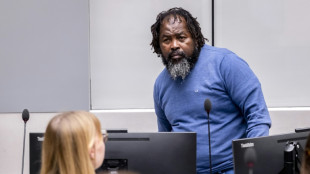
 China swimmer, 13, seals Games hat-trick as North Korea win first gold

 China's Xi heads to US for talks with Trump: state media
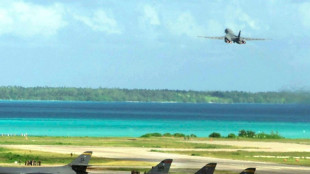
 Azerbaijan pardons Frenchman after EU lifts sanctions on oligarchs

 Hadjar extends Red Bull contract for 2027 F1 season
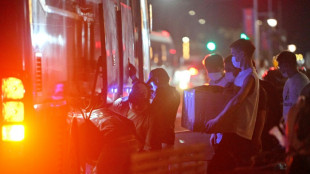
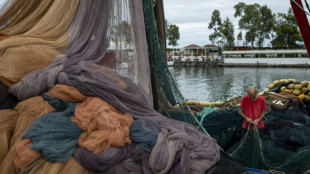 Black Sea drone attacks spell terror for Turkish sailors

 Canada judge to decide prison term for suicide poison seller

 Weinstein faces resentencing in New York for 2006 sex assault

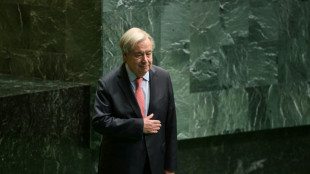 Outgoing UN chief makes climate push at New York summit
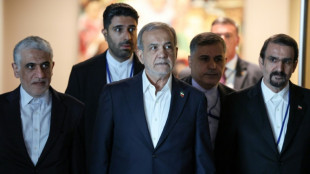 AI risks, Iran war to take center stage at UN

The Nobel Peace Prize was awarded Friday to Nihon Hidankyo, a Japanese group of atomic bomb survivors who are advocating for "a world free of nuclear weapons".
The survivors are from Hiroshima and Nagasaki, two cities that the United States dropped nuclear bombs on in 1945 at the end of World War II.
Hiroshima was hit on August 6, 1945, killing 140,000 people. Three days later, another bomb was dropped on Nagasaki, killing around 74,000 people.
Here are some facts about the attacks:
- The bombs -
The first atomic bomb was dropped on the western city of Hiroshima by the US bomber Enola Gay.
The bomb was nicknamed "Little Boy" but its impact was anything but small.
It detonated about 600 metres (2,000 feet) from the ground, with a force equivalent to 15,000 tonnes of TNT.
Tens of thousands died instantly, while others succumbed to injuries or illness in the weeks, months and years that followed.
Three days later the US dropped a second bomb, dubbed "Fat Man", on the city of Nagasaki.
The attacks remain the only time atomic bombs have been used in wartime.
- The attacks -
When the bomb was dropped on Hiroshima, the first thing people noticed was an "intense ball of fire", according to the International Committee of the Red Cross (ICRC).
Temperatures near the blast reached an estimated 7,000 degrees Celsius (12,600 Fahrenheit), which burned human skin within a radius of about 3.5 kilometres (two miles).
ICRC experts say there were cases of temporary or permanent blindness due to the intense flash of light, and subsequent related damage such as cataracts.
A whirlwind of heat generated by the explosion also ignited thousands of fires that burned several square kilometres of the largely wooden city. A firestorm that consumed all available oxygen caused more deaths by suffocation.
It has been estimated that burn- and fire-related casualties accounted for more than half of the immediate deaths in Hiroshima.
The explosion generated an enormous shock wave that in some cases literally carried people away. Others were crushed to death inside collapsed buildings or injured or killed by flying debris.
"I remember the charred bodies of little children lying around the hypocentre area like black rocks," Koichi Wada, a witness who was 18 at the time of the Nagasaki attack, has said of the bombing.
- Radiation effects -
The bomb attacks unleashed radiation that proved deadly both immediately and over the longer term.
Radiation sickness was reported in the aftermath by many who survived the initial blasts and firestorms.
Acute radiation symptoms include vomiting, headaches, nausea, diarrhoea, haemorrhaging and hair loss, with radiation sickness fatal for many within a few weeks or months.
Bomb survivors, known as "hibakusha", also experienced longer-term effects including elevated risks of thyroid cancer and leukaemia, and both Hiroshima and Nagasaki have seen elevated cancer rates.
Of the 50,000 radiation victims from both cities studied by the Japanese-US Radiation Effects Research Foundation, about 100 died of leukaemia and 850 suffered from radiation-induced cancers.
The group found no evidence however of a "significant increase" in serious birth defects among survivors' children.
- The aftermath -
The twin bombings dealt the final blow to imperial Japan, which surrendered on August 15, 1945, bringing an end to World War II.
Historians have debated whether the devastating bombings ultimately saved lives by bringing an end to the conflict and averting a ground invasion.
But those calculations meant little to survivors, many of whom battled decades of physical and psychological trauma, as well as the stigma that sometimes came with being a hibakusha.
Despite their suffering and their status as the first victims of the atomic age, many survivors were shunned -- in particular for marriage -- because of prejudice over radiation exposure.
Survivors and their supporters have become some of the loudest and most powerful voices opposing the use of nuclear weapons, meeting world leaders in Japan and overseas to press their case.
In 2019, Pope Francis met several hibakusha on visits to Hiroshima and Nagasaki, paying tribute to the "unspeakable horror" suffered by victims of the attacks.
In 2016, Barack Obama became the first sitting US president to visit Hiroshima. He offered no apology for the attack, but embraced survivors and called for a world free of nuclear weapons.
K.AbuDahab--SF-PST