'No justice': N.Ireland marks 'Bloody Sunday' amid Brexit backdrop

 Rees-Zammit returns to wing as Wales face Fiji
 Renovations on historic Paris Opera house extended by three years

 Thailand denies viral claim Macron knelt before king
 Spain, Portugal eye World Cup last 16
 Russian strikes kill 17 in biggest ever attack on Kyiv, mayor says
 Uruguay veteran Cavani quits Boca Juniors
 West Ham's Fernandes joins Spurs
 Bones of contention: More research needed on 'd'Artagnan corpse'
 Coffee with a view: tourists flock to Starbucks overlooking North Korea

 German coalition agrees on reform package in key breakthrough
 France recall record try scorer Penaud for All Blacks Test

 Seoul's Kospi tanks as Asia tech firms suffer another blow

 'Outstanding' Love to start at fly-half for All Blacks against France
 Campbell back from four years in Wallabies wilderness to face Ireland
 Migrants pick up pieces back home after fleeing South Africa
 Farrell names Leinster-heavy Ireland side to face Wallabies

 Fearing Russian strike, Kyiv's Holodomor museum evacuates exhibits
 Germany's energy-hungry small firms struggle with green shift

 Pochettino says Balogun foul 'never' a red card as suspension looms
 Campbell back after four years in Wallabies team to face Ireland

 Kane saves England as USA, Belgium reach last 16
 Budding chefs cook up new career at China's BBQ academy
 One stitch at a time: Artist's mission to recreate the Bayeux Tapestry

 Deadly Russian barrage pounds Ukraine capital

 Belgium coach salutes Tielemans after World Cup rescue act
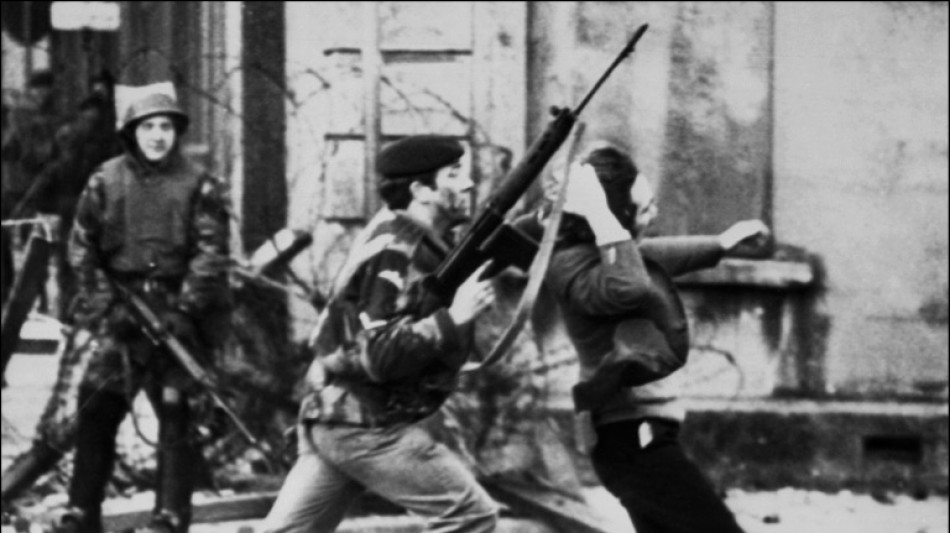
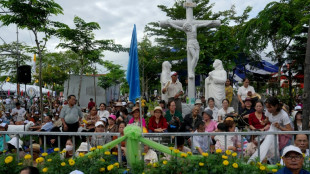
The Northern Irish city of Londonderry commemorates one of the darkest days in modern UK history on Sunday when, 50 years ago, British troops opened fire without provocation on civil rights protesters.
The anniversary of "Bloody Sunday" comes with Northern Ireland's fragile peace destabilised by Brexit, and with families of the victims despondent over whether the soldiers involved will ever face trial.
Charlie Nash saw his 19-year-old cousin William Nash killed by one of more than 100 high-velocity rounds fired by members of the British Parachute Regiment on January 30, 1972.
"We thought there might be rioting, but nothing, nothing like what happened. We thought at first they were rubber bullets," Nash, now 73, told AFP.
"But then we saw Hugh Gilmour (one of six 17-year-old victims) lying dead. We couldn't take it in. Everyone was running," he said.
"It's important for the rest of the world to see what they done to us that day. But will we ever see justice? Never, especially not from Boris Johnson."
- Amnesty? -
The UK prime minister this week called Bloody Sunday a "tragic day in our history". But his government is pushing legislation that critics say amounts to an amnesty for all killings during Northern Ireland's three decades of sectarian unrest, including by security forces.
Thirteen protesters died on Bloody Sunday, when the paratroopers opened fire through narrow streets and across open wasteland.
Some of the victims were shot in the back, or while on the ground, or while waving white handkerchiefs.
At the entrance to the city's Catholic Bogside area stands a wall that normally proclaims in large writing: "You are now entering Free Derry."
But this weekend, as relatives of the victims prepare to retrace the 1972 civil rights march, the mural says: "There is no British justice."
After an initial government report largely exonerated the paratroopers and authorities, a landmark 12-year inquiry running to 5,000 pages found in 2010 that the victims were unarmed and posed no threat, and that the soldiers' commander on the ground violated his orders.
"We in the inquiry came to the conclusion that the shootings were unjustified and unjustifiable," its chairman Mark Saville, a former judge and member of the UK House of Lords, told BBC radio on Saturday.
"And I do understand, people feel that in those circumstances justice has yet to be done," he said, while expressing concern that with the surviving soldiers now elderly, the government should have launched any prosecution "a very long time ago".
Then as now, Londonderry -- known as Derry to pro-Irish nationalists -- was a largely Catholic city. But housing, jobs and education were segregated in favour of the pro-British Protestant minority.
Simmering tensions over the inequality made Londonderry the cradle of the "Troubles" in Northern Ireland starting in the late 1960s, which finally ended with the 1998 Good Friday Agreement.
- 'Reckless' -
The UK's divorce from the European Union has unsettled the fragile post-1998 consensus.
Protestant unionists want Johnson's government to scrap a protocol governing post-Brexit trade for Northern Ireland, which treats the province differently from the UK mainland (comprising England, Scotland and Wales).
The government, which is in protracted talks with the EU on the issue, is sympathetic to their demands.
Heading into regional elections in May, some nationalists hope that Brexit could help achieve what the Irish Republican Army (IRA) never did -- a united Ireland, a century after the UK carved out a Protestant statelet in the north.
Sinn Fein, which was once the political wing of the IRA, is running ahead of the once dominant unionists in opinion polls.
"Northern Ireland finds itself again in the eye of a political storm where we appear to be collateral damage for a prime minister whose future is hanging in the balance," said professor Deirdre Heenan, a Londonderry resident who teaches social policy at Ulster University.
"The government's behaviour around the peace process has been reckless in the extreme," she added.
Protestant hardliners have issued their own reminders of where they stand: leading up to the anniversary, Parachute Regiment flags have been flying in one unionist stronghold of Londonderry, to the revulsion of nationalists.
"How can they do that, this weekend of all weekends? These are innocent boys killed by the Paras," said George Ryan, 61, a tour guide and local historian.
"Will any of the troops ever stand up in a court of law?" he added.
"It's looking more unlikely than ever, but it's important as ever."
X.AbuJaber--SF-PST