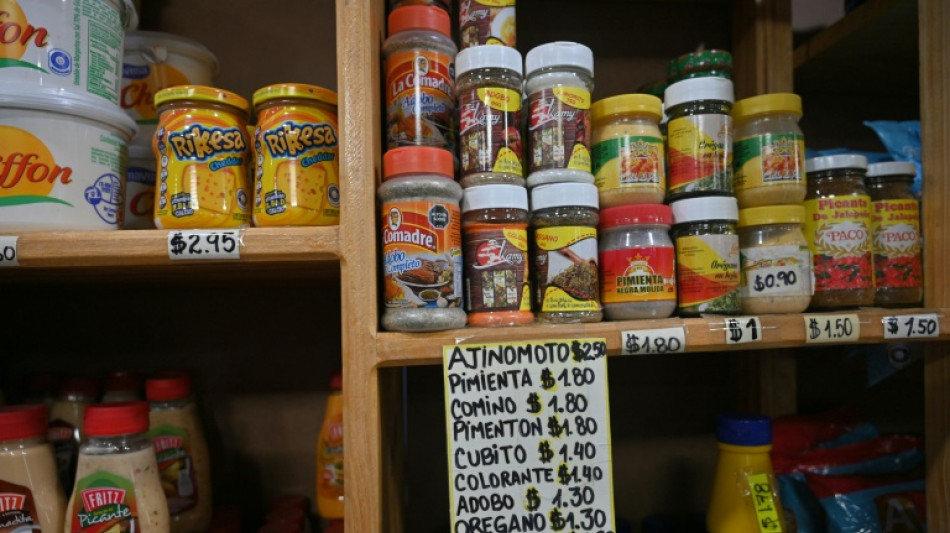
Closing the 'escape valve': Venezuela pursues de-dollarization / Photo: Federico PARRA - AFP

 Guehi insists players have 'trust and belief' in Man City after charges
 UN climate panel head wants swift end to deadlock over key scientific report
 PM calls for curfews in France as govt grapples with unrest
 Man City's Semenyo out for up to eight weeks

 Australian lawmaker critically hurt in 'violent' vehicle attack
 England women's coach Wiegman signs two-year contract extension
 Louvre blocked as France grapples with unrest
 Bollywood actor Tiger Shroff shot at in Mumbai, three suspects held: police
 UN biodiversity summit opens with nature goals off track
 'Physical hell': Hong Kong hosts gruelling underwater hockey tournament
 Police 'lost control' during French protests, says interior minister
 Australia's new Ghost Shark submarines grow some 'teeth'
 'I call it a bribe': Pennsylvania residents spurn $10,000 data center checks
 In a former US steel city, ordinary people struggle to get by
 'Liar,' 'clown': Lula and Bolsonaro spar in Brazil poll debate
 Record El Nino? Depends who's counting
 On the front line of ocean conservation off Portugal's Madeira

 Wembanyama targets title breakthrough as NBA season tips off

 With LeBron on board it's title or bust for Philly fans
 One year after Louvre heist, where are the missing jewels?

 Knicks face tall task in NBA championship repeat bid
 Warriors' Curry 'fine' after limping out of practice - Kerr

 Chervon Names Devin Murray Director of Sales - Northern Division
 Kings' Ben Simmons tears Achilles in training
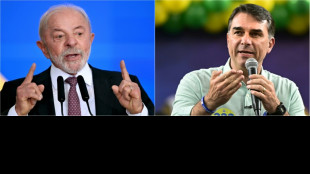 Lula, Bolsonaro set for first debate showdown in bitter election race

Having opened its arms to the US dollar as an "escape valve" Venezuela is now trying to re-energize its own currency, which has been crippled by devaluation in recent years.
The aim is to incorporate $3 billion circulating on the streets of the South American country into its financial system, but experts warn it is a risky gamble.
Distrust in the bolivar due to severe devaluations, demonetization and four years of hyperinflation persists, despite a slow down in price rises and economic recovery following seven years of recession in which GDP fell by 80 percent.
The dollarization, described by President Nicolas Maduro as an "escape valve", alongside an easing of price controls brought an end to the scarcity of bare essentials and the interminable queues for what little was available, such as a bag of rice.
"It's a risky bet with bad timing because the recovery is very weak and the economy is still suffering from chronic inflation. Not hyperinflation but still chronic inflation," Asdrubal Oliveros, director of consultancy Ecoanalitica, told AFP.
"(Inflation is) very high for you ... (to be able) to re-establish confidence in the currency from one day to the next."
The latest move, applied at the end of March, was to impose a tax ranging from three to 20 percent on transactions using foreign currencies.
The government hopes to encourage use of the bolivar, which was also boosted by a massive injection of foreign currency into the market to stabilize the exchange rate.
The official exchange rate has only fallen from 4.18 bolivars to the dollar in October to 4.43, a depreciation of 6.7 percent, compared 76 percent last year and more than 95 percent in each of the three previous years.
Inflation ended 2021 at 686 percent, according to the Central Bank -- the highest in the world but an enormous improvement on the preceding three years: 130,000 percent in 2018, 9,500 percent in 2019 and just under 3,000 percent in 2020.
- 'Different dynamic' -
The government has recorded some successes in its policy to boost use of the bolivar.
The Superintendency of Banks said that since the imposition of the new foreign currency tax, online bolivar payments were up 21 percent and debit card payments increased 22 percent.
"We're entering a different dynamic," Henkel Garcia, director at consultants Econometrica, told AFP.
"Venezuela is currently a demonetized country. They are trying to remonetize it and to do so with bolivars .... Having your own currency gives you a scope to maneuver."
Outlawed for 15 years by state currency controls, the dollar became a refuge for Venezuelans during the economic crisis in 2019.
The dollar started being widely used when frequent nationwide power cuts made card payments and bank transfers impossible, as the bolivar's depreciation left the local currency in scarce supply.
Now, Ecoanalitica says almost 45 percent of urban commerce is done in dollars and 8.5 percent in Colombian pesos, a popular currency in border areas.
In 2021, foreign currencies made up 70 percent of the market.
"Four in every five (dollars) are outside the banks, the people have them in their hands, in businesses, in their homes. We're talking about around $3 billion in circulation," said Oliveros.
If that money was put into banks it could boost depressed credit.
There are risks, however, not least the possibility of "slowing the advance of economic activity" given that dollarization gave "certainty" to the private sector, said Oliveros.
- 'Tax? Bye-bye' -
"They charged me the three percent in two places. I paid in dollars and they charged me the taxes in bolivars," said Maria Isabel Marcano, 48, after a shopping run.
Although the tax was implemented a little over a month ago, many Caracas businesses are still not applying it to foreign currency transactions, insisting they are still updating their systems. As an incentive, the government has offered loans to buy tax machines.
Not everyone is convinced, however.
"There are people who come and say to you: are you going to charge me the tax? If you charge me, bye-bye," said one merchant.
But others, like the popular Arturo's chain of fried chicken restaurants, say the new system is up and running.
The company has around 70 restaurants in the country, and says it only had to suspend trading for a few hours at the end of March.
"Now, everything is working normally," Laura Decena, the company's marketing director, told AFP.
S.Barghouti--SF-PST