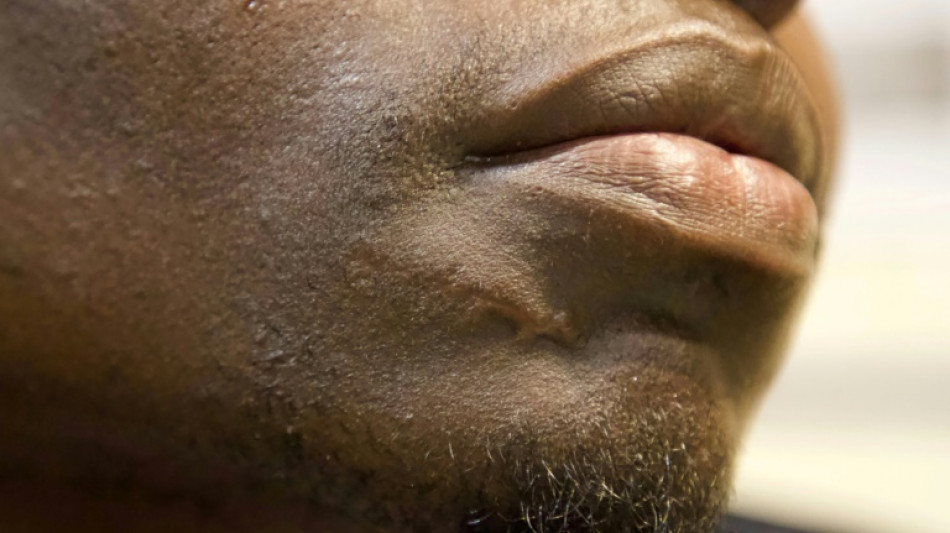
Transit and 'torture': Rescued migrants recount Libya horrors / Photo: Alexandros Kottis - AFP

 Araujo says too soon to talk about permanent Liverpool move

 US wants to be 'strong partner' for central Asia: Rubio

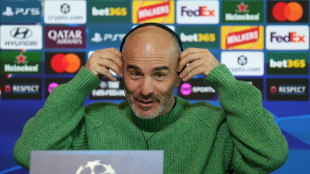
 'Special' to face friend Perez in Champions League, says Liverpool's Iraola
 Monitor says Indonesia fires have burned nearly two million hectares

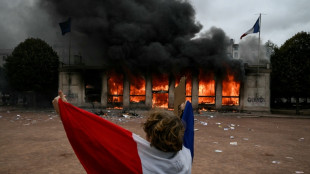
 French PM says could declare state of emergency over unrest 'if needed'
 Albanian PM warns of 'red line' after days of unrest
 Putin, Xi and Trump could meet at APEC summit: Kremlin
 Microsoft exits data centre deal in blow to UK AI ambitions

 European stocks retreat as France violence spreads

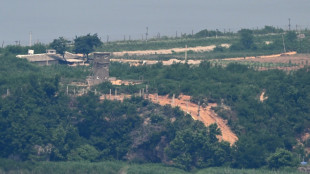 North Korea warns 'grave situation' prevailing along border
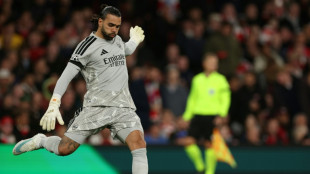 Raya proud of Arsenal's 'incredible' reaction after third straight win

 Indonesia fires have burned nearly two million hectares: monitor
 Australian lawmaker 'critically' hurt in attack, officials say
 Indonesia fires burned over 1.9 mn hectares through September: monitor
 Asian tech stocks mixed after Wall St losses, eyes on earnings
 China's third-quarter growth narrowly beats forecasts
 Asian stocks start week on back foot, tracking tech-led Wall St losses
 China growth narrowly beats forecasts

 Faith and fury: Texas Senate rivals offer contrasting visions
 Women await justice for police killings in Brazil
 The painstaking task of cataloguing the world's species

 Nations seek reset at UN talks as nature goals off track

 Rubio seeks to strengthen US foothold in Central Asia
 LeBron joins 76ers to chase one more NBA title at age 41

 Rays one win from World Series return after downing Guardians

On a medical ship off the Italian coast, rescued migrants are colouring in a map of Africa, where many started their perilous journeys toward Europe.
The countries are brightly coloured in yellow, green, purple and red. Libya however, a common transit country from sub-Saharan Africa into Italy, is black.
For many of the migrants, the country evokes painful memories: abuse, torture and trafficking.
Libya has been singled out as a dangerous country for migrants, and a UN report last year revealed "crimes against humanity" inflicted on the most vulnerable.
For some aboard the Geo Barents ship run by medical charity Doctors Without Borders (MSF), the dangers are all too familiar.
"I was tied up, beaten, electrocuted," said 25-year-old Eritrean refugee John, who gave only one name.
He explained how he fled authoritarian Eritrea in 2018, crossing through Ethiopia and Sudan before arriving in the southeastern Libyan city of Al Kufra four years ago.
"I was abducted from Al Kufra and sold to traffickers. And then to others," he told AFP.
He eventually escaped, boarding a dinghy headed for Italy, from which he was rescued in April by the Geo Barents.
He like others has received medical care on board the ship, where migrants also spend time doing activities like the map colouring exercise.
John colours Libya in black to signify the pain he experienced during his time there.
"There is no government in this country," he said. "No laws."
- 'Lots of beatings' -
John is one of the tens of thousands of migrants who attempt the dangerous and often deadly crossing from Libya to Italy every year. More than 31,000 made the journey by sea last year, according to UN figures.
Many stream to Libya from elsewhere in Africa, boarding precarious vessels to cross the Mediterranean toward Italy.
AFP could not independently verify details of John's account, but MSF doctors on the Geo Barents say many migrants arrive with chilling reminders of their time in Libya.
"We see a lot of them with actual physical evidence of violence, injuries that cause long-term problems," MSF doctor Mohammed Fadlalla told AFP.
"We commonly see bullet wounds, burns, evidence of electrocution, lots of beatings."
Many migrants land in the hands of traffickers in Libya who demand hefty sums in exchange for their freedom. Attempts to escape can be a death sentence.
The Geo Barents helps those lucky enough to flee, trawling the waters of the central Mediterranean near Italy and Libya in search of migrant boats.
It stops in Italian or international waters -- never Libyan waters -- and takes in migrants in need, sometimes for as long as two weeks, before they are sent to Italy.
Fadlalla said medics on the ship often use scars or bruises to piece together what happened to the migrants -- a kaleidoscope of trauma used to compile accounts of human rights violations.
Others need extensive mental and emotional support.
"A lot of these survivors who have suffered this torture have psychological difficulties as well," said Fadlalla.
"Fear, difficulty sleeping, flashbacks, anxiety, depression."
- 'Robbed, beaten' -
Libya, wracked by conflict since the 2011 overthrow of dictator Moamer Kadhafi, has gained a notorious reputation for migrants on the dangerous route to Europe.
A UN fact-finding mission last year found some of the abuses faced by migrants there could be classified as "crimes against humanity".
"Violations against migrants are committed on a large scale by state and non-state actors, with a high level of organisation and with the encouragement of the state," one of the UN experts, Chaloka Beyani, wrote.
Lawyer Jelia Sane, who specialises in refugee law and human rights, condemned European governments for intercepting migrant boats coming from Libya, urging them to offer safe and legal routes.
"The evidence of the plight of refugees and migrants in Libya can no longer be ignored," said Sane, from London's Doughty Street Chambers.
And for those who have been tortured, access to "full rehabilitation services, as required by international law", should be offered, she said.
Senegalese migrant Eladj Ndiaye still bears the evidence of such abuse.
The 19-year-old has scars on his scalp and under his lip from when he was beaten with a glass bottle by his captors. They held him for several weeks in Libya, he said.
"Everywhere in Libya you are robbed, you are beaten," he added.
Despite the known risks -- and mounting evidence of abuses -- migrants continue to trek toward Europe.
Eritrean refugee John knew what he could face, but went anyway.
"We know it's dangerous. But we want to join Italy," he said.
S.Abdullah--SF-PST