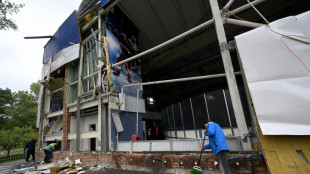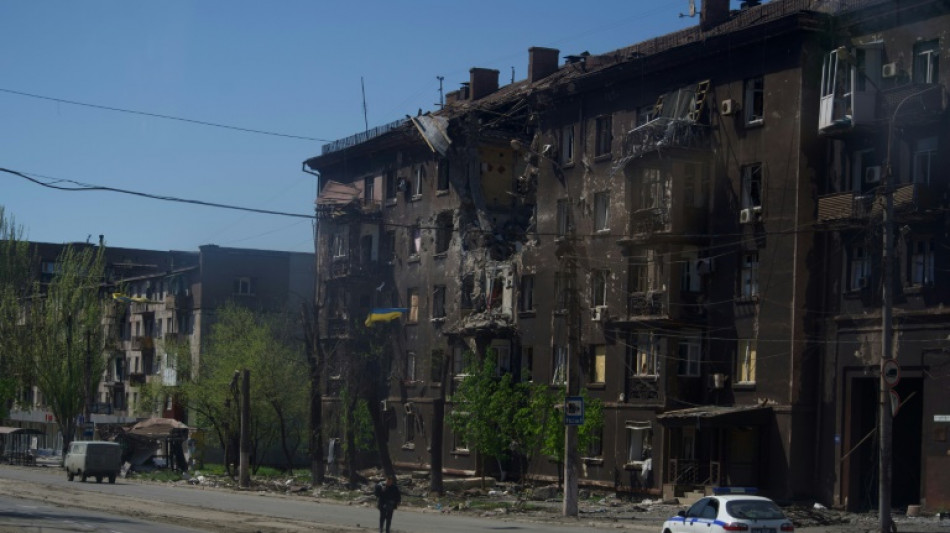
In devastated Mariupol, a daily struggle to survive / Photo: Andrey BORODULIN - AFP

 Araujo says too soon to talk about permanent Liverpool move

 US wants to be 'strong partner' for central Asia: Rubio

 'Special' to face friend Perez in Champions League, says Liverpool's Iraola
 Monitor says Indonesia fires have burned nearly two million hectares

 French PM says could declare state of emergency over unrest 'if needed'
 Albanian PM warns of 'red line' after days of unrest

 Putin, Xi and Trump could meet at APEC summit: Kremlin
 Microsoft exits data centre deal in blow to UK AI ambitions

 European stocks retreat as France violence spreads

 North Korea warns 'grave situation' prevailing along border
 Raya proud of Arsenal's 'incredible' reaction after third straight win

 Indonesia fires have burned nearly two million hectares: monitor

 Australian lawmaker 'critically' hurt in attack, officials say

 Indonesia fires burned over 1.9 mn hectares through September: monitor
 Asian tech stocks mixed after Wall St losses, eyes on earnings
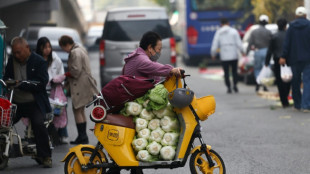
 China's third-quarter growth narrowly beats forecasts
 Asian stocks start week on back foot, tracking tech-led Wall St losses
 China growth narrowly beats forecasts

 Faith and fury: Texas Senate rivals offer contrasting visions

 Women await justice for police killings in Brazil
 The painstaking task of cataloguing the world's species

 Nations seek reset at UN talks as nature goals off track

 Rubio seeks to strengthen US foothold in Central Asia

 LeBron joins 76ers to chase one more NBA title at age 41

 Rays one win from World Series return after downing Guardians

In another life, not so long ago, Inna was a hairdresser. Now she spends her days chasing down food and water, in a struggle to simply survive in the Russian-held Ukrainian city of Mariupol.
"You run to find a water distribution point. After, to where they are handing out bread. Then you line up to get rations," said the 50-year-old, holding two empty water cans.
"You run all the time."
After a weeks-long siege, Russian and pro-Moscow separatist forces took almost complete control of Mariupol in southeastern Ukraine in mid-April.
The city is now largely calm, AFP journalists saw on a recent press tour organised by Russian forces, apart from the muffled rumble of explosions coming from the direction of the Azovstal steel plant, the last holdout of Ukrainian forces.
After living for weeks in underground shelters or shut in at home, Mariupol's residents are emerging to find their once-vibrant port city a devastated ruin.
In one eastern district, none of the nine-storey Soviet-era apartment blocks lining the streets are intact. The buildings' facades are charred and torn apart by shelling, and some have collapsed entirely.
Shops have been looted and several freshly dug graves can be seen in the grassy alley that runs in the middle of a boulevard.
There is no running water, no electricity, no gas, no mobile network and no internet -- daily life is now dominated by the hunt for the most basic of essentials.
On the day AFP was in the city, separatist authorities organised aid distribution in front of the pockmarked walls and shattered windows of a local school.
- 'We don't live, we survive' -
Some 200 people massed behind a military truck as volunteers handed out food packages -- pasta, oil, some preserves -- marked with the letter "Z" that symbolises support for Russia's military campaign in Ukraine. Not far away, two tanker trucks distributed drinkable water.
An old man with narrowed eyes pushed a rickety pram filled to the brim with cans and parcels.
Residents gathered in front of a building at improvised gas stoves heating pots and teapots, the acrid smell rising into the air. Beside them, clothes were steeping in two big blue barrels turned into makeshift washing machines.
"We don't live, we survive," said Irina, a 30-year-old video game designer lost inside a grey sweatshirt, the little face of a Yorkshire Terrier sticking out from her backpack.
Many residents of the city -- home to about 450,000 people before the conflict -- fled as Russian forces advanced.
It is unclear how many remain but those left behind now see little hope of being able to leave.
"I would like to go, but where?" asked Kristina Burdiuk, a 25-year-old pharmacist heading home with her two young girls, each hugging a large loaf of bread to her chest.
"There is nothing left" elsewhere in Ukraine, she said, and "there are already so many" Ukrainians in Poland. Russia, she said simply, is not an option.
Burdiuk said she saw cars carrying families riddled with bullets when they tried to escape the city at the start of the siege. She does not know who shot them.
So she prefers to stay in Mariupol, with her husband, mother and grandmother. She plans to take up offers of work from the new authorities, clearing up rubble, removing bodies or helping with demining -- the salary now paid in Russian rubles.
"I am ready to do anything," she said.
- Anger and frustration -
Irina, the video game designer, said she cannot work without the internet or phone lines and -- far worse -- cannot reach her loved ones outside the city.
She worries about her twin sister who, the last she heard, was in the capital Kyiv.
Her only sources of information are a pro-Russian channel she can hear on a neighbour's battery-powered radio, or the rumours that spread among neighbours.
The lack of reliable news and continued uncertainty have left the city boiling with anger and frustration.
During the aid distribution, a woman of around 60 began questioning an official and soon a group formed around him.
"When will we get our pensions? When will the schools re-open? What about the shops?" they asked.
"We are doing our best," said the official, dressed in a camouflage uniform and military cap. "The priority is to ensure security and clean up."
Despite the presence of several armed soldiers, a young man exploded: "We asked you concrete questions, give us concrete answers!"
As she prepared to head home from the aid distribution point with food and water, Irina wanted to believe "the worst is over".
She hopes she can "hold on a few more weeks, a few months, until the situation gets better."
Most of all, she wants communications restored so she can reach out to her twin.
"I want to tell her: 'I am alive, your sister is alive.'"
R.Halabi--SF-PST