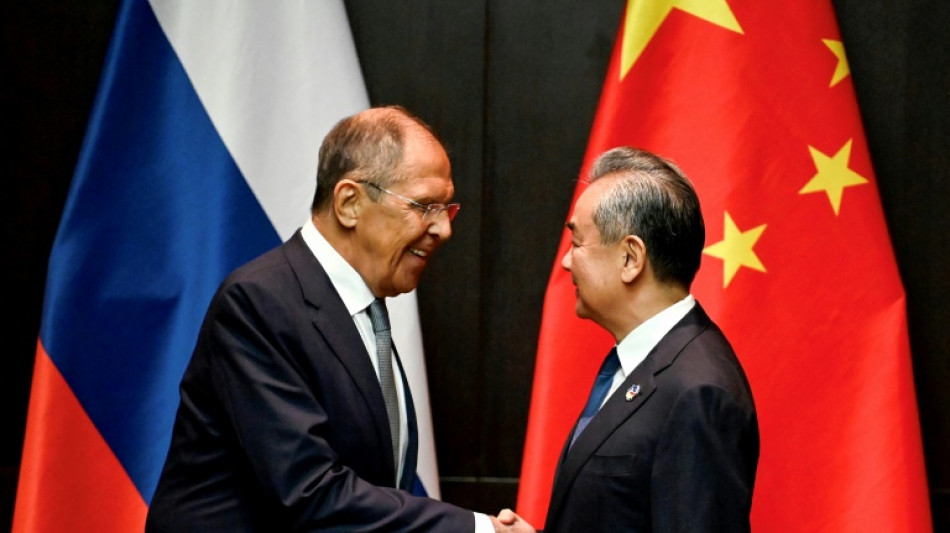
China, Russia say to counter 'extra-regional forces' in SE Asia / Photo: TANG CHHIN Sothy - AFP

 مطالبات برلمانية أمريكية لماسك بالاحتفاظ بسجلات استخدام أوكرانيا لشبكة ستارلينك

 DJ Chaia Brings 'Yiddishland' Sound to Capital Region with Kleztronica Rave

 بطريرك القدس للاتين يهنئ المقدم رؤوف إميل بالإفراج عنه في منزله بالزبابدة

 أبو هولي والأسعد يبحثان مع الفصائل الفلسطينية في لبنان أزمة الكهرباء وحوكمة المخيمات

 Mkhwanazi and Former Ekurhuleni Officials to Face Court Over Blue Lights Scandal

 Metsola Urges EU Investment to Secure Global AI Leadership

 رئيس بنك نيويورك الفيدرالي يحذر من استمرار رفع الفائدة للسيطرة على التضخم
China and Russia's foreign ministers met their Southeast Asian counterparts Friday after vowing to counter "extra-regional forces", a day before Washington's top diplomat was due to arrive.
Wang Yi and Sergei Lavrov were attending a three-day meeting of the 10-member Association of Southeast Asian Nations (ASEAN) bloc in the Laos capital Vientiane.
Both held talks with counterparts from the bloc, while Wang also met with new British Foreign Secretary David Lammy.
On Thursday Wang and Lavrov agreed to work together in "countering any attempts by extra-regional forces to interfere in Southeast Asian affairs", according to Moscow's foreign ministry.
They also discussed implementing "a new security architecture" in Eurasia, Lavrov said in a statement, without elaborating.
According to a readout from Chinese state news agency Xinhua, Wang said Beijing was "ready to work with Russia to... firmly support each other, safeguard each other's core interests".
China is a close political and economic ally of Russia, and NATO members have branded Beijing a "decisive enabler" of Moscow's war in Ukraine.
US Secretary of State Antony Blinken is expected to arrive in Vientiane on Saturday morning for talks with ASEAN foreign ministers.
Blinken has made Washington's alliances in Asia a top foreign policy priority, with the aim of "advancing a free and open" Indo-Pacific -- a veiled way of criticizing China and its ambitions.
But Blinken shortened his Asia itinerary by a day to be present for Thursday's White House meeting between Biden and Israeli Prime Minister Benjamin Netanyahu.
Wang and Blinken will meet in Laos, a spokeswoman for Beijing's foreign ministry said, to "exchange views on issues of common concern".
- South China Sea dispute -
On Friday Wang met ASEAN foreign ministers and hailed Beijing's deepening economic ties with the region.
For the customary joint handshake, Wang stood next to Myanmar's representative Aung Kyaw Moe, permanent secretary to the foreign affairs ministry.
The ASEAN bloc has banned Myanmar's junta from high-level meetings over its 2021 coup and crackdown on dissent that have plunged the country into turmoil.
Lavrov also met ASEAN counterparts at the venue in Vientiane but did not take questions from journalists
ASEAN ministers are expected to issue a joint communique after the three-day meeting.
One diplomatic source said the joint communique is being held up by lack of consensus over the wording of the paragraphs on the Myanmar conflict and disputes in the South China Sea.
Beijing claims the waterway -- through which trillions of dollars of trade passes annually -- almost in its entirety despite an international court ruling that its assertion has no legal basis.
Several Southeast Asian countries have competing claims..
A.Suleiman--SF-PST