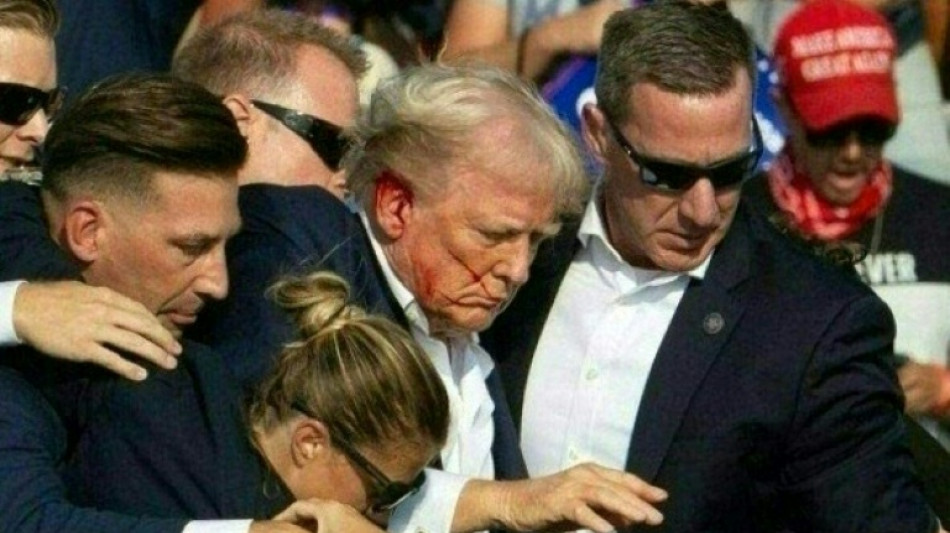
Bullet and the ballot box: violent US rhetoric comes 'home to roost' / Photo: Rebecca DROKE - AFP/File

 Austria 'ghetto' language classes leave children to repeat school
 S.African women runners arm themselves after string of killings
 'I felt embarrassed': Japan eSports whizz-kid, 11, wins Games gold

 Indonesia fires threatens critically-endangered orangutan: IUCN

 Bangkok declares flood disaster across city

 'World records not enough': North Korea weightlifters target Olympic gold rush

 Iran proposes Hormuz plan, Trump reportedly refuses
 El Nino rewrites the menu in the world's top restaurants
 Pope to hold giant mass on Champs-Elysees
 TikTok to pay Alabama $100 mn under pre-trial settlement

 Internationals take 7-3 Presidents Cup lead after foursomes sweep

 Brazil team returns to Colombian site of doomed jet crash

 Mbappe injured as Zidane wins on France debut, Italy lose on Mancini return
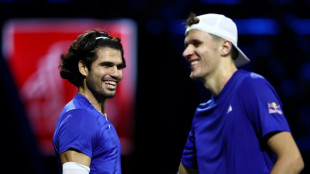
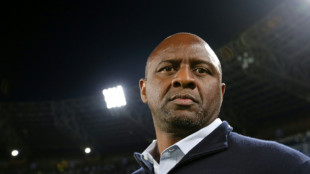 Senegal draw in Vieira debut, Nigeria survive scare as Cape Verde crash
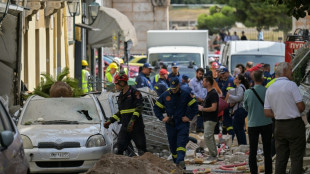
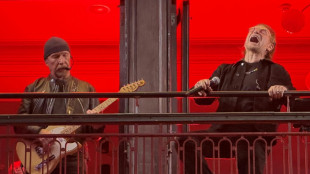 U2 performs surprise 50th anniversary gigs in Dublin
 Pope calls worshippers 'saints of France' after AI warning
 US court sides with Pentagon in Anthropic AI ban
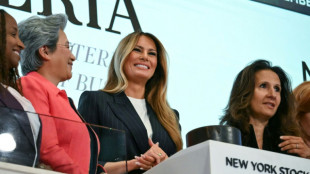 Wall Street stocks rise, greeting optimism over possible US-Iran deal
 NFL players chief raises concerns over pitch for Maracana game
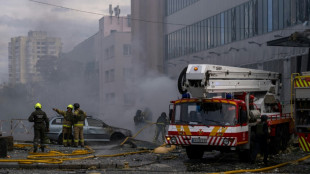 Daytime Russian attacks kill seven in Kyiv
 Spotting AI writing: how reliable are the detectors?
 French youth await pope after AI 'paradise of machines' warning
 Man City found guilty of Premier League charges, set to appeal: reports
 Embolo follows Xhaka out of Swiss squad over fake Covid documents
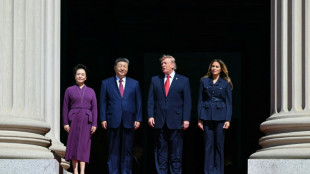 Trump, Xi inspect founding documents of US democracy to close summit

The attempted assassination of Donald Trump by a gunman at his Pennsylvania rally has confirmed the worst fears of public figures warning that an escalation in incendiary political rhetoric on all sides could lead to bloodshed.
US lawmakers and analysts have been voicing concern since the 2021 US Capitol riot that increasingly bellicose campaign language was becoming a worrying contusion on the US body politic ahead of November's presidential election.
The danger was vividly illustrated in 2022, when then-House speaker Nancy Pelosi's husband was attacked with a hammer by a far-right conspiracy theorist who wanted to hold the Democratic leader hostage and "break her kneecaps."
The political affiliations of Saturday's shooter, identified as 20-year-old Thomas Matthew Crooks, were not immediately clear -- but analysts and politicians immediately pointed the finger at extreme political discourse.
"For weeks Democrat leaders have been fueling ludicrous hysteria that Donald Trump winning re-election would be the end of democracy in America," House Republican Majority Leader Steve Scalise, who was seriously wounded in a mass shooting at a congressional sports event in 2017, said on X.
"Clearly we've seen far left lunatics act on violent rhetoric in the past. This incendiary rhetoric must stop."
Senior Trump campaign aide Chris LaCivita assailed the language of "leftist activists, Democrat donors and even Joe Biden."
While Ajamu Baraka, Green Party candidate Jill Stein's running mate in 2016, suggested Democratic rhetoric might have led the gunman to see it as his "patriotic duty to eliminate an existential threat to the nation."
"The chickens have really come home to roost," he posted on X.
- Private security -
What none of the three acknowledged was that Trump himself has been a major architect of the coarsening in US political discourse in recent years.
Many of Trump's targets in Congress and the government -- from Republican Senator Mitt Romney to retired top government scientist Anthony Fauci -- have disclosed having to take on private security after threats from Trump's supporters.
The former US president sparked fury last year when he implied that the country's top military officer should be executed, and joked about the Pelosi hammer attack.
Trump's exhortations to violence are nothing new -- he suggested that protesters should be "roughed up" at a rally in 2016, and that looters should be shot during the 2020 racial protests over the police murder of George Floyd.
He has also repeatedly described the attorneys leading the multiple civil and criminal cases he faces as "monster," "deranged" and "psycho."
And, of course, many argue he incited the deadly Capitol riot on January 6, 2021, when he exhorted his followers to "fight like hell" shortly before they stormed the seat of US government, leaving five people dead.
Republicans have in the past accused Democrats of overreacting to figurative language and ignoring leftist aggression, such as harassment of conservative Supreme Court justices and the 2017 shooting that wounded Scalise.
Still, law enforcement agencies say that while threats have proliferated from every corner, right-wing violence is the bigger worry.
- 'Attack on our democracy' -
Discourse that was once taboo is now commonplace on the far right, with Republican flamethrowers in Congress incorporating violent language and imagery into their stump speeches.
Threats against members of Congress of all stripes reached a record high of 9,625 in 2021, according to data provided by the Capitol Police, compared with just 3,939 in 2017.
Robert Pape of the University of Chicago has conducted several polls on political violence since the Capitol assault. In his latest last month, 10 percent of respondents said the use of force was "justified to prevent Donald Trump from becoming president."
"The shooting of former President Trump is a consequence of such significant support for political violence in our country," he told AFP.
"We also need to worry about threat in retribution to President Biden. Our survey shows seven percent of American adults -- 18 million -- support force to restore Trump to the presidency, half of whom own guns."
Political analyst Charlie Kolean called for Americans to stand together "in condemning such violence and work towards ensuring the safety and security of all public officials."
"Today's events are a stark reminder of the threats our leaders face," Kolean, the chief strategy officer at conservative-leaning political consultancy RED PAC, told AFP.
"An attack on the presidential candidate is an attack on our democracy."
A.AbuSaada--SF-PST