
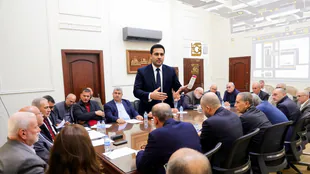
Mongolian PM declares victory in polls dominated by corruption, economy / Photo: Hector RETAMAL - AFP

 BingX: Major Announcement of Far-Reaching Significance

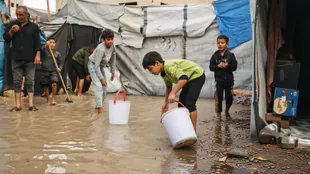 أونروا تحذر من أزمة إنسانية في غزة بسبب القيود على الإغاثة
 Big Brother’s Omar El Mayer Addresses Backlash, Confirms Relationship with Rhianna Collins

 Alberta Unveils New High School Graduation Requirements to Increase Student Choice
 إصابة شاب برصاص الاحتلال في بلدة جبع جنوب جنين
 Sixers Face Pacers and Nets on Back-to-Back; Embiid and James Availability in Question
 Daily Horoscope for November 14, 2026: Astrological Predictions for All Zodiac Signs
 TK Maxx Beauty Gift Sets Offer Alternative to Christmas Candles

 Luciano Pierre White Welcomes Daughter Paloma Blu
Mongolian Prime Minister Luvsannamsrain Oyun-Erdene declared victory early Saturday in parliamentary elections, after a contest dominated by deepening public anger over corruption and the state of the economy.
People across the vast, sparsely populated nation of 3.4 million, sandwiched between China and Russia, voted Friday to elect 126 members of the State Great Khural.
With 100 percent of votes counted by machine, the prime minister told a press conference in the capital Ulaanbaatar a few hours after polls closed that his ruling Mongolian People's Party had won a majority of seats.
"According to the pre-results, the Mongolian People's Party has 68 to 70 seats," he said.
The votes are also being counted by hand to ensure accuracy and an official result was expected on Saturday.
Results tallied by local media outlet Ikon based on official data also showed the MPP winning 68 seats, with the main opposition Democratic Party winning 42.
The minor anti-corruption HUN party won eight, Ikon reported.
Voter turnout was 69.3 percent nationally, a screen at the country's Electoral Commission headquarters showed.
Tsagaantsooj Dulamsuren, a 36-year-old cashier pregnant with her fourth child, told AFP that the election offered her a chance to "give power to the candidates you really want to support".
"I want lawmakers to provide more infrastructure development... and more jobs in the manufacturing industry for young people," she said outside a polling station at a hospital near the capital.
Analysts had expected the MPP to retain the majority it has enjoyed since 2016 and govern for another four years.
They say the party can credit much of its success to a bonanza over the past decade in coal mining that fuelled double-digit growth and dramatically improved standards of living, as well as to a formidable party machine and a weak, fractured opposition.
Yet there is deep public frustration over endemic corruption, as well as the high cost of living and lack of opportunities for young people who make up almost two-thirds of the population.
There is also a widespread belief that the proceeds of the coal-mining boom are being hoarded by a wealthy elite -- a view that has sparked frequent protests.
- Broad spectrum -
The streets of Ulaanbaatar, home to almost half of Mongolia's population, were decked out with colourful campaign posters touting candidates from across the political spectrum, from populist businessmen to nationalists, environmentalists and socialists.
Parties are required by law to ensure that 30 percent of candidates are women in a country where politics is dominated by men.
Long lines snaked around corridors at a polling station in a school in downtown Ulaanbaatar, with many voters wearing traditional clothing.
Oyun-Erdene voted in a kindergarten in the capital, an AFP reporter saw.
The prime minister told local TV after casting his ballot that he hoped the election would "open a new page of trust and cooperation between the state and citizens".
Batsaikan Battseren, a 45-year-old community leader dressed in traditional Mongolian deel clothing, said he was urging people to vote.
"Our area's average participation is 60 percent," the former herder said at a polling station in rural Sergelen, an administrative division more than an hour's drive from the capital.
However, "young people from 18 to 30 years old don't go to vote", he said.
- 'We've done well' -
Mongolia has plummeted in Transparency International's Corruption Perceptions Index under Oyun-Erdene's premiership.
It has also fallen in press freedom rankings and campaigners say there has been a notable decline in the rule of law.
It remains popular, particularly among rural, older voters, and commands a sprawling, nationwide campaign apparatus.
R.Shaban--SF-PST