Nord Stream 2 pipeline: key card in West's hand against Russia

 Trump rejects international regulation of AI

 How is the EU approaching record fuel prices?

 Sri Lanka's Colombage strikes on debut as England dismissed for 265 in first ODI
 Hurricane Polo strengthens to top category 5 off Mexico

 11 hurt as teen opens fire outside school in western Turkey

 UN chief says 'Big Oil' treats atmosphere as open sewer

 Tunisia says 2026 summer hottest on record
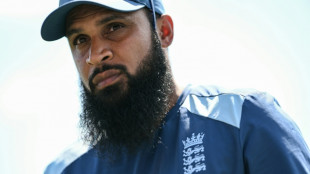 England's Rashid out of Sri Lanka ODIs with hand injury

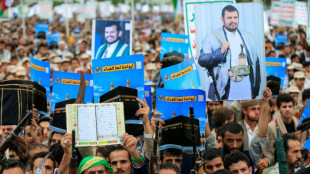 Houthis accuse Saudi Arabia of deadly strikes as thousands flee

 Stocks climb as oil slides, AI buzz returns

 India cricketers win in style as Afghan savours 'special' Games silver

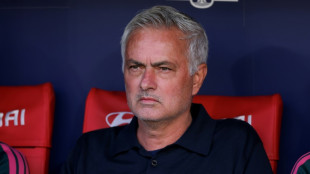 La Liga president hits out at Real Madrid refereeing 'conspiracy' claims
 MEXC Launches “Real Stocks, Real Friends” with Rewards for Bringing Friends to Wall Street

 Mbappe continues media push for Ballon d'Or recognition
 Stocks rise on AI buzz, oil prices cool

 India narrowly survive huge scare against minnows Japan

 Missing F-35 fighter parts 'not sensitive', says Australia minister

 Cambodia showcases scams crackdown with global conference

 Afghan cyclist who disguised herself as man wins Asian Games silver

 Typhoon Dujuan leaves four dead in Japan, 45,000 houses without power

 G7 leaders condemn Houthi strikes on Saudi Arabia

 Google data centre sparks protests in Austria

 Shin Ohashi: Junk food-loving teen and Japan's next big swimming hope

 Stocks rise on AI buzz, drop in oil prices
 China's robot dancers limber up for America's Got Talent final

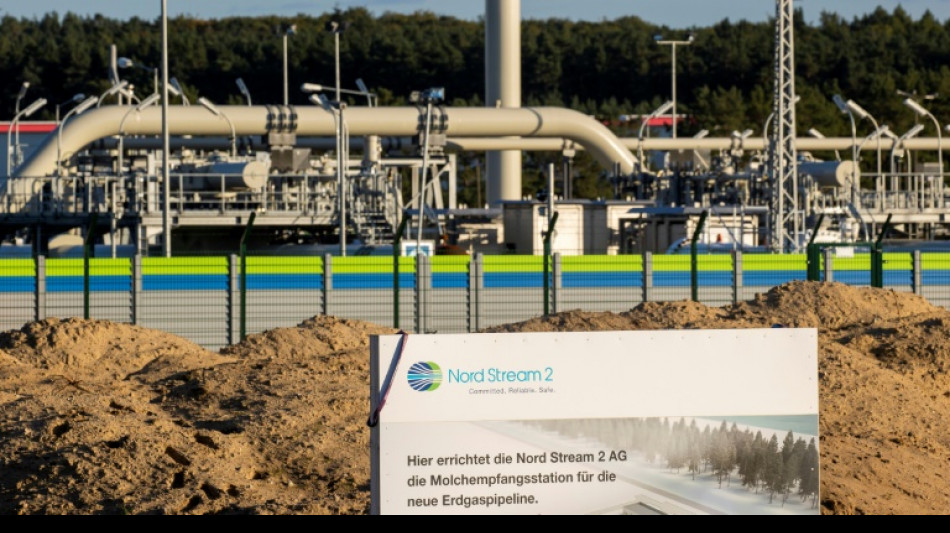
The Nord Stream 2 pipeline, set to double natural gas supplies from Russia to Germany, has become a key bargaining chip for the West in its bid to stop Moscow from invading Ukraine.
The pipeline, which Germany has defiantly pursued despite criticism from the United States and Eastern Europe, was completed last year but still requires regulatory approval.
Germany has now given a clear warning that it will not allow Nord Stream 2 to begin operating if Russia invades Ukraine, despite a severe energy crisis that has sent gas prices soaring in Europe.
Here is a look at the history of the pipeline, which critics say will increase Europe's dependence on Russian gas and Ukraine has described as a "geopolitical weapon".
- What is it? -
Running from Russia's Baltic coast to northeastern Germany, the 1,200-kilometre (745-mile) underwater Nord Stream 2 follows the same route as Nord Stream 1, which was completed over a decade ago.
Like its twin, Nord Stream 2 will be able to pipe 55 billion cubic metres of gas per year from Russia to Europe, increasing the continent's access to relatively cheap natural gas at a time of falling domestic production.
Russian giant Gazprom has a majority stake in the 10-billion-euro ($12 billion) project. Germany's Uniper and Wintershall, France's Engie, the Anglo-Dutch firm Shell and Austria's OMV are also involved.
The pipeline was completed in September 2021 but German authorities in November suspended the approval process, saying it needed to first become compliant with German law.
The operating company behind the project, Swiss-based Nord Stream 2 AG, said this week it had founded a German subsidiary as it presses ahead despite the rising diplomatic tensions.
- Why is it controversial? -
Nord Stream 2 bypasses Ukraine's pipeline infrastructure, depriving the country of around a billion euros annually in gas transit fees and, Kyiv fears, removing a key check on potential Russian aggression.
Ukraine, in conflict with Russia since Moscow's 2014 annexation of Crimea, also believes Nord Stream 2 will be used by Russia to exert political pressure.
In past disputes with Russia, Ukraine has had its gas supply cut off several times.
The US shares those concerns. As do several European nations, particularly Poland and eastern European countries wary of becoming too reliant on Moscow for energy security.
Analysts meanwhile disagree about Nord Stream's economic and environmental benefits.
A 2018 report by German think-tank DIW said the project was unnecessary and based on forecasts that "significantly overestimate natural gas demand in Germany and Europe".
- Why was Germany so keen? -
Europe's top economy imports around 40 percent of its gas from Russia and believes the pipeline has a role to play in the transition away from coal and nuclear energy.
Former chancellor Gerhard Schroeder serves as chairman of the Nord Stream's shareholders committee.
The previous German government under Angela Merkel deflected calls to abandon the project even as tensions rose with Russia over spying allegations and the poisoning and jailing of Kremlin critic Alexei Navalny.
Now, with energy prices soaring across Europe -- and Russia allegedly restricting existing gas supplies to put pressure on the West -- stopping Nord Stream 2 looks like a bigger risk than ever.
- What do other countries think? -
US President Joe Biden objects to Nord Stream 2, calling it a bad deal for Europe and a security risk.
US sanctions on Russian vessels laying the pipeline had long succeeded in delaying Nord Stream 2, angering Germany.
But Biden, eager to rebuild transatlantic ties after Donald Trump, last year unexpectedly waived sanctions on the Russian-controlled company behind the project.
Ukrainian President Volodymyr Zelensky, meanwhile, has long insisted that Nord Stream 2 poses a serious global security threat.
"We view this project exclusively through the prism of security and consider it a dangerous geopolitical weapon of the Kremlin," he said last year.
- What's the latest? -
With tensions with Moscow soaring over Russia's deployment of troops on the Ukraine border, the new German government under Chancellor Olaf Scholz, from the centre-left Social Democrats, has finally brought a change in Germany's stance on Nord Stream 2.
Scholz warned on his first day in office that there would be "consequences" for the pipeline if Russia makes a move on Ukraine.
This week, German Foreign Minister Annalena Baerbock told parliament that her government was "working on a strong package of sanctions" alongside allies that would include Nord Stream 2.
In Washington, a top official also voiced confidence that an invasion would stop Germany from activating the multibillion-dollar project.
"If Russia invades Ukraine, one way or another, Nord Stream 2 will not move forward," said Victoria Nuland, the undersecretary of state for political affairs.
F.AbuZaid--SF-PST