Military spending reaches record levels: report / Photo: Valentin RAKOVSKY - AFP

 US to auction deep sea mining leases off American Samoa

 Australian lawmaker hurt in car attack underwent surgery overnight: PM
 Japan launches rocket for potential world first Mars moon mission

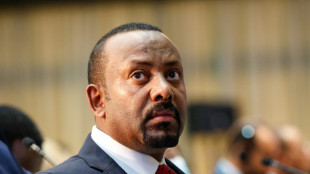 Ethiopia PM warns Eritrea of 'severe consequences' if supports enemies

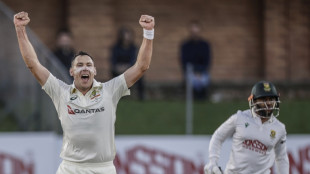 Boland grabs opportunity for Australia as South Africa struggle in second Test
 Ronaldo handed 30-day suspension: Portuguese federation
 France announces curfews as government grapples with unrest
 Boland sets pace as South Africa struggle
 Ukraine on back foot as Kremlin moots US, China meeting
 'Stay home!': Tourists find themselves in a France convulsed by protests
 Kenyan cult leader guilty on all charges over 191 starvation deaths
 Eagles star Hurts to miss rest of NFL season: reports
 Oil-rich Alberta votes on Canada breakup
 Israel announces arrests after West Bank settler attacks on Westerners
 Guehi insists players have 'trust and belief' in Man City after charges
 UN climate panel head wants swift end to deadlock over key scientific report
 PM calls for curfews in France as govt grapples with unrest
 Man City's Semenyo out for up to eight weeks
 Australian lawmaker critically hurt in 'violent' vehicle attack
 England women's coach Wiegman signs two-year contract extension
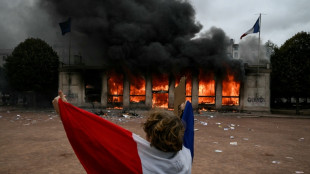 Louvre blocked as France grapples with unrest
 Bollywood actor Tiger Shroff shot at in Mumbai, three suspects held: police
 UN biodiversity summit opens with nature goals off track

 'Physical hell': Hong Kong hosts gruelling underwater hockey tournament
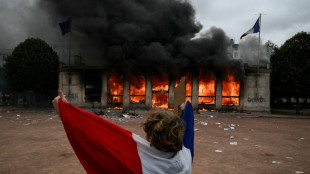 Police 'lost control' during French protests, says interior minister
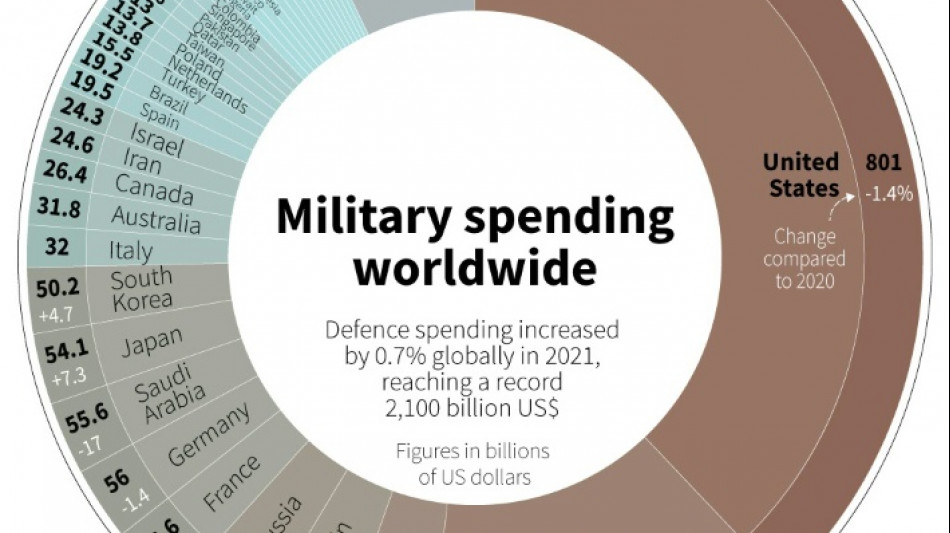
Global military spending rose again in 2021, setting new records as Russia continued to beef up its military prior to its invasion of Ukraine, researchers said Monday, predicting the trend would continue in Europe in particular.
Despite the economic fallout of the global Covid pandemic, countries around the world increased their arsenals, with global military spending rising by 0.7 percent last year, according to a report by the Stockholm International Peace Research Institute (Sipri).
"In 2021 military spending rose for the seventh consecutive time to reach $2.1 trillion. That is the highest figure we have ever had," Diego Lopes da Silva, senior researcher at Sipri, told AFP.
Russia's spending grew by 2.9 percent -- the third year of consecutive growth -- to $65.9 billion.
Defence spending accounted for 4.1 percent of Russia's gross domestic product (GDP), "much higher than the world average", and making Moscow the fifth largest spender in the world, Lopes da Silva said.
High oil and gas revenues helped the country boost military expenditure. Lopes da Silva noted that Russia saw a sharp uptick in spending towards the end of the year.
"That happened as Russia amassed troops alongside the Ukrainian border preceding of course the invasion of Ukraine in February," the researcher said.
- Tougher sanctions -
Whether Russia would be able to sustain its spending was difficult to predict, Lopes da Silva said, due to the wave of sanctions imposed by the West in response to the aggression in Ukraine.
In 2014, when Russia annexed Crimea, the country was also targeted with sanctions at the same time as energy prices fell, making it difficult to gauge how effective sanctions were on their own.
"Now... we have even tougher sanctions, that's for sure, but we have higher energy prices which can help Russia afford to maintain military spending at that level," Lopes da Silva said.
On the other side, Ukraine's military spending has risen by 72 percent since the annexation of Crimea. While spending declined by over eight percent in 2021 to $5.9 billion, it still accounted for 3.2 percent of Ukraine's GDP.
As tensions have increased in Europe, more NATO countries have stepped up spending.
Eight members countries last year reached the targeted two percent of GDP for spending, one fewer than the year before but up from only two in 2014, Sipri said.
Lopes da Silva said he expected spending in Europe to continue to grow.
The US, which far outspent any other nation with $801 billion, actually went against the global trend and decreased its spending by 1.4 percent in 2021.
- 'Technological edge' -
Over the past decade, US spending on research and development has risen by 24 percent while arms procurement has gone down by 6.4 percent.
While both decreased in 2021, the drop in research was not as pronounced, highlighting the country's focus "on next-generation technologies."
"The US government has repeatedly stressed the need to preserve the US military's technological edge over strategic competitors," Alexandra Marksteiner, another researcher at Sipri, said in a statement.
China, the world's second largest military spender at an estimated $293 billion, boosted its expenditure by 4.7 percent, marking the 27th straight year of increased spending.
The country's military buildup has in turn caused its regional neighbours to beef up their military budgets, with Japan adding $7 billion, an increase of 7.3 percent -- the highest annual increase since 1972.
Australia also spent four percent more on its military, reaching $31.8 billion in 2021.
India, the world's third largest spender at $76.6 billion, also increased funding in 2021, but by a more modest 0.9 percent.
The UK took over the number four spot, with a three percent increase in military spending to $68.4 billion, replacing Saudi Arabia which instead decreased spending by 17 percent to an estimated $55.6 billion.
I.Yassin--SF-PST