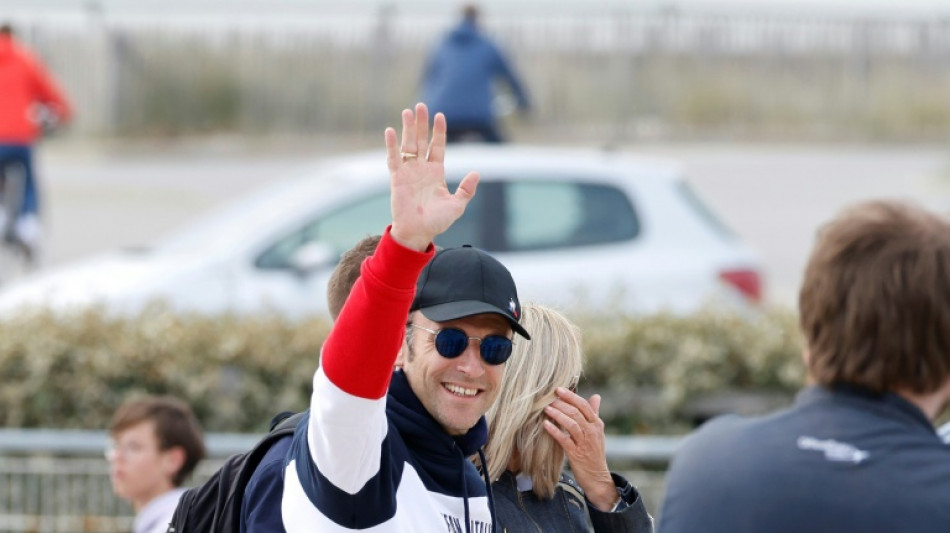
Macron battles far-right Le Pen for French presidency / Photo: Ludovic MARIN - AFP

 US to auction deep sea mining leases off American Samoa

 Australian lawmaker hurt in car attack underwent surgery overnight: PM
 Japan launches rocket for potential world first Mars moon mission

 Ethiopia PM warns Eritrea of 'severe consequences' if supports enemies

 Boland grabs opportunity for Australia as South Africa struggle in second Test

 Ronaldo handed 30-day suspension: Portuguese federation
 France announces curfews as government grapples with unrest

 Boland sets pace as South Africa struggle
 Ukraine on back foot as Kremlin moots US, China meeting
 'Stay home!': Tourists find themselves in a France convulsed by protests
 Kenyan cult leader guilty on all charges over 191 starvation deaths
 Eagles star Hurts to miss rest of NFL season: reports
 Oil-rich Alberta votes on Canada breakup

 Israel announces arrests after West Bank settler attacks on Westerners
 Guehi insists players have 'trust and belief' in Man City after charges
 UN climate panel head wants swift end to deadlock over key scientific report
 PM calls for curfews in France as govt grapples with unrest
 Man City's Semenyo out for up to eight weeks

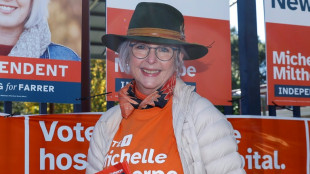 Australian lawmaker critically hurt in 'violent' vehicle attack
 England women's coach Wiegman signs two-year contract extension
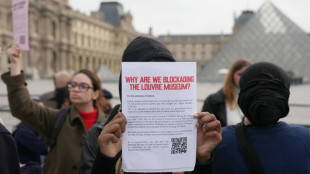
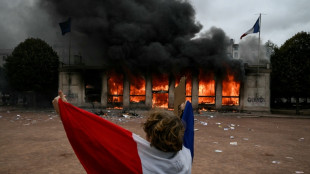 Louvre blocked as France grapples with unrest
 Bollywood actor Tiger Shroff shot at in Mumbai, three suspects held: police
 UN biodiversity summit opens with nature goals off track
 'Physical hell': Hong Kong hosts gruelling underwater hockey tournament
 Police 'lost control' during French protests, says interior minister
France votes on Sunday in presidential elections facing a stark choice between centrist President Emmanuel Macron and challenger Marine Le Pen, after a fractious campaign that has seen the French far-right come its closest yet to winning power.
Macron goes into the election with a reasonable lead in polls over Le Pen, an advantage he consolidated in the frenetic final days of campaigning, including a no-holds-barred performance in the pre-election debate.
But analysts have warned Macron, who rose to power in 2017 aged 39 as the country's youngest ever modern leader, can take nothing for granted with turnout crucial to ensuring victory.
He must above all ensure that left-wing voters who backed other candidates in the first round on April 10 hold their noses and back the centrist former investment banker to stop Le Pen winning power.
Polls in mainland France will open at 0600 GMT on Sunday and close 12 hours later, immediately followed by projections that usually predict the result with a degree of accuracy.
Some 48.7 million French are eligible to vote.
To take account of the time difference with mainland France, polls opened earlier in overseas territories, home to almost three million French.
The first vote in the election was cast midday Saturday Paris time by a 90-year-old man in the tiny island territory of Saint Pierre and Miquelon off the northern coast of Canada.
Polls subsequently opened in France's islands in the Caribbean and the South American territory of French Guiana, followed by territories in the Pacific and then Indian Ocean before the mainland joins.
- Turnout key -
Macron himself repeatedly made clear that the complacency of stay-at-home voters precipitated the shocks of the 2016 polls that led to Brexit in Britain and Donald Trump's election in the United States.
Analysts say abstention rates could reach 26 to 28 percent, although the 1969 record for a second-round abstention rate of 31.1 percent is not expected to be beaten.
Far-left leader Jean-Luc Melenchon, who scored a close third-place finish in the first-round vote on April 10, has pointedly refused to urge his millions of followers to back Macron while insisting they must not cast a single vote for Le Pen.
Another factor is that elections are being held in the midst of the Easter school break in much of France.
According to Martial Foucault, director of the CEVIPOF political studies centre, the greater the abstention rate the more the gap will narrow between Macron and Le Pen, describing this as a "real risk" for the president.
Early turnout indications will be closely watched from the overseas territories, where average incomes are lower than in mainland France and which generally backed Melenchon in the first round.
- High stakes -
A Le Pen victory would send shockwaves across Europe. Left-leaning EU leaders including German Chancellor Olaf Scholz have pleaded with France to choose Macron over his rival.
The stakes are huge, with Macron pledging reform and tighter EU integration while Le Pen insists the bloc should be modified in what opponents describe as a "Frexit" by another name.
Macron has also bitterly opposed her plan to make it illegal to wear the Muslim headscarf in public.
They have also clashed on Russia, with Macron seeking to portray Le Pen as incapable of dealing with the invasion of Ukraine due to a loan her party took from a Russian-Czech bank.
Le Pen would become modern France's first far-right leader and first female president. Macron would be the first French president to win re-election in two decades since Jacques Chirac in 2002.
Polls have shown Macron with a lead of around 10 percentage points in an outcome much closer than in 2017, when the same candidates faced off.
Macron won then with 66 percent. The other far-right run-off challenge was in 2002 when Chirac crushed Marine Le Pen's father Jean-Marie with over 82 percent of the vote.
L.AbuAli--SF-PST