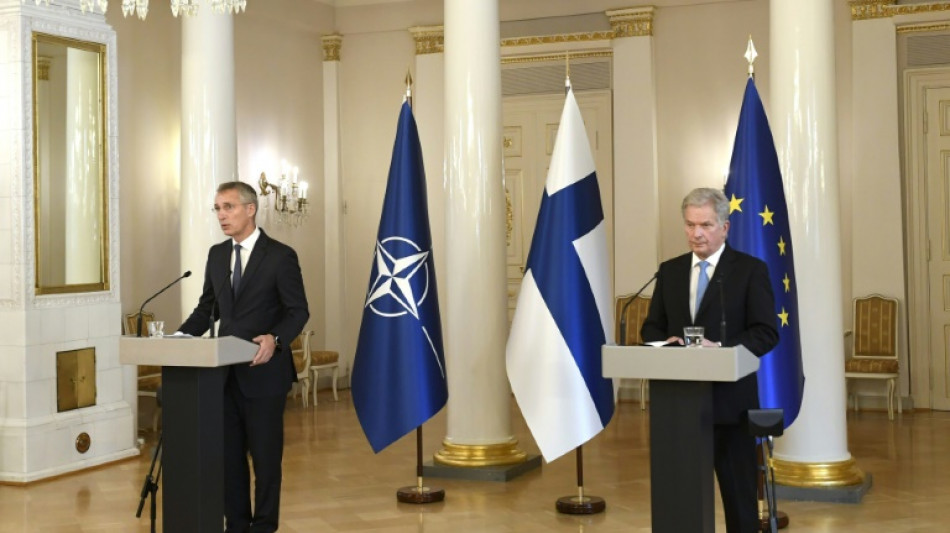
Finnish MPs open debate on joining NATO / Photo: Vesa Moilanen - Lehtikuva/AFP/File

 How recent controversies have rocked the US death penalty debate

 Adams facing long injury layoff as Rams' problems deepen
 US judge orders Saudi engineer held in OpenAI case
 Maddison sparkles as Spurs end Premier League winless run

 Maddison sparkles on Spurs return as win drought ends

 Trump says ready to meet with Putin and Xi in China
 The young lawmaker making Brazil's Lula 'king of the selfie'
 Christiane Amanpour to leave CNN after 43 years

 Ronaldo handed 30-day suspension after walking out on Portugal

 Netanyahu basks in Trump endorsement week before election

 Saudi airport closure disrupts life in kingdom's capital

 Ramaphosa tells South Africa to prepare for loss of US-Africa trade deal

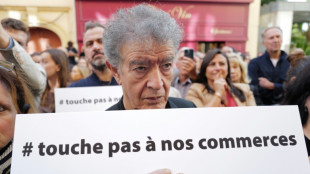 France presses resale platforms to remove 'stolen' goods after unrest

 Yamal v PSG: Ballon d'Or backdrop to Champions League showdown

 Araujo says too soon to talk about permanent Liverpool move

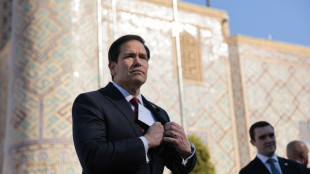 US wants to be 'strong partner' for central Asia: Rubio

 'Special' to face friend Perez in Champions League, says Liverpool's Iraola

 Monitor says Indonesia fires have burned nearly two million hectares
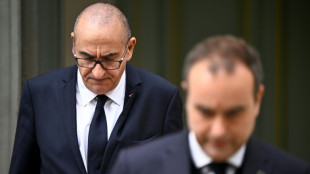 French PM says could declare state of emergency over unrest 'if needed'

 Albanian PM warns of 'red line' after days of unrest

 Putin, Xi and Trump could meet at APEC summit: Kremlin
 Microsoft exits data centre deal in blow to UK AI ambitions

 European stocks retreat as France violence spreads
 North Korea warns 'grave situation' prevailing along border

 Raya proud of Arsenal's 'incredible' reaction after third straight win

Finland's parliament Wednesday will open a debate on whether to seek NATO membership, after Russia's invasion of Ukraine sparked a surge in political and public support for joining the military alliance.
Despite Russia warning of a nuclear build-up in the Baltic should Finland and neighbouring Sweden join the military alliance, Finland's prime minister said that her country would now decide quickly on whether to apply for membership.
"I think it will happen quite fast. Within weeks, not within months," Prime Minister Sanna Marin said last week.
Sweden is also discussing whether to submit a membership bid following Russia's February 24 invasion.
The 200 MPs in Finland's Eduskunta last week received a government-commissioned "white paper" that assessed the implications of NATO membership alongside other security options, such as increased bilateral defence agreements.
The report did not make recommendations but stressed that without NATO membership, Finland enjoys no security guarantees despite currently being a partner to the alliance.
It said the "deterrent effect" on Finland's defence would be "considerably greater" inside the bloc, while noting that membership also carried obligations for Finland to assist other NATO states.
After two decades of public support for NATO membership remaining steady at 20-30 percent, the war sparked a surge among those in favour to over 60 percent, according to opinion polls.
"I used to be against joining NATO but because of this situation I'm now more in favour," said 24-year-old Sofia Lindblom, walking her dog in central Helsinki on Wednesday.
"Joining would bring a certain kind of security," she told AFP.
On nearby Senate Square, Vuokka Mustonen said the invasion of Ukraine has "utterly changed" her opinion in favour of NATO membership.
"I feel pretty safe, but quite worried," the 69-year-old said.
- 'Highly likely' -
Public statements gathered by Finnish media suggest half of Finland's 200 MPs now support membership, while only around 12 oppose.
Others say they will announce a position after detailed discussions.
The Finnish government said it hopes to build a parliamentary consensus over the coming weeks, with MPs due to hear from a number of security experts.
On Saturday, Finland's European Affairs Minister Tytti Tuppurainen said she believed a Finnish application was "highly likely."
"But the decision is not yet made," she told Britain's Sky News.
However, the Finns "seem to have already made up their mind and there is a huge majority for the NATO membership."
Many analysts predict Finland could submit a bid in time for a NATO summit in June.
Any membership bid must be accepted by all 30 NATO states, a process that could take four months to a year.
Finland has so far received public assurances from Secretary General Jens Stoltenberg that NATO's door remains open, and support from several members.
President Sauli Niinisto said Russia's response could include airspace, territorial violations and hybrid attacks, which Finnish NATO proponents believe the country is well prepared to withstand.
Finland declared independence in 1917 after 150 years of Russian rule.
During World War II, its vastly outnumbered army fought off a Soviet invasion, before a peace deal saw it cede several border areas to Moscow.
The Nordic nation remained neutral during the Cold War in exchange for Soviet guarantees not to invade.
After the fall of the Iron Curtain, Finland firmly aligned itself with the West, by joining the EU and becoming a close partner of NATO.
Successive Finnish leaders shied away from full membership believing that military non-alignment was the best way to maintain working relations with the Kremlin.
N.AbuHussein--SF-PST