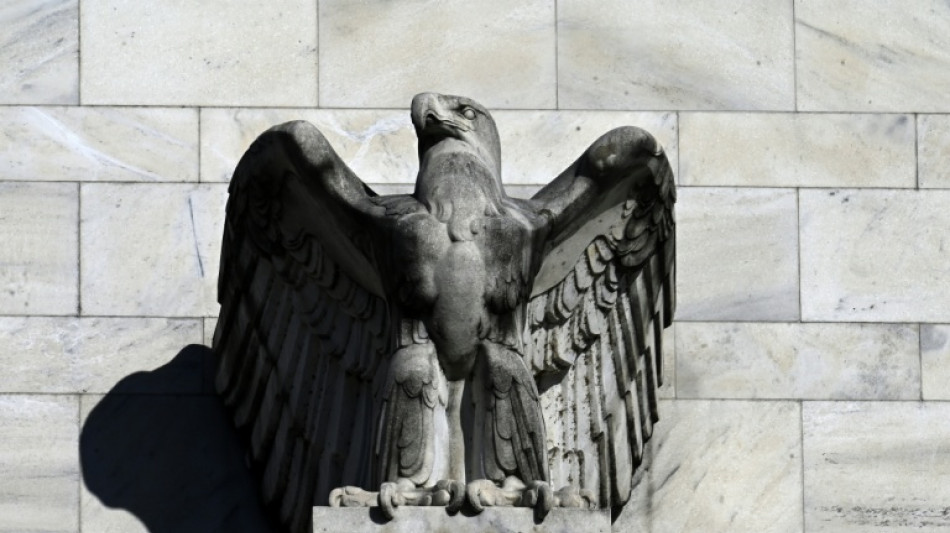
With Fed set to hike US rates, 'ultra-cheap money' era nears end

 Japan deploys bear cameras in moutains as attacks surge

 Germany's Infineon opens major chip plant as EU seeks tech autonomy

 Biggest ever Russian barrage on Kyiv kills at least 13

 EU top court upholds record 4.1 bn euro Google fine
 Italy name two debutants to face Japan in Nations Championship opener

 Wallabies' Schmidt rules out another coaching job
 India asks Meta to hold WhatsApp username rollout over fraud fears

 Deadly Russian barrage on Kyiv kills at least 13

 Next indirect US-Iran talks after Khamenei funeral: mediators

 Reviving Montenegro's 'ancient' olive tree

 Resource rich PNG leaving its Pacific people behind: World Bank

 Papal envoy presides over first Vietnam beatification rite

 LeBron James praises Balogun after 'Silencer' celebration

 Farrell names Leinster-heavy side to face Wallabies

 Most Asia markets down as tech firms take fresh blow

 South Korean school baseball team suspended over 'Tank Day' chants

 Ceuzany, Cape Verde's golden voice with volcanic emotion

 Balogun scores and sees red as US beat Bosnia 2-0

 EU top court to rule on record 4.1 bn euro Google fine

 'Job forever': trade schools are all the rage in the AI era

 Celtics reportedly trading Brown to Sixers in NBA blockbuster

 Kane saves England after DR Congo scare; Belgium comeback stuns Senegal

 Celtics to trade Jaylen Brown to 76ers for Paul George: report

 Streamex is making digital gold accessible

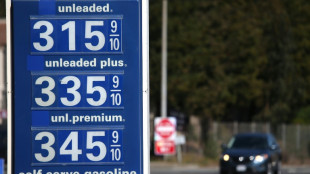 Mixed US auto sales in Q2 amid high gas prices

Consumers, companies and financial markets are bound to see borrowing costs rise as the Federal Reserve gets ready to hike rates after two years of loose policy meant to support the US economy during the pandemic.
At the conclusion of its policy meeting on Wednesday, Fed Chair Jerome Powell opened the door to raising rates in March, and most analysts expect a total of three hikes this year alone.
But the world's largest economy is showing signs of tighter lending conditions even before the Fed has acted.
Rates on 30-year fixed mortgages have jumped, from 2.77 percent in August to 3.56 percent on average, according to refinancing giant Freddie Mac.
"Borrowers feel that pain, much more so than looking at a broader context where three-and-a-half percent was a record low prior to the pandemic," said Greg McBride, chief financial analyst at Bankrate.com.
Corporations have also taken note, with JPMorgan Chase CFO Jeremy Barnum saying in a recent earning call, "Obviously, with higher rates, we expect things to be weaker next year" for mortgage volume.
On Wall Street, "a recalibration" is at work for "some of the most speculative parts of the market," according to Zachary Hill, strategist at Horizon Investments.
Since March 2020, individuals and institutional investors alike have aggressively bought and traded risky assets to take advantage of almost unlimited access to capital.
The Fed's moves to both raise rates and end its stimulus program of purchasing bonds and securities could take some of the steam out of markets.
- 'Meme stock' slowdown -
Stocks have reacted negatively to this paradigm shift, with pandemic darlings such as trading platform Robinhood down 85 percent from early August, and at-home fitness company Peloton 84 percent lower over the 12 months to January.
"Meme stocks" that saw surges fueled by social media interest are also experiencing a hangover, with video game store GameStop down 59 percent and movie theater chain AMC 78 percent below its high in June.
Cryptocurrencies, another poster child for speculative assets, have seen a severe correction over the last two months. Bitcoin is down nearly 30 percent, and ethereum has lost more than 40 percent.
"Crypto assets are highly sensitive to the fortunes of the stock market and have been propelled higher in this era of ultra-cheap money, so it's no surprise they have been hit with a severe case of the jitters as policy makers ponder their next move," wrote Susannah Streeter, an analyst at Hargreaves Lansdown.
At the opposite end of the risk spectrum, the US government has also been drawn to the mix, offering 1.72 percent on a recent 10-year Treasury note auction, versus 1.33 percent in September.
Credit conditions are already tightening for corporations, through bonds and loans.
"Markets have been quite addicted to zero interest rates and basically zero borrowing costs," said Kim Rupert, the managing director of global fixed income analysis for Action Economics.
However, she predicted demand will remain strong for the debt of companies with strong finances, which "will limit any real increase" in corporate bonds' yields.
- 'Dicey proposition' -
The transition could be tougher for less financially sound companies. So-called "junk bonds," issued by these corporations, "might be the worst asset class for now bond-wise," Rupert said.
With the dollar edging higher against major currencies, which can also be connected to the Fed's shift and could potentially be a drag for US exports, these bonds have become even less attractive, the analyst added.
After a record 2021, IPOs as well as mergers and acquisitions could be "a little bit more of a dicey proposition" until mid-2022, when the Fed will have provided a clearer picture of its time frame to normalization.
Although credit and funding conditions are expected to remain highly favorable in historic standards, economists warn that a miscalibrated tightening could trigger a US economic slowdown.
"I think the modus operandi of the Fed is to be as flexible as possible, given all of the uncertainty and challenges that face them in the coming months," said Bob Schwartz, senior economist at Oxford Economics.
O.Mousa--SF-PST