
Macron warns 'mortal' Europe needs stronger defence / Photo: Christophe PETIT TESSON - POOL/AFP

 تقارير إسرائيلية تكشف عن محاولات نتنياهو وزملائه للتأثير على نتائج الانتخابات عبر استهداف الفلسطينيين
 بنك القدس يتعهد بتأمين احتياجات مرضى السكري خلال أمسية توعوية في رام الله
 AI Job Losses at NAB, Qantas, Canva and Atlassian Signal Market Shift, Not Workforce Collapse

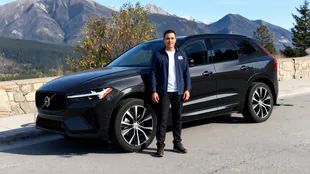 Owner Review: 2023 Volvo XC60 Recharge Exceeds Expectations for Calgary Driver
 Indiana River Otters Make Comeback After Decades of Conservation Efforts
 Tamil Film 'Arivu' Selected for 57th International Film Festival of India
 أسعار الديزل في الولايات المتحدة تنخفض دون 6 دولارات لأول مرة منذ شهرين
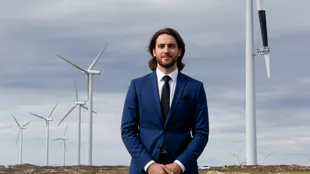 Why Wind Farms Paint One Turbine Blade Black to Protect Birds
French President Emmanuel Macron on Thursday warned that Europe faced an existential threat from Russian aggression, calling on the continent to adopt a "credible" defence strategy less dependent on the United States.
He described Russia's behaviour after its invasion of Ukraine as "uninhibited" and said it was no longer clear where Moscow's "limits" lay.
Macron also sounded the alarm on what he described as disrespect of global trade rules by both the United States and China, calling on the European Union to revise its trade policy.
"Our Europe, today, is mortal and it can die," he said.
"It can die and this depends only on our choices," Macron said, warning that Europe was "not armed against the risks we face" in a world where the "rules of the game have changed".
"Over the next decade... the risk is immense of (Europe) being weakened or even relegated," he added, also pointing to the risk of Iran obtaining a nuclear weapon.
- 'Not ambitious enough' -
Macron returned to the themes of a September 2017 speech he gave months after taking office, speaking at the same location -- the Sorbonne University in Paris -- but in a context that seven years on has been turned upside down by Brexit, Covid and Russia's invasion of Ukraine.
"The risk is that Europe will experience a decline and we are already starting to see this despite all our efforts," he warned, saying the continent was in a situation of "encirclement" from other regional powers.
"We are still too slow and not ambitious enough," he added, urging a "powerful Europe", which "is respected", "ensures its security" and regains "its strategic autonomy".
Macron champions the concept of European strategic autonomy in economy and defence, arguing that Europe needs to face crises like Russia's war against Ukraine without relying on the United States.
He urged Europe to be more a master of its own destiny, saying in the past it was over-dependent on Moscow for energy and Washington for security.
He said the indispensable "sine qua non" for European security was "that Russia does not win the war of aggression in Ukraine".
"We need to build this strategic concept of a credible European defence for ourselves," Macron said, adding Europe could not be "a vassal" of the United States.
- 'New paradigms' -
He said he would ask European partners for proposals in the next months and added that Europe also needed its own capacity in cyberdefence and cybersecurity.
Macron said preference should be given to European suppliers in the purchase of military equipment and backed the idea of a European loan to finance this effort.
Macron also called for a "revision" of EU trade policy to defend European interests, accusing both China and the United States of no longer respecting the rules of global commerce.
"It cannot work if we are the only ones in the world to respect the rules of trade -- as they were written up 15 years ago -- if the Chinese and the Americans no longer respect them by subsidising critical sectors."
Macron is, after Brexit and the departure from power of German chancellor Angela Merkel, often seen by commentators as Europe's number one leader.
But his party is facing embarrassment in June's European elections, ranking well behind the far-right in opinion polls and even risking coming third behind the Socialists.
The head of the governing party's list for the elections, the little-known Valerie Hayer, is failing to make an impact, especially in the face of the high-profile 28-year-old Jordan Bardella leading the far right and Raphael Glucksmann emerging as a new star on the left.
Macron only made a brief explicit reference to the elections at the end of his almost two-hour speech, even though analysts say he is clearly seeking to wade into the campaign.
"The response is not in timidity but in boldness" including at the June 9 European elections, he said. "The choice is not to do what we have always done but to adopt new paradigms."
He railed against far right nationalists in Europe who he said wanted to stay in the "European house" but "without paying the rent" or respecting the "cohabitation rules".
W.Mansour--SF-PST