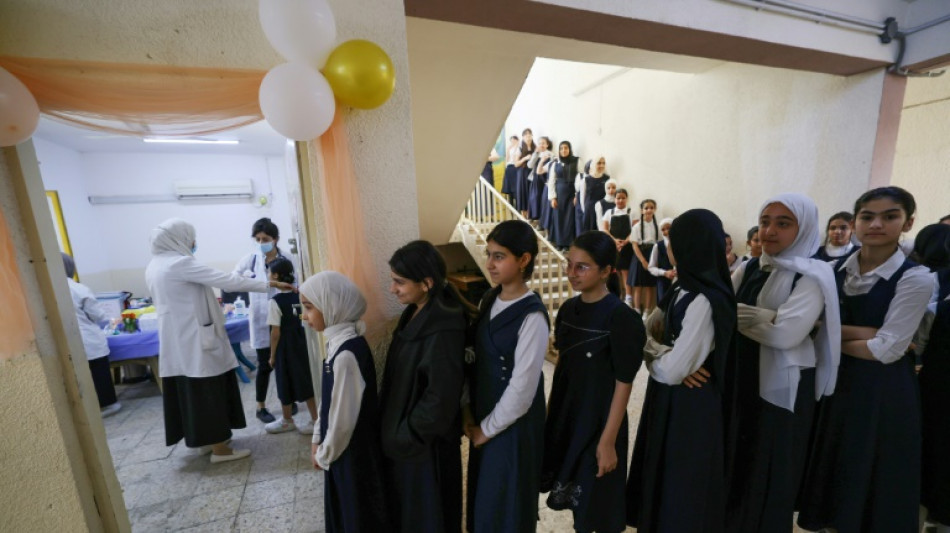
Vaccines saved at least 154 million lives in 50 years: WHO / Photo: AHMAD AL-RUBAYE - AFP

 Oil takes off again, Wall Street dips after Trump rejects Iran truce offer
 AlgoQuant Asset Management Selects Liquid Mercury to Enhance Digital Asset Trading Infrastructure
 UK to reopen refugee resettlement scheme to push 'safe' migration
 Pope urges Europe to help combat 'lies and deceit' in world affairs
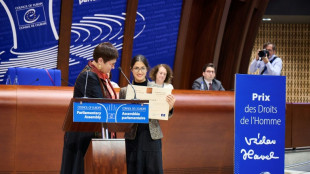 Iranian lawyer Nasrin Sotoudeh wins Council of Europe's rights prize
 French far-right's Bardella denies alleged 2013 antisemitic comments

 Oil up, Wall Street dips after Trump rejects Iran truce offer

 Gakpo withdraws from Netherlands squad

 SpaceX puts Starship megarocket in orbit for first time

 Iran denies link to suspected bomb plot at UK airbase used by US
 Ex-boss Mancini says City charges 'not my concern'

 Berlin Marathon winner Assefa finished race with torn Achilles
 Comedian convicted for Erdogan 'insult' but freed pending appeal

 French prosecutors seek two-year sentence for ex-minister Dati in graft case
 Eala makes fast start as weather and transport woes hit Asian Games
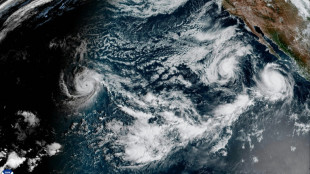 Hurricane Polo approaches Mexico, threatens severe damage
 Energy markets rally after Trump rejects Iran truce offer
 Japanese convenience store enlists Lady Gaga to bolster recruitment
 Seoul summons Ukraine envoy in row over North Korean POWs

 Ireland 'raised awareness worldwide' in Israel game: Hallgrimsson

 Colombian police capture wife, daughter of Ecuador drug lord
 More Asian Games woes as bus takes Pakistan team to wrong venue

 Radio frequencies vital to Earth observation must be protected: UN
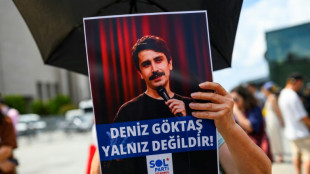 Comedian on trial for insulting Erdogan in standup show

 Women's Fashion Week kicks off in Paris

Global immunisation efforts have saved at least 154 million lives in the past 50 years, the World Health Organization said Wednesday, adding that most of those to benefit were infants.
That is the equivalent of six lives saved every minute of every year of the half century, the UN health agency said.
In a study published in the Lancet, WHO gave a comprehensive analysis of the impact of 14 vaccines used under the Expanded Programme on Immunisation (EPI), which celebrates its 50th anniversary next month.
Thanks to these vaccines, "a child born today is 40 percent more likely to see their fifth birthday than a child born 50 years ago", WHO chief Tedros Adhanom Ghebreyesus told reporters.
"Vaccines are among the most powerful inventions in history, making once-feared diseases preventable," he said.
"Smallpox has been eradicated, polio is on the brink, and with the more recent development of vaccines against diseases like malaria and cervical cancer, we are pushing back the frontiers of disease."
Infants accounted for 101 million of the lives saved through immunisation over the five decades, said the study.
"Immunisation was the single greatest contribution of any health intervention to ensuring babies not only see their first birthdays but continue leading healthy lives into adulthood," WHO said.
- 'Vaccines cause adults' -
Over 50 years, vaccines against 14 diseases -- diphtheria, Haemophilus influenza type B, hepatitis B, Japanese encephalitis, measles, meningitis A, pertussis, invasive pneumococcal disease, polio, rotavirus, rubella, tetanus, tuberculosis, and yellow fever -- had directly contributed to reducing infant deaths by 40 percent, the study found.
For Africa, the reduction in infant mortality was more than 50 percent, it said.
The vaccine against measles -- a highly contagious disease by a virus that attacks mainly children -- had the most significant impact.
That jab accounted for 60 percent of the lives saved due to immunisation, according to the study.
The polio vaccine means that more than 20 million people are able to walk today who would otherwise have been paralysed.
The study also showed that when a vaccine saves a child's life, that person goes on to live an average of 66 years of full health on average -– with a total of 10.2 billion full health years gained over the five decades.
"Vaccines cause adults," Tedros said.
WHO stressed that the gains in childhood survival showed the importance of protecting progress on immunisation.
It highlighted accelerating efforts to reach 67 million children who missed at least one vaccination during the Covid pandemic.
The UN health agency, along with the UN children's agency Unicef, the Gavi vaccine alliance and the Bill and Melinda Gates Foundation, on Wednesday launched a joint campaign called "Humanly Possible".
It is aimed at scaling up vaccination programmes around the world.
"By working together we can save millions more lives, advance equity and create a much healthier and more prosperous world," Violaine Michell of the Gates Foundation told journalists.
- Anti-vax threat -
But efforts to ensure broader vaccine coverage have increasingly run into anti-vax movements and conspiracy theories circulating on social media.
This was particularly clear during the Covid pandemic, but it has also taken its tolls on efforts to avert measles outbreaks.
"There has been a very significant backsliding in the use of the measles vaccine and the coverage that has been achieved in countries around the world, and that is resulting in outbreaks," WHO vaccine chief Kate O'Brien told journalists.
Lack of access to the vaccines was a major concern, said O'Brien, but part of the backsliding was attributable to "misinformation and anti-vax movements".
"The measles vaccine is a safe vaccine, and it's highly effective," she insisted, stressing the need to ramp up efforts against "one of the most infectious viruses that infect humans".
M.AbuKhalil--SF-PST