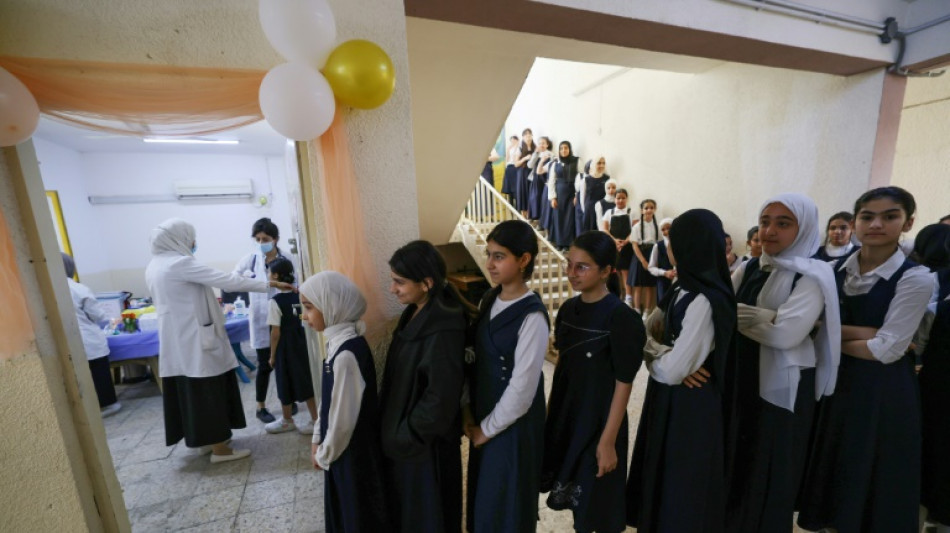
Vaccines save at least 154 million lives in 50 years: WHO / Photo: AHMAD AL-RUBAYE - AFP

 تقارير إسرائيلية تكشف عن محاولات نتنياهو وزملائه للتأثير على نتائج الانتخابات عبر استهداف الفلسطينيين

 بنك القدس يتعهد بتأمين احتياجات مرضى السكري خلال أمسية توعوية في رام الله

 AI Job Losses at NAB, Qantas, Canva and Atlassian Signal Market Shift, Not Workforce Collapse

 Owner Review: 2023 Volvo XC60 Recharge Exceeds Expectations for Calgary Driver

 Indiana River Otters Make Comeback After Decades of Conservation Efforts

 Tamil Film 'Arivu' Selected for 57th International Film Festival of India

 أسعار الديزل في الولايات المتحدة تنخفض دون 6 دولارات لأول مرة منذ شهرين

 Why Wind Farms Paint One Turbine Blade Black to Protect Birds
Global immunisation efforts have saved at least 154 million lives in the past 50 years, the World Health Organization said Wednesday, adding that most of those to benefit were infants.
That is the equivalent of six lives saved every minute of every year of the half century, the UN health agency said.
In a study published in the Lancet, WHO gave a comprehensive analysis of the impact of 14 vaccines used under the Expanded Programme on Immunisation (EPI), which celebrates its 50th anniversary next month.
"Vaccines are among the most powerful inventions in history, making once-feared diseases preventable," WHO chief Tedros Adhanom Ghebreyesus said in a statement.
"Thanks to vaccines, smallpox has been eradicated, polio is on the brink, and with the more recent development of vaccines against diseases like malaria and cervical cancer, we are pushing back the frontiers of disease," he said.
"With continued research, investment and collaboration, we can save millions more lives today and in the next 50 years."
The study said infants accounted for 101 million of the lives saved through immunisation over the five decades.
"Immunisation was the single greatest contribution of any health intervention to ensuring babies not only see their first birthdays but continue leading healthy lives into adulthood", WHO said.
Over 50 years, vaccines against 14 diseases -- diphtheria, Haemophilus influenza type B, hepatitis B, Japanese encephalitis, measles, meningitis A, pertussis, invasive pneumococcal disease, polio, rotavirus, rubella, tetanus, tuberculosis, and yellow fever -- had directly contributed to reducing infant deaths by 40 percent, the study found.
For Africa, the reduction was more than 50 percent, it said.
The vaccine against measles -- a highly contagious disease by a virus that attacks mainly children -- had the most significant impact.
That jab accounted for 60 percent of the lives saved due to immunisation, according to the study.
The polio vaccine means that more than 20 million people are able to walk today who would otherwise have been paralysed.
The study also showed that when a vaccine saves a child's life, that person goes on to live an average of 66 years of full health on average -– with a total of 10.2 billion full health years gained over the five decades.
"These gains in childhood survival highlight the importance of protecting immunisation progress," WHO said, pointing to accelerating efforts to reach 67 million children who missed at least one vaccination during the Covid pandemic.
B.AbuZeid--SF-PST