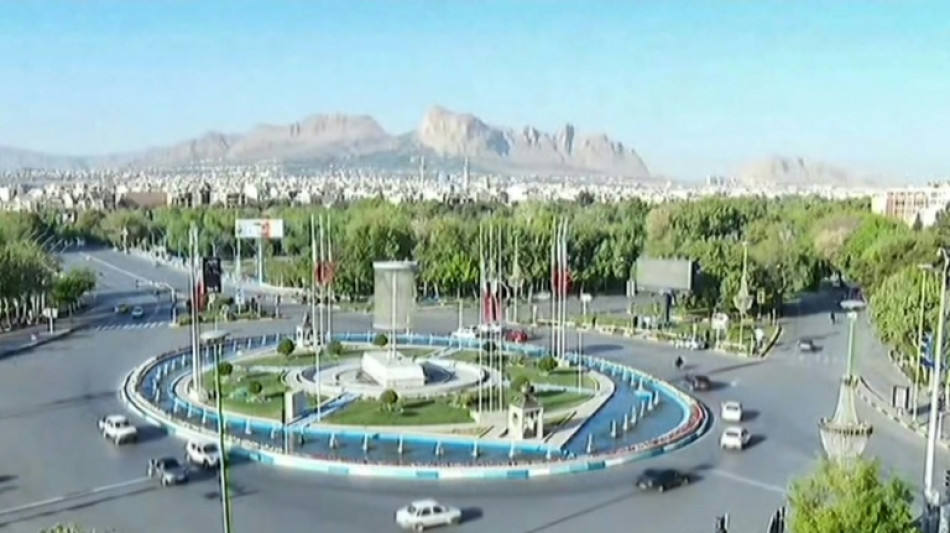
Israel, Iran ready to de-escalate -- for now: analysts / Photo: - - IRANIAN STATE TV (IRIB)/AFP

 Trump denies offering to sell arms to China's Xi

 Wemby ready for NBA Spurs to move rivals in climb to top

 Ukraine to postpone some spending amid delays in aid: PM

 Tuchel says Czech Republic game 'not yet a must-win'

 MaXhosa puts South Africa on the Paris fashion map
 Rose, Scott among 2027 World Golf Hall of Fame finalists

 Brunson says NBA champion Knicks can't get satisfaction

 France puts out largest wildfire since 1949

 Real Madrid's Perez summoned over Barcelona referee payments comments

 Oil takes off again, Wall Street dips after Trump rejects Iran truce offer

 AlgoQuant Asset Management Selects Liquid Mercury to Enhance Digital Asset Trading Infrastructure
 UK to reopen refugee resettlement scheme to push 'safe' migration
 Pope urges Europe to help combat 'lies and deceit' in world affairs

 Iranian lawyer Nasrin Sotoudeh wins Council of Europe's rights prize
 French far-right's Bardella denies alleged 2013 antisemitic comments
 Oil up, Wall Street dips after Trump rejects Iran truce offer

 Gakpo withdraws from Netherlands squad

 SpaceX puts Starship megarocket in orbit for first time
 Iran denies link to suspected bomb plot at UK airbase used by US
 Ex-boss Mancini says City charges 'not my concern'
 Berlin Marathon winner Assefa finished race with torn Achilles
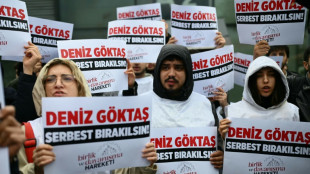 Comedian convicted for Erdogan 'insult' but freed pending appeal

 French prosecutors seek two-year sentence for ex-minister Dati in graft case

 Eala makes fast start as weather and transport woes hit Asian Games
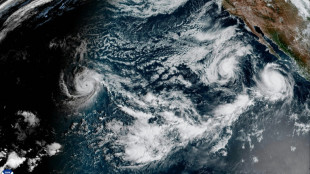 Hurricane Polo approaches Mexico, threatens severe damage

The limited nature of Israel's reported strike on Iran and the restrained immediate Iranian reaction shows both sides, in particular Tehran, are looking to de-escalate after weeks of tensions but the situation remains dangerously explosive, analysts say.
There have been fears over the last weeks decades of enmity between Israel and the Islamic republic could spill over into all-out war as Israel pursues its offensive on Gaza in the wake of the October 7 attack on Israel by Palestinian militant group Hamas which is backed by Tehran.
An apparent Israeli strike on the Iranian consulate in Damascus on April 1 killed seven members of the Revolutionary Guards force, including its top commander for Iran and Lebanon, and enraged Iran as well as troubling Israel's Western allies.
Iran, which does not recognise Israel, responded by launching hundreds of drones and missiles to attack Israel in an unprecedented assault, all largely shot down by Israel and its allies, with the Israeli strike overnight Friday seen as retaliation against Tehran.
Iran's state media reported explosions in the central province of Isfahan with Iranian officials quoted by the New York Times saying said the attack was carried out by small drones, possibly launched from inside Iran.
There was no indication the reported attack was directed against a site of Iran's controversial nuclear programme, even though Isfahan province is known to host key atomic installations.
The International Atomic Energy Agency said there had been no damage to Iranian atomic sites.
Meanwhile, Iranians woke up to reports on state TV apparently intent on minimising the impact of the strikes with reporters emphasising daily life was continuing as normal in the regional centre of Isfahan.
"Calm prevails in Iran's Isfahan, people mock report of Israeli attack," wrote the Tasnim news agency in a headline above an image of two people on the city's beloved Zayandeh Roud river in a pedalo shaped as a swan.
- 'Exiting current escalatory cycle' -
"We seem to be at a moment when both sides are seeking to exit the current escalatory cycle, with Israel conducting a very limited attack to demonstrate some response to the Iranian strikes and Tehran quickly playing down the incident in order not to be compelled to respond," said Julien Barnes-Dacey, director of the Middle East and North Africa programme at the European Council on Foreign Relations.
"For the moment, neither side want a direct war," he told AFP.
But he warned there remained danger of a wider confrontation, with it as yet "unclear" if the overnight action represents the "full extent of the Israeli response".
Tensions remain high on the Lebanon-Israel border between Israel and the Tehran-backed Lebanese militant group Hezbollah and the risk remains Israel could yet launch a new offensive in Gaza on Rafah.
"While we may be exiting this current escalatory cycle the wider regional war is ongoing and remains hotter than ever," he said.
After the attack on the Iranian consulate -- which according to the New York Times angered the administration of President Joe Biden after only being told at the last moment -- Washington had urged Iran not to attack Israel.
But after that attack, the United States had also made clear it expected its ally not to further escalate and risk a wider conflagration.
Despite the mass nature of Iran's attack against Israel last week, the interceptions of the incoming weapons meant damage was very limited, with a military base one of the few targets slightly damaged.
Some unconfirmed reports say a non-nuclear military installation in Isfahan was the chief target of Israel's reported strike against Iran.
- 'Difficult to anticipate' -
"What should be emphasised is a quasi-symmetry between the two strikes. There is a certain restraint on both sides," said Hasni Abidi, director of the Center for Studies and Research on the Arab and Mediterranean World in Geneva.
"Objective indications show us that for the Iranians this is a closed matter, and that for the Iranians, more than the Israelis, there is no interest in this tension continuing."
But he warned risks remained, with Iran supporting both Hezbollah and Hamas well beyond its own borders.
"It is very difficult to anticipate Iranian conduct. The Iranians can always respond, not necessarily directly, through their allies in the region."
Russian Foreign Minister Sergei Lavrov said after contacts with both sides that Russia had made clear to Israel that Iran "does not want escalation".
Agnes Levallois, vice-president of the Institute for Mediterranean Middle East Research and Studies, said with Israel's priority still defeating Hamas in Gaza, Iran has a far greater interest in de-escalating.
"What I understand from the Iranian position is that the Iranians really want to de-escalate. They did what they felt they had to do, but they don't want to go beyond that."
"But for me, Israel is in a logic of escalation and not at all in a logic of de-escalation," she said.
Q.Najjar--SF-PST