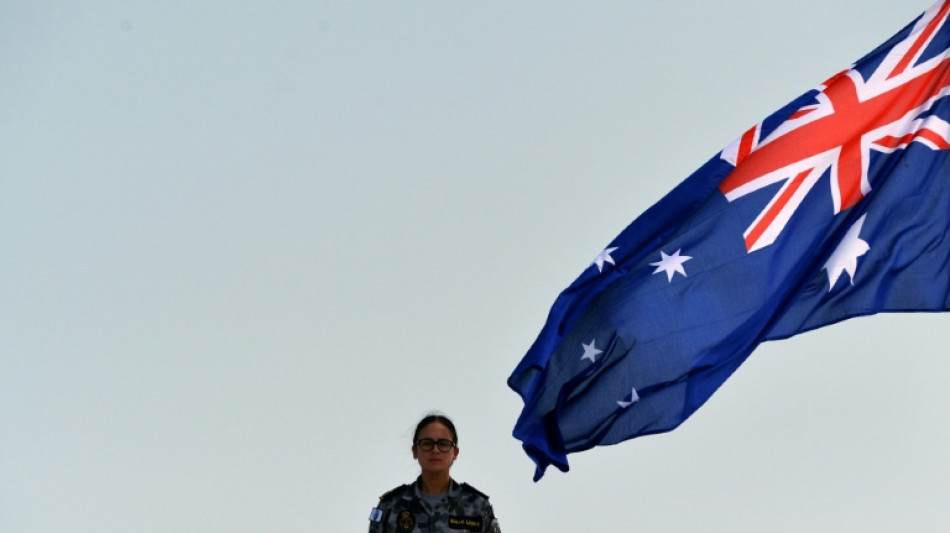
Australia unveils new defence strategy, with eye on 'coercive' China / Photo: ISHARA S. KODIKARA - AFP/File

 Dodgers eye three-peat, Red Sox face Yankees as MLB playoffs begin

 Certification of Boeing 737 MAX delayed by software bug

 Celine Dion wows Paris Fashion Week with surprise gig

 AMD buys firm founded by AI 'godmother' Fei-Fei Li
 Italy rebound in Turkey as France win late in Belgium

 Pope says concerns about AI 'should be taken seriously'
 Hurricanes to hoist title banner as NHL season begins
 Justice Alito steps aside from major US climate case

 Willis happy with England exile after retains Top 14 player award

 Spain housing protests keep heat on government as PM seeks new law

 Wissa spoils Zimbabwe homecoming as DR Congo win AFCON qualifier

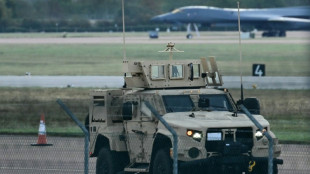 UK police release on bail five men held over airbase incident

 Ex-All Black Plummer 'sure' New Zealand will find Super Rugby solution

 Shein sees 1% revenue growth in first half of 2026
 Netherlands regrets Israel retaliation in settlements row

 Moscow seizes Russian assets of German food retailer Metro
 Bulgarian spirits inflamed by new rakia rules

 Documentary turns camera on architect Peter Zumthor

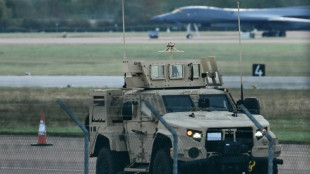 UK police say releasing on bail five men held over airbase incident

 Trump admin finalizes reversal of US fuel economy standards

 US says no China arms sale plans after envoy cites Trump offer

 Dozens kidnapped in two weekend attacks in northern Nigeria
 Next stop the world: Pathirage wins Asian Games javelin gold

 Aster Launches Perpetual Grid Trading 2.0 with Up to 140,000 $ASTER Liquidity Mining Campaign
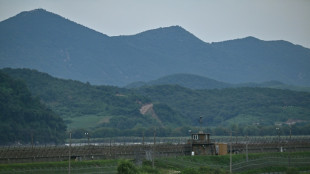 Seoul says North Korean mines 'highly suspected' as cause of DMZ blast
Australia unveiled its first National Defence Strategy on Wednesday, signalling a new focus on deterring China's "coercive tactics" in a region seen as lurching towards conflict.
The 80-page document offers a gloomy assessment of Pacific security and sets out a massive increase in defence spending to retool Australia's military to cope.
"The optimistic assumptions that guided defence planning after the end of the Cold War are long gone," said Defence Minister Richard Marles, presenting the new strategy.
Warning that "China has employed coercive tactics in pursuit of its strategic objectives," the text describes an Australia vulnerable to foes strangling trade or preventing access to vital air and sea routes.
"We are a maritime trading island nation," Marles said.
"The invasion of Australia is an unlikely prospect in any scenario, precisely because so much damage can be done to our country by an adversary without ever having to step foot on Australian soil," he said.
So instead of focusing on maintaining a military that can do a range of tasks almost anywhere in the world, Marles said there would be a laser focus on building a deterrent force that can protect Australia's interests in its immediate region.
At the centre of the strategy are plans to develop a fleet of stealthy nuclear-powered submarines, to triple key missile capabilities and develop a large surface combatant fleet.
"Having the most capable Navy in our history will be at the heart of our projection and our strategy of denial," Marles said.
The strategy boils down to making any attack against Australia's interests prohibitively expensive and risky.
As a share of GDP, defence spending is set to increase from about two percent today to 2.4 percent within a decade.
That will only fuel an arms race that is taking place across the Pacific, with China, South Korea and Japan all piling more money into defence.
According to the Stockholm International Peace Research Institute, military spending in Asia and Oceania has increased 45 percent since 2013.
Given that backdrop, Australia predicts an increased risk of conflict in the Taiwan Strait, the South and East China Seas or on the border with India.
Marles said that old assumptions about how much time Australia would have to prepare for war were gone.
"Australia no longer has the luxury of a 10-year window of strategic warning time for conflict" he said, upending long-held belief.
Asked about Canberra's strategy at a regular briefing, Beijing urged Australia to "refrain from making accusations against China at every turn".
"China poses no threat to any country," foreign ministry spokesperson Lin Jian said.
"We hope that the Australian side can view China's development and strategic intentions in a correct light, abandon the Cold War mentality (and) do more to safeguard regional peace and stability," he added.
N.Shalabi--SF-PST