
Biden, Iraqi PM agree on talks for US-led coalition withdrawal / Photo: ANDREW CABALLERO-REYNOLDS - AFP

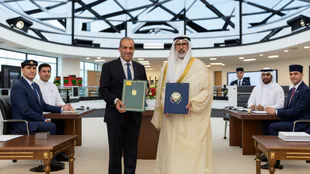 Kuwait and Egypt Sign Eight Agreements to Expand Strategic Partnership

 تقارير إسرائيلية تكشف عن محاولات نتنياهو وزملائه للتأثير على نتائج الانتخابات عبر استهداف الفلسطينيين

 بنك القدس يتعهد بتأمين احتياجات مرضى السكري خلال أمسية توعوية في رام الله

 AI Job Losses at NAB, Qantas, Canva and Atlassian Signal Market Shift, Not Workforce Collapse

 Owner Review: 2023 Volvo XC60 Recharge Exceeds Expectations for Calgary Driver
 Indiana River Otters Make Comeback After Decades of Conservation Efforts

 Tamil Film 'Arivu' Selected for 57th International Film Festival of India

 أسعار الديزل في الولايات المتحدة تنخفض دون 6 دولارات لأول مرة منذ شهرين

 Why Wind Farms Paint One Turbine Blade Black to Protect Birds
US President Joe Biden and Iraq's Prime Minister Mohamed Shia al-Sudani said Monday they would keep working towards the withdrawal of a US-led anti-jihadist coalition in the country.
Their meeting at the White House came amid soaring tensions in the Middle East after Iraq's neighbor Iran launched a massive aerial attack on US ally Israel over the weekend.
The US-led military coalition was formed in 2014 to fight the Islamic State group -- the year the jihadists overran nearly a third of Iraq's territory and swaths of neighboring Syria.
Iraq has been trying to stay out of regional tensions amid the six-month war waged by Israel against Iran-backed Palestinian militants in Gaza, following Hamas's October 7 attack on Israel.
Armed groups linked to Iran, including some based in Iraq, have since carried out a series of attacks on facilities belonging to the United States, which is Israel's main ally.
Iraq, hoping not to be consumed by US-Iran hostility, strongly protested a US drone strike in February that killed an Iraqi militia leader, carried out in retaliation for an attack that killed three US service members in Jordan.
But tensions have since subsided between Washington and Baghdad, and they resumed talks on the future of the coalition.
In a joint statement, Biden and Sudani said they discussed the "natural evolution" of the coalition "in light of the significant progress that has been made in ten years."
They would now look at issues including the continued threat from IS, the needs of the fragile Iraqi government for support, and bolstering Iraqi security forces, they said.
"The two leaders affirmed they would review these factors to determine when and how the mission of the Global Coalition in Iraq would end," they said in the statement.
The aim would be to move to a bilateral agreement that could still keep some US troops in Iraq.
The United States currently has some 2,500 troops in Iraq and 900 in Syria as part of the coalition.
Biden and Sudani, making his first visit to Washington since taking office in 2022, also discussed the fractious situation in the region following Iran's attack on Israel.
At the start of their meeting in the Oval Office, Sudani urged "restraint" on all sides to "stop the expansion of the area of conflict."
US forces based near the northern Iraq city of Erbil were involved in the operation to counter the attack, using a Patriot missile battery to shoot down an Iranian ballistic missile.
W.Mansour--SF-PST