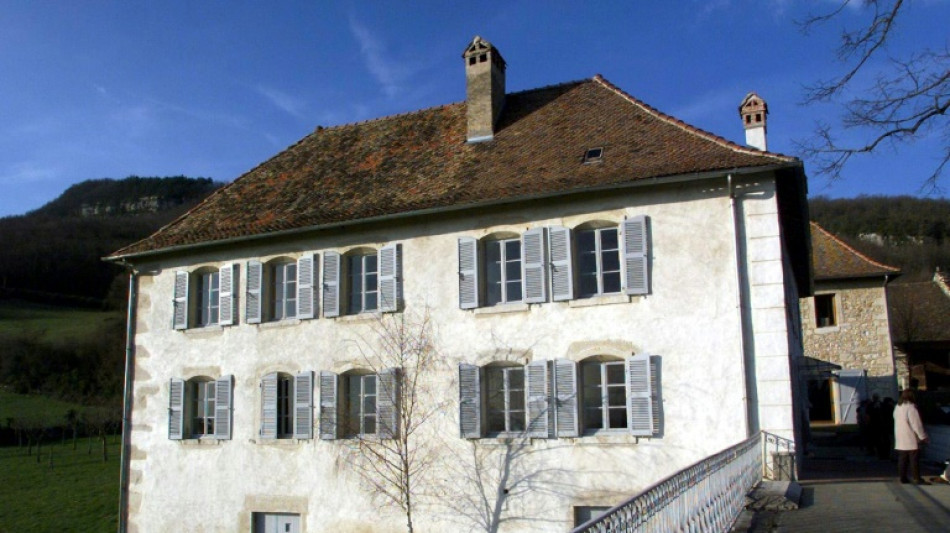
80 years on, Macron leads tribute to victims of Nazi raid on Jewish orphanage / Photo: ERIC CABANIS - AFP/File

 استقرار أسعار الذهب مع ترقب المستثمرين لقرارات الفائدة الأمريكية
 Kuwait and Egypt Sign Eight Agreements to Expand Strategic Partnership
 تقارير إسرائيلية تكشف عن محاولات نتنياهو وزملائه للتأثير على نتائج الانتخابات عبر استهداف الفلسطينيين

 بنك القدس يتعهد بتأمين احتياجات مرضى السكري خلال أمسية توعوية في رام الله

 AI Job Losses at NAB, Qantas, Canva and Atlassian Signal Market Shift, Not Workforce Collapse

 Owner Review: 2023 Volvo XC60 Recharge Exceeds Expectations for Calgary Driver
 Indiana River Otters Make Comeback After Decades of Conservation Efforts

 Tamil Film 'Arivu' Selected for 57th International Film Festival of India
French President Emmanuel Macron on Sunday marked 80 years since Nazi forces raided a Jewish orphanage in the southeast of France and sent almost all its occupants to extermination camps.
The event is among the first of a sequence of ceremonies Macron will lead this year to mark eight decades since the penultimate year of World War II that in summer 1944 saw D-Day followed by the liberation of Paris from Nazi occupation.
A handful of former residents of the orphanage in the village of Izieu attended the ceremony headed by Macron late Sunday afternoon.
Earlier in the day, he also visited a remote Alpine plateau to pay tribute to resistance heroes who, in early spring 1944, were killed or captured by Nazi forces and French collaborators.
On April 6, 1944, the 44 Jewish children aged four to 12 hosted in the orphanage were rounded up by the Gestapo with their seven instructors, also Jewish.
The raid was carried out on the orders of Klaus Barbie, the notorious Nazi known as the "Butcher of Lyon". Barbie fled to South America after the war but was extradited from Bolivia to France in 1983 and in 1987 was sentenced to life imprisonment on charges of crimes against humanity. He died in prison in 1991.
All the Izieu victims were deported to the death camp of Auschwitz-Birkenau in Poland or to German-occupied Estonia. Only one instructor survived.
"You are going to tell me your stories," Macron told four former residents of the orphanage who attended the ceremony at the building, a museum for the last three decades.
"I didn't understand anything about this war which was above me. I was angry, I didn't eat anymore," Helene Waysenson, 8 years old at the time, who had arrived from Luxembourg with two of her brothers, told the president.
"It takes a lot of resilience to come and talk to you," added Roger Wolman, who, in 1943, aged five, spent a few weeks in the house when his parents were deported.
Between May 1943 and April 1944, the Izieu colony, founded by Sabine Zlatin, a Jewish resistance fighter of Polish origin, took in around 100 children whose parents had been deported. Until the raid, it had been left relatively untouched.
- 'French tragedy' -
The event marked the celebration of "the commitment of those who stood up against Nazism by welcoming the victims of persecution, and of those who opposed the abomination of republican values, by bringing the executioner Klaus Barbie to justice," the French presidency said.
Macron earlier paid tribute to 106 fighters buried in mountain plateau of Glieres, also in the Alps, which was an important resistance hub against Nazi rule.
From January to March 1944, 465 partisans gathered at Glieres to receive airdrops of weapons in the run-up to the Allied landings in the south of France in August 1944.
But the German army -- with the assistance of a French collaborationist militia -- decided to attack in late March of that year.
Two thirds of the resistance fighters were taken prisoner and 124 killed during the fighting or shot. Nine disappeared and 16 died in deportation.
"At an altitude of 1,400 meters, France rose up. It lived as it should never have ceased to live, as it should never cease to exist," Macron said.
Macron emphasised that the battle was not simply as French fighting Germans.
"French people imprisoned French people, French people murdered French people," he said, referring to the collaborators and describing it as a "French tragedy".
This year's commemorations peak in June with the 80th anniversary of the 1944 Normandy landings. A host of world leaders are expected to attend, including US President Joe Biden.
In August, the liberation of Paris from Nazi occupation will be marked.
Z.AlNajjar--SF-PST