Forecasting the future of science to keep Swiss diplomatic hub buzzing / Photo: Fabrice COFFRINI - AFP

 All Blacks name veteran Taylor captain as Mo'unga seizes 10 jersey

 Race against time as Asian Games cricket quarter-finals washed out

 India turns to corals and seagrass to shield against rising seas
 Manchester City's Premier League charges: What comes next?

 Brazil's cellphone crime: a security nightmare in every pocket
 Russia pummels Kyiv in latest deadly attack

 NFL Giants obtain QB McCarthy from Vikings

 Deal for evicted Spanish pensioner as PM seeks new housing law

 Clippers apologize, warn fans of 'challenges' after Leonard scandal

 Turkish comedian convicted for Erdogan 'insult' freed pending appeal
 Trump announces 'biggest' US steel plant in battleground Iowa

 Olise wonder strike gives Zidane's France win in Belgium

 US stocks fall, bond yields rise as Middle East war drags on

 Trump denies offering to sell arms to China's Xi

 Wemby ready for NBA Spurs to move rivals in climb to top

 Ukraine to postpone some spending amid delays in aid: PM

 Tuchel says Czech Republic game 'not yet a must-win'

 MaXhosa puts South Africa on the Paris fashion map

 Rose, Scott among 2027 World Golf Hall of Fame finalists

 Brunson says NBA champion Knicks can't get satisfaction

 France puts out largest wildfire since 1949

 Real Madrid's Perez summoned over Barcelona referee payments comments

 Oil takes off again, Wall Street dips after Trump rejects Iran truce offer

 AlgoQuant Asset Management Selects Liquid Mercury to Enhance Digital Asset Trading Infrastructure
 UK to reopen refugee resettlement scheme to push 'safe' migration

As technology and science advance at breakneck speed, a Swiss group is already looking beyond AI to the next big potential technological disrupters.
Quantum computing is a likely candidate, and this time the group hopes that rules are in place to govern its use before it is unleashed, unlike what happened with artificial intelligence.
Quantum computing combines advances in scientific understanding of the subatomic world with leaps in information theory to solve mathematical problems that are impossible for today's conventional computers.
The Geneva Science and Diplomacy Anticipator Foundation (GESDA) wants to ensure Switzerland remains central to the international response.
The rapidly-swelling power of artificial intelligence became apparent with the release of ChatGPT in November 2022.
Policy makers have been playing catch up as they scramble to determine how to govern the technology, and if it is even possible.
Last month, the European Parliament approved the world's most far-reaching rules, but warnings already abound that the hastily-assembled text will not do enough to protect people.
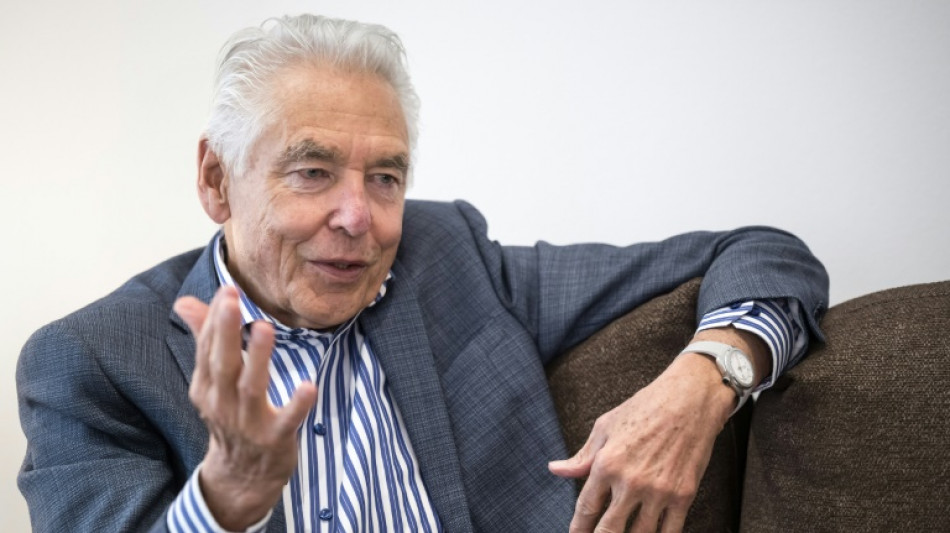
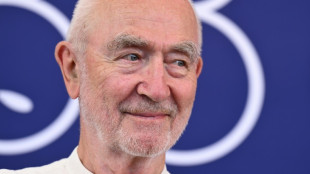
It would have been better to anticipate what was coming and how to govern it, said Peter Brabeck-Letmathe, chairman of GESDA.
"AI was too fast," the former longtime head of Swiss food giant Nestle told AFP in a recent interview.
"By the time we had identified it, it (was) already almost to market," he said. "This shows you how important anticipation is -- real anticipation."
GESDA was founded five years ago by the Swiss government to look into the future and anticipate breakthroughs, and then coordinate with decision-makers to harness coming changes -- and channel them in a positive direction.
It also aims to ensure that Geneva -- home to the United Nations' European headquarters and numerous other institutions created after World War II -- remains a relevant diplomatic hub.
With its focus on science diplomacy, fuelled by anticipation, GESDA can help ensure that "Geneva continues to be a centre for multilateralism also in the future", Brabeck-Letmathe said.
- Quantum, next big disrupter -
The platform arrived too late to provide much advance foresight on the looming powers of AI, but he insists it is well-positioned to take on quantum computing, which "has the potential of changing almost everything".
With the first commercial machines up to a decade away, "we are still in a phase where we can do something about it".
To map out the most impactful future technological developments, Brabeck-Letmathe said GESDA contacted thousands of scientists and all the major laboratories around the world, and asked: "What is cooking?".
It also asked how scientific breakthroughs might impact the world decades into the future.
GESDA then turned to diplomats and asked: "What framework do we need so that those breakthroughs are dedicated more to the good than to the bad?".
Among the questions raised was: what does it mean to be a human being in an era of avatars and increasing human augmentation?
Human augmentation, or technologies that improve human capabilities, carry huge promise, including to help people with degenerative diseases like Parkinson's.
"But of course, once you have a chip in your brain, the question is what can you programme into that chip?" Brabeck-Letmathe asked.
"It will demand very careful thinking."
- 'Incredible power' -
"It will be an incredible power," Brabeck-Letmathe said of quantum computing, pointing out that it was expected to be "1,000 to 10,000 times more potent than the computing power we have today".
It is therefore vital to govern the technology and ensure it is not left in the hands of a few companies, as with the internet, he said.
If a few tech companies are allowed to control quantum, he warned, "you get an incredible concentration of power, where our democratic system... is not going to be working".
GESDA last month launched a new Open Quantum Institute situated inside Europe's science lab CERN.
That centre may not place Switzerland at "the centre of the world" when it comes to quantum, Brabeck-Letmathe acknowledged.
But the country, he said, would be positioned as "an honest broker for this new technology, in favour of humankind".
N.Shalabi--SF-PST