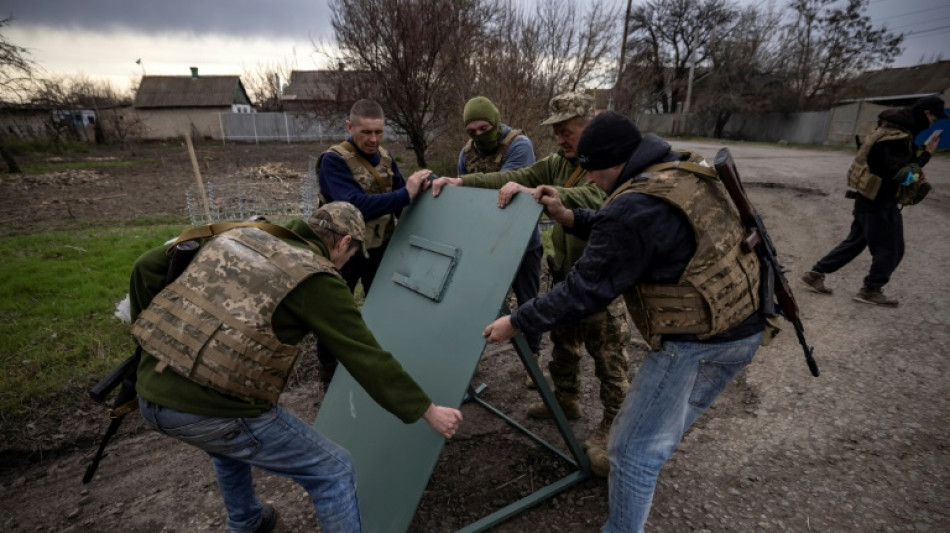
Bloody, uncertain struggle awaited for supremacy in east Ukraine / Photo: FADEL SENNA - AFP

 Rubio lands in India for 'trade diplomacy'
 China opposes US ban on govt agencies from using DeepSeek
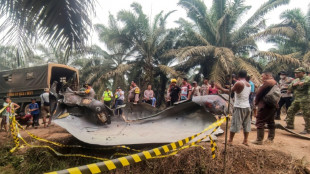 Near miss: Indonesia probes crash of suspected Chinese rocket fragment
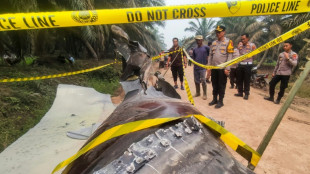 Indonesia investigates crash of suspected Chinese rocket fragment
 South Korea to withdraw some Ukraine embassy staff after POW row
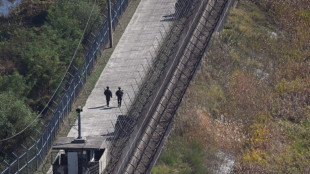 S. Korea warns of 'firm' response after North threatens fresh measures near border

 Ukraine claims US missile holdup ahead of reported talks

 Niners hold off Commanders to stay perfect in NFL

 Tech firms bear brunt of selling as Asian stocks drop

 Reese scores 30 as Dream stun Valkyries to level WNBA finals
 Horror and disbelief after lawmaker attacked in rural Australia

 Ukraine races to secure energy supplies ahead of winter

 Vote count begins in Alberta secession referedum, testing Canada unity

 Ukraine claims US missile holdup as Trump floats summit without Zelensky

 Detained Suu Kyi receives UK royal package: Myanmar govt

 Japan successfully launches probe in historic Mars moon mission

 US to auction deep sea mining leases off American Samoa

 Australian lawmaker hurt in car attack underwent surgery overnight: PM
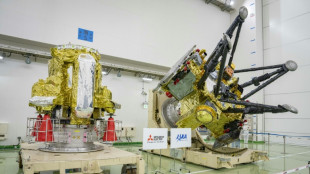 Japan launches rocket for potential world first Mars moon mission

 Ethiopia PM warns Eritrea of 'severe consequences' if supports enemies

 Boland grabs opportunity for Australia as South Africa struggle in second Test

 Ronaldo handed 30-day suspension: Portuguese federation
 France announces curfews as government grapples with unrest

 Boland sets pace as South Africa struggle
 Ukraine on back foot as Kremlin moots US, China meeting
While Russia appears to have abandoned for now its aim of pushing deep into the heart Ukraine, its new declared goal of taking control of much the east of the country still risks a protracted and bloody conflict.
Analysts say Moscow will at least want to control the Donetsk and Lugansk regions that form the Donbas area of eastern Ukraine, to be able to claim some kind of military success when Russia marks World War II victory day on May 9.
But even the outcome of the struggle for the Donbas remains uncertain, with Russian forces hurt by morale and logistical problems after what analysts see as a botched attempt to take the capital Kyiv.
"I have clearly set out the aims. The main aim is to help people in the Donbas," President Vladimir Putin said Tuesday.
Ukrainian defence ministry spokesman Oleksander Motuzianik warned Monday that "the enemy has almost completed its preparation for an assault on the east. The attack will take place very soon."
Russia may not even content itself with these regions but seek to push further west to control portions of Ukraine east of the Dnieper River.
- Donbas priority -
Pro-Russian separatists even before the war already controlled parts of the breakaway self-declared Donetsk and Lugansk regions after a 2014 conflict.
But they did not control the full extent of these regions as administrative entities within Ukraine, and a key Russian war aim was always seen as expanding their reach.
In addition, Russian forces also want control of the strategic coastal city of Mariupol on the Sea of Azov, which would help Russia seize a land corridor to the annexed peninsula of Crimea.
"Russian forces are continuing to carry out limited attacks in Mariupol and northern Donbass while preparing to push more actively from Izyum towards the west of the Sloviansk-Kramatorsk stronghold," close to current frontlines, said former French colonel Michel Goya on Twitter.
Despite a large number of casualties, resupply issues and talk of flagging morale, Russia still has the means to push further west from the Donbas.
This could mean Moscow has its eyes on taking Dnipro (formerly Dnipropetrovsk), an industrial centre on the Dnieper River southeast of Kyiv.
"This is a political target as well as a military one," said Mick Ryan, a retired Australian army major general.
Russia's tactic may be to "fix Ukrainian forces in the Donbas while also attempting to envelop them with the advance on Dnipro," Ryan added, using a military term for a pincer movement that prevents retreat for an embattled force.
"Both will be bloody struggles," he warned.
- Urban warfare and insurrection –
As seen in the initial weeks of the war, the fighting could quickly coalesce around urban targets and spark insurrections from residents backed by regular forces. Both situations could take heavy tolls on both sides.
The Russians "are going to have to enter cities in the Donbas, and it's going to cost them," a Western military source told AFP, estimating that some 60,000 Russian troops had arrived in the region from the northern fronts.
On the Ukrainian side, around 40,000 of the best-trained and experienced soldiers have been deployed.
"They're gearing up for something that's going to go on for a while. But we don't know how long the Ukrainians are going to be able to hold out," the source said.
"And if they lose these men in this fierce theatre of operations, the Ukrainians won't be able to put up long-term opposition."
For James Dobbins, a former US crisis diplomat now at the RAND Corporation, Ukraine's leaders are already gearing up for tactical urban fighting if Donbas cities find themselves behind enemy lines.
"They've created a website with advice directed to ordinary citizens looking to engage in resistance activities," Dobbins said, suggesting that Ukraine's leaders recognise the fight could be long.
- Uncertain outcome –
Russia appears to have the upper hand after its redeployment to the eastern front. But Ukrainians have quasi-existential reasons that could spur them to hold out, bolstered by the deep patriotic groundswell encouraged by their charismatic President Volodymyr Zelensky.
"If Russian forces make a breakthrough in the east, or are able to advance to Dnipro, we could see a significant change in the war's momentum," Ryan said.
Behind its immediate aims in the run-up to the symbolic May 9 holiday, Moscow most likely has longer-term goals to secure before showing any willingness to negotiate a cease-fire.
But "experience shows that insurgent campaigns can last decades, that external assistance and an adjacent sanctuary are often critical to insurgent success, and that counterinsurgency campaigns can be very long and manpower-intensive," Dobbins warned.
For Goya, "it's hard to see how the Russians could create enough victorious contact points to finalise this spring offensive".
But for Ukraine, "Western aid is obviously essential, whether in terms of intelligence, light modern equipment, or heavier material," he said.
H.Jarrar--SF-PST