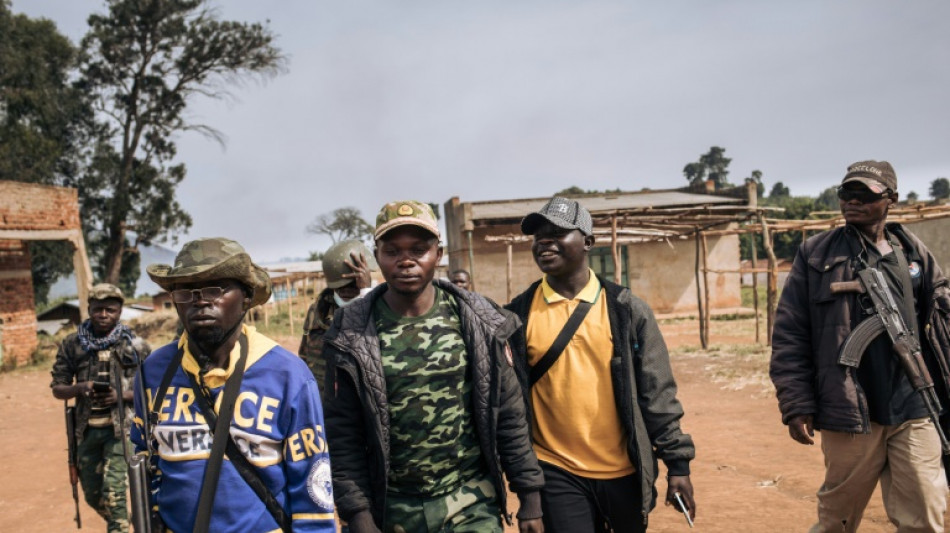
Last hostages free after long-running DR Congo mediation drama / Photo: ALEXIS HUGUET - AFP/File

 Rubio lands in India for 'trade diplomacy'
 China opposes US ban on govt agencies from using DeepSeek
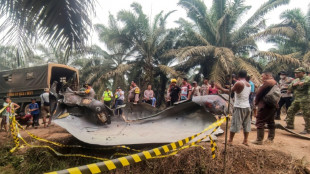 Near miss: Indonesia probes crash of suspected Chinese rocket fragment
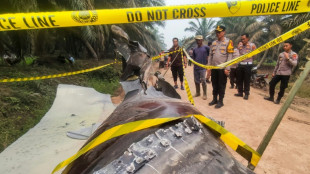 Indonesia investigates crash of suspected Chinese rocket fragment
 South Korea to withdraw some Ukraine embassy staff after POW row
 S. Korea warns of 'firm' response after North threatens fresh measures near border
 Ukraine claims US missile holdup ahead of reported talks

 Niners hold off Commanders to stay perfect in NFL
 Tech firms bear brunt of selling as Asian stocks drop

 Reese scores 30 as Dream stun Valkyries to level WNBA finals
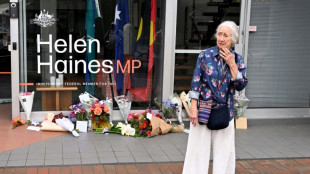 Horror and disbelief after lawmaker attacked in rural Australia

 Ukraine races to secure energy supplies ahead of winter

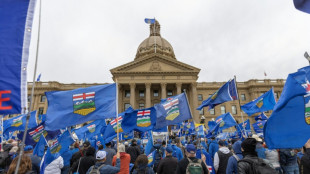 Vote count begins in Alberta secession referedum, testing Canada unity
 Ukraine claims US missile holdup as Trump floats summit without Zelensky

 Detained Suu Kyi receives UK royal package: Myanmar govt

 Japan successfully launches probe in historic Mars moon mission

 US to auction deep sea mining leases off American Samoa

 Australian lawmaker hurt in car attack underwent surgery overnight: PM
 Japan launches rocket for potential world first Mars moon mission
 Ethiopia PM warns Eritrea of 'severe consequences' if supports enemies

 Boland grabs opportunity for Australia as South Africa struggle in second Test
 Ronaldo handed 30-day suspension: Portuguese federation
 France announces curfews as government grapples with unrest

 Boland sets pace as South Africa struggle
 Ukraine on back foot as Kremlin moots US, China meeting
The last four members of a team that went to northeast DR Congo to mediate with an armed group who then took them hostage are now free, their spokesman said Tuesday.
The eight-member team had travelled to Ituri province in mid-February with the government's blessing, seeking to persuade an armed group called CODECO to end a bloody campaign of ethnic violence.
But the mediators -- including three former warlords -- were themselves seized by CODECO, who accused the army of using the reconciliation trip as a cover to shell their positions.
One hostage was released on March 21 and three others, including the team's driver, on April 4.
On Tuesday, Pitchout Mbodina Iribi, a spokesman for the mediators, said "all the remaining members of the delegation... have been released."
But another source within his organisation, speaking on condition of anonymity, told AFP that the final four had "escaped" from their captors and had arrived in the provincial capital Bunia early Tuesday.
The team sent to meet CODECO included former warlords Thomas Lubanga, Germain Katanga and Floribert Ndjabu, with an escort that included Congolese army colonels.
Lubanga and Katanga respectively served 14- and 12-year prison sentences handed down by the International Criminal Court (ICC) for crimes committed in Ituri in the early 2000s.
Ndjabu was jailed for 15 years over the killing of nine UN peacekeepers.
- 'Army intervened' -
Lubanga and Ndjabu along with army colonels Justin and Desire Lobho were the last four to be freed.
"I am at a loss for words to thank and congratulate our army," Lubanga said on his arrival in Bunia, in comments that seemed to back the idea of an army-led escape rather than a voluntary release by CODECO.
"Perfect coordination between our armed forces with the colonels who were with us led to (the kidnappers) being foiled," he said.
Lubanga said "negotiations had taken place... (but) we had become a prize for our captors, enabling them to continue blackmailing for months."
"We had no hope left... It was at that point that our army intervened," the former warlord said.
The ill-fated mediation mission had been approved by President Felix Tshisekedi, who is struggling with a surge of violence by armed groups in Ituri and neighbouring North Kivu.
- Notorious group -
CODECO -- the name for the Cooperative for the Development of the Congo -- is a political-religious sect that claims to represent the interests of the Lendu ethnic group.
The Lendu and Hema communities have a long-standing feud that led to thousands of deaths between 1999 and 2003 before intervention by a European peacekeeping force.
Violence then resumed in 2017, blamed on the emergence of CODECO.
CODECO attacks since then have caused hundreds of deaths and prompted more than 1.5 million people to flee their homes, while half of the region's population faces food insecurity, according to the Danish Refugee Council.
The group used the detention of the mediators to demand the release of CODECO fighters and members of the Lendu community who had been "arbitrarily arrested."
They also called for an end to army operations against them and to a so-called state of siege declared in Ituri and North Kivu last May.
Civilian leaders in the two provinces have been replaced by military or police officers, with the declared aim of boosting a crackdown on armed groups.
However, the measure has so far failed to bring peace to the region.
E.Aziz--SF-PST