Biden, Modi discuss Ukraine war as Indian response raises concern

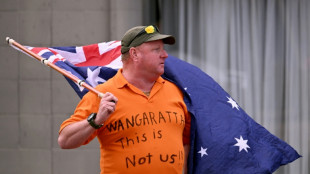
 Australian police charge man over 'targeted' attack on lawmaker

 Rubio lands in India for 'trade diplomacy'
 China opposes US ban on govt agencies from using DeepSeek
 Near miss: Indonesia probes crash of suspected Chinese rocket fragment
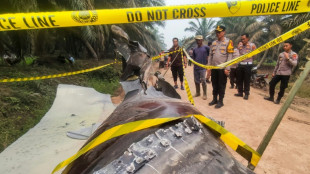 Indonesia investigates crash of suspected Chinese rocket fragment

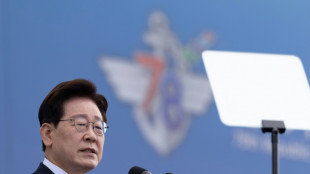 South Korea to withdraw some Ukraine embassy staff after POW row
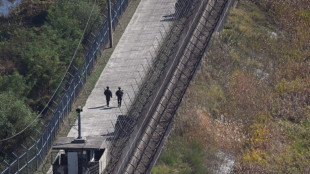 S. Korea warns of 'firm' response after North threatens fresh measures near border
 Ukraine claims US missile holdup ahead of reported talks
 Niners hold off Commanders to stay perfect in NFL

 Tech firms bear brunt of selling as Asian stocks drop

 Reese scores 30 as Dream stun Valkyries to level WNBA finals
 Horror and disbelief after lawmaker attacked in rural Australia
 Ukraine races to secure energy supplies ahead of winter

 Vote count begins in Alberta secession referedum, testing Canada unity

 Ukraine claims US missile holdup as Trump floats summit without Zelensky
 Detained Suu Kyi receives UK royal package: Myanmar govt

 Japan successfully launches probe in historic Mars moon mission

 US to auction deep sea mining leases off American Samoa

 Australian lawmaker hurt in car attack underwent surgery overnight: PM
 Japan launches rocket for potential world first Mars moon mission

 Ethiopia PM warns Eritrea of 'severe consequences' if supports enemies

 Boland grabs opportunity for Australia as South Africa struggle in second Test
 Ronaldo handed 30-day suspension: Portuguese federation
 France announces curfews as government grapples with unrest
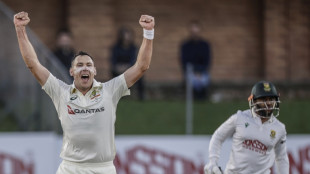 Boland sets pace as South Africa struggle
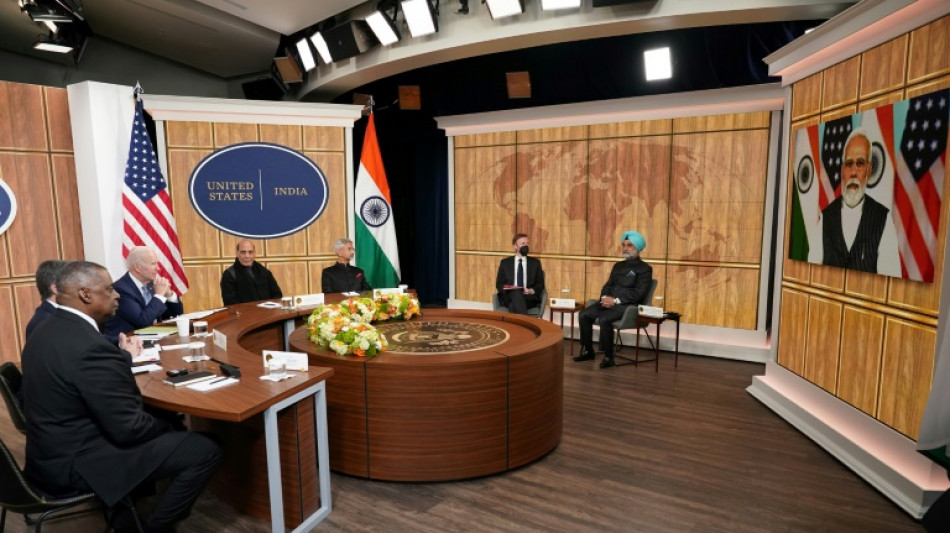
President Joe Biden and Indian Prime Minister Narendra Modi held a virtual summit Monday, clouded by US frustration over New Delhi's neutral stance on Russia's invasion of Ukraine.
The South Asian nation has tried to walk a tightrope between maintaining relations with the West and avoiding alienating Russia, and has not imposed sanctions over the war.
New Delhi has raised concerns in Washington in particular by continuing to buy Russian oil and gas, despite pressure from Biden for world leaders to take a hard line against Moscow.
India said ahead of the talks the meeting would be about strengthening the allies' "comprehensive global strategic partnership," while Washington spotlighted "Russia's brutal war against Ukraine and mitigating its destabilizing impact."
The more pointed US statement suggested that a resolute Biden would press Modi to take a stronger line on Moscow during the call.
Biden began the meeting however by saluting the "deep connection" between the two countries and said he wanted to continue their "close consultation" over the war, as Modi appeared alongside him on a large screen.
The Indian leader said the two countries were "natural partners," describing the Ukraine crisis as "very worrying" and recalling that India supported talks between Ukraine and Russia while delivering medical assistance to Kyiv.
Biden and Modi failed to reach a joint condemnation of the Russian invasion when they last spoke in early March at a meeting of the so-called "Quad" alliance of the United States, India, Australia and Japan.
- India 'shaky' on Russia? -
New Delhi abstained when the UN General Assembly voted last week to suspend Russia from its seat on the 47-member Human Rights Council over allegations that Russian soldiers in Ukraine engaged in war crimes.
The United States has already warned that any country that actively helps Russia to circumvent international sanctions will suffer "consequences."
Yet this has not deterred India from working with Russia on a rupee-ruble payment mechanism to circumvent banking sanctions, while taking advantage of discounted oil prices offered by Russian producers.
Meanwhile state-run Indian Oil Corp. has bought at least three million barrels of crude from Russia since the start of the invasion on February 24, in defiance of an embargo by Western nations.
Biden said on March 21 that India was an exception among Washington's allies with its "somewhat shaky" response to the Russian offensive.
In the Cold War, officially non-aligned India leaned towards the Soviet Union -- in part due to US support for arch-rival Pakistan -- buying its first Russian MiG-21 fighter jets in 1962.
According to experts, Russia remains India's biggest supplier of major arms and India is also Russia's largest customer.
Russian Foreign Minister Sergei Lavrov, who met with Modi in New Delhi in early April, lauded India for its approach to the conflict, and in particular for judging "the situation in its entirety, not just in a one-sided way."
- Growing Chinese power -
Biden and Modi are also expected to talk about ending the Covid-19 pandemic, countering climate change, and bolstering security and democracy in the Asia-Pacific region, where India is seen as a critical counterweight to growing Chinese power.
The last confrontation between the Chinese and Indian militaries on the Line of Control, on the border of Tibet and the Indian region of Ladakh, flared up as recently as June 2020.
Biden was flanked by his defense and foreign ministers and their Indian counterparts, who were due to meet later Monday in person for the annual "2+2 Dialogue," launched in 2018 to deepen cooperation between the two countries.
The two sides, who are expected to discuss Ukraine and China, are aiming eventually to take bilateral trade from the $113 billion registered in 2021 to $500 billion.
But another point of contention is likely to be India's purchase of Russia's S-400 missile defense system, which contravenes a US prohibition on countries from signing defense deals with Russia, Iran or North Korea.
The US sanctioned China in 2018 for buying the system but has not committed to doing the same for India.
S.Barghouti--SF-PST