Five takeaways from France's presidential election

 Australian police charge man over 'targeted' attack on lawmaker
 Rubio lands in India for 'trade diplomacy'
 China opposes US ban on govt agencies from using DeepSeek
 Near miss: Indonesia probes crash of suspected Chinese rocket fragment
 Indonesia investigates crash of suspected Chinese rocket fragment
 South Korea to withdraw some Ukraine embassy staff after POW row
 S. Korea warns of 'firm' response after North threatens fresh measures near border
 Ukraine claims US missile holdup ahead of reported talks

 Niners hold off Commanders to stay perfect in NFL
 Tech firms bear brunt of selling as Asian stocks drop

 Reese scores 30 as Dream stun Valkyries to level WNBA finals

 Horror and disbelief after lawmaker attacked in rural Australia

 Ukraine races to secure energy supplies ahead of winter
 Vote count begins in Alberta secession referedum, testing Canada unity

 Ukraine claims US missile holdup as Trump floats summit without Zelensky
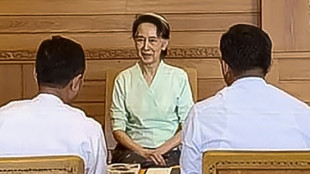 Detained Suu Kyi receives UK royal package: Myanmar govt

 Japan successfully launches probe in historic Mars moon mission
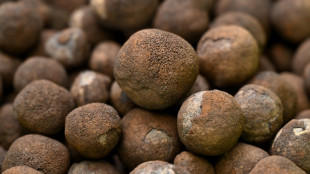 US to auction deep sea mining leases off American Samoa
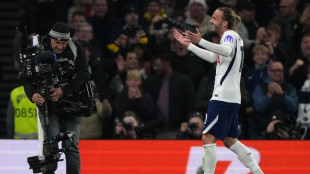
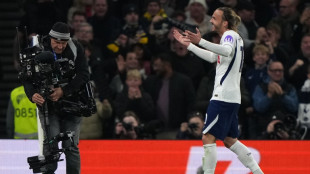
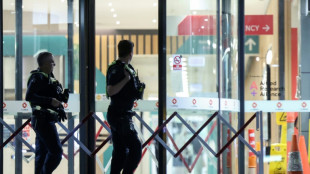 Australian lawmaker hurt in car attack underwent surgery overnight: PM
 Japan launches rocket for potential world first Mars moon mission
 Ethiopia PM warns Eritrea of 'severe consequences' if supports enemies
 Boland grabs opportunity for Australia as South Africa struggle in second Test
 Ronaldo handed 30-day suspension: Portuguese federation
 France announces curfews as government grapples with unrest
 Boland sets pace as South Africa struggle
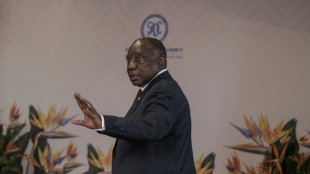
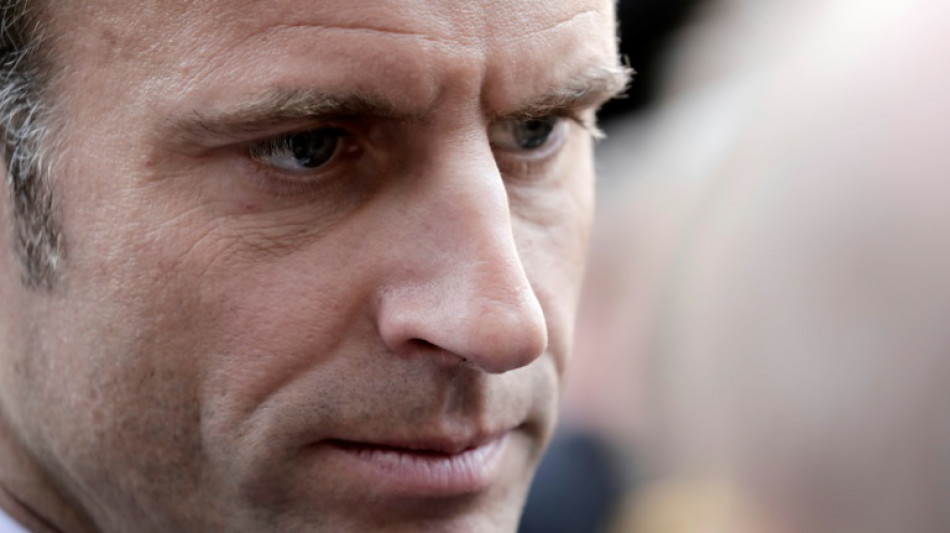
President Emmanuel Macron and far-right rival Marine Le Pen will battle for the presidency in a repeat of their 2017 run-off, but the results of the first round show changing dynamics in French politics and society.
AFP looks at five things we learnt from the election, which was a devastating disappointment for some of Macron's rivals but also has uncomfortable aspects for the president despite polls giving him an edge for the second round on April 24.
- Young cool on Macron
For a president who is just 44-years-old and who came to office in 2017 as France's youngest modern leader, it is striking that Macron lagged among young voters on Sunday.
Over a third -- 34.8-36 percent -- of people aged 18 to 24 voted for far-left third placed candidate Jean-Luc Melenchon in the first round, with just 21-24.3 percent backing Macron, according to surveys by Harris Interactive and Ifop.
Among the 25-34 age group, he fared even worse, with just 19.3-21 percent backing the incumbent, behind both Le Pen and Melenchon.
"It's a generational phenomenon," the head of Macron's party in parliament, Christophe Castaner, told BFM television, adding that he hoped young people would be "mobilised" by environmental issues.
However, surveys showed that amongst the oldest generations, Macron was by far the most popular candidate.
- Country split
The first-round electoral map of France shows glaring geographical splits, with Le Pen coming out on top in the industrial north of the country and on the Mediterranean coast, where the far right counts on support from many so-called "pied-noirs" born in Algeria under colonial rule and their families.
Macron by contrast came out on top in a swathe of territory in the relatively affluent west of France as well as the centre and eastern regions on the Swiss and German borders.
Melenchon was the leading candidate in several areas in Paris and its region, and in French overseas territories in the Caribbean.
In a nod to the need to find new reservoirs of support in the second round, Macron on Sunday visited Denain, a small town in France's northern rust belt, where he came only third on Sunday behind Le Pen and Melenchon.
- Missed chance for left
Melenchon finished just over a percentage point behind Le Pen in the final reckoning, after a late surge in the final days of campaigning.
This prompted some to wonder what might have happened if the French left had rallied behind Melenchon as the most successful candidate, instead of having a plethora of other leftist candidates.
Socialist Anne Hidalgo, Green Yannick Jadot and Communist Fabien Roussel all won less than five percent on Sunday, but if thoses votes had gone instead to Melenchon, he might have reached the second round instead of Le Pen.
"We felt an expectation of a left-wing alliance but they could not, due to their egos or lack of forward thinking," former Socialist presidential candidate Segolene Royal told BFM.
"If they had pulled out then Jean-Luc Melenchon would be in the third round," she said.
- Calamity for the right
The Republicans party is the right-wing political faction that brought former presidents Jacques Chirac and Nicolas Sarkozy to power and dominated French politics for years.
However, its candidate Valerie Pecresse polled only 4.8 percent in a campaign shadowed by the refusal of Sarkozy to endorse her candidacy.
Adding insult to injury, the party now faces a financial crisis as only candidates who score above five percent have their expenses reimbursed by the state -- Pecresse on Monday appealed for financial help from supporters.
"This is about the survival of the Republicans, and beyond this, the survival of a republican right-wing," she said, adding that she was personally indebted to the tune of five million euros ($5.5 million).
- No Green sunrise
In neighbouring Germany, the Greens are part of the government, have long paid a central role in national politics and hold the posts of foreign minister and economy minister in the cabinet.
Success in local elections in France has seen the Greens holding major cities including Bordeaux, Lyon and Grenoble but this success has never been transferred to a national level.
These elections marked no breakthrough, with its candidate Yannick Jadot failing to break the five percent barrier and leaving his party mired in the same financial crisis as the Republicans.
"Ecology will be absent from the second round," Jadot lamented after his defeat was confirmed.
Y.Zaher--SF-PST