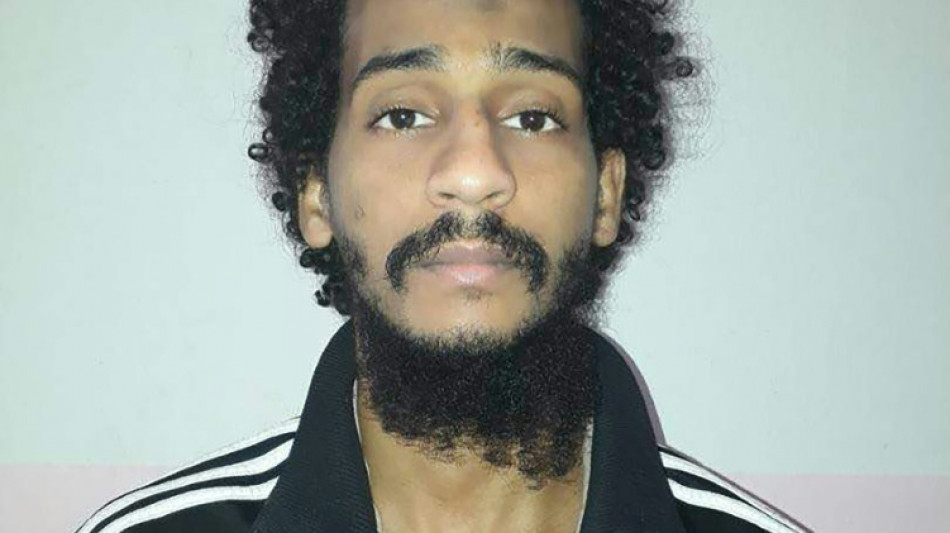
Former hostages unmask Islamic State 'Beatle' at trial

 O'Connor, Sivakov join Seixas at Decathlon CMA CGM
 Faletau left out of Wales squad for Nations Championship
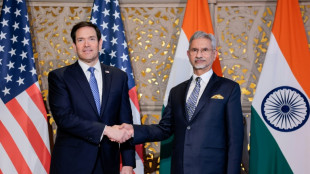 Rubio says India diversifying oil, trade deal 'very close'
 Kemi Badenoch Proposes Ending Childcare Benefit Cliff Edge

 More Than 52,000 West Midlands Families Use Tax-Free Childcare

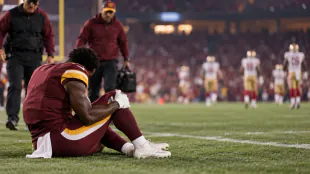 Commanders Fear Serious Knee Injury for Terry McLaurin

 Rays Beat Guardians 7-3 to Secure World Series Place
 Veteran Character Actor Richard Riehle Dies at 78
 Hardik Pandya Meets Fan Who Walked 2,390 Kilometres Across India

 Erling Haaland Buys Villa at Abu Dhabi’s Jacob & Co Beachfront Living
 Analysts Stay Positive on Vedanta After Hindustan Zinc’s Strong Quarter

 World Gold Council Sees Digital Gold Market Tripling by 2031

 Industry Groups Outline Four Steps to Help Women Farmers Reach Markets

 Tamil Nadu and Puducherry Face Return of Very Heavy Rain

 Tamil Nadu Adds 25 State-Funded Workdays for Eligible Rural Households

 Tonbo Imaging IPO Draws Nearly 136 Times the Shares Offered

 James Maddison Leads Tottenham to First League Victory of Season

 October 20 Milestones Trace Decades of Kuwait’s Development

 Spain Housing Dispute Puts Landlords at Centre of Election Debate

 Qatar Prime Minister Opens Eighth Global Security Forum

 US Midterms Put Control of Congress and Key States at Stake

 QNB and Qatar Airways Forge Worldwide Digital Payments Alliance

 Alaraby Television Network Earns Five GEMA Award Nominations
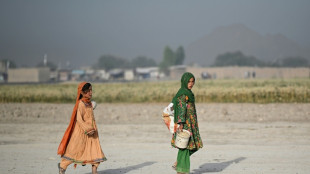 UN says 19 mn Afghans facing acute food insecurity by April
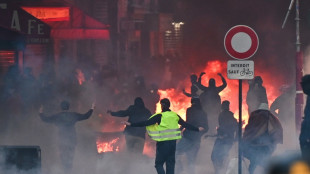 An unhappy republic: France's troubles extend beyond the street
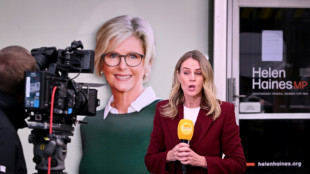
Former hostages taking the witness stand at the trial of their alleged Islamic State group captor have described their brutal treatment in chilling detail.
Eight former IS hostages have testified so far at the trial of El Shafee Elsheikh, accused of being a member of the notorious kidnap-and-murder cell known as the "Beatles."
But in a quirk of the case -- none of the former IS captives has been asked so far to formally identify their alleged captor in court.
That's because the 33-year-old Elsheikh and the other alleged "Beatles" -- so-called because of their British accents -- took pains to conceal their identities.
The former hostages said they were frequently blindfolded and their captors wore balaclavas at all times with only a slit for the eyes.
"They always tried to protect themselves," said Edouard Elias, a French photographer held prisoner by IS from June 2013 to April 2014.
"With other guards I could get some information, but not with them," Elias said. "I just saw that one had a darker skin, that's all."
The kidnappers also had a "rule" whenever they entered the cells where the prisoners were held.
"We had to kneel down with our face toward the wall and never look them in the face," said Federico Motka, an Italian aid worker who was held for 14 months, longer than any other hostage.
"We had to cover our face," said Frida Saide, a former Doctors Without Borders (MSF) worker who was held for three months.
Nicolas Henin, a French journalist, told the court the hostage-takers apparently believed that "as long as they were masked they were protected from prosecution."
"This was maybe a stupid idea," Henin said.
- Use own words against him -
Despite the precautions taken, prosecutors are confident they can prove to the jury beyond a reasonable doubt that Elsheikh, a former British citizen, was one of the "Beatles."
Elsheikh and another alleged "Beatle," Alexanda Amon Kotey, were captured in January 2018 by a Kurdish militia in Syria while attempting to flee to Turkey.
They were turned over to US forces in Iraq and flown to the United States to face charges of hostage-taking, conspiracy to murder US citizens and supporting a foreign terrorist organization.
Elsheikh is charged with the murders of American freelance journalists James Foley and Steven Sotloff and aid workers Kayla Mueller and Peter Kassig and suspected of the kidnapping of nearly 20 other Westerners.
Kotey pleaded guilty in September 2021 and is facing life in prison.
Elsheikh, who pleaded not guilty, is not expected to testify at his trial but prosecutors have been using his own words against him.
After his capture, Elsheikh gave interviews to several media outlets and prosecutors have played excerpts from those interviews for the jury.
In the interviews, Elsheikh acknowledged interacting with the hostages but claimed he did no more than ask them for information -- email addresses, for example -- so the kidnappers could open ransom negotiations with their families.
Elsheikh also sought to deflect responsiblity on another member of the "Beatles," Mohamed Emwazi, the IS executioner known as "Jihadi John" who was killed by a US drone in Syria in November 2015.
- 'Like a team' -
The former hostages tell a far different story -- brutal beatings at the hands of all three "Beatles," waterboarding, electric shocks and other forms of torture.
"George was into boxing. John kicked a lot. Ringo talked a lot about how he liked wrestling, putting people in headlocks," Motka said.
"It was like a team," Elias said.
Saide, the ex-MSF worker, said they were "friendly, comfortable around each other."
"They seemed to be good friends," she said.
The former hostages have testified that even if they could not see their faces they could easily recognize the "Beatles," even from the individual ways they would knock on their cell doors.
Besides their distinctive British accents, the "Beatles" were also better equipped than the other guards with expensive pistols and walkie-talkies..
In court, Elsheikh resembles a college student wearing fashionable civilian clothes and oversized glasses. A long black beard protudes from beneath his black Covid mask.
During witness testimony, he appears to spend most of his time staring straight ahead of him.
Elsheikh's lawyers have seized on the question of identification in mounting his defense.
In opening arguments, they acknowledged he was an IS jihadist but insisted he was not one of the "Beatles" and it was a case of "mistaken identity."
H.Darwish--SF-PST