Ukraine invasion places sharp new focus on calls for UN reform

 O'Connor, Sivakov join Seixas at Decathlon CMA CGM
 Faletau left out of Wales squad for Nations Championship
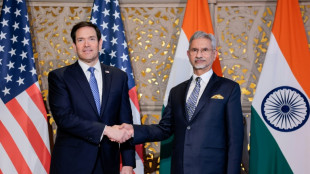 Rubio says India diversifying oil, trade deal 'very close'
 Kemi Badenoch Proposes Ending Childcare Benefit Cliff Edge

 More Than 52,000 West Midlands Families Use Tax-Free Childcare

 Commanders Fear Serious Knee Injury for Terry McLaurin
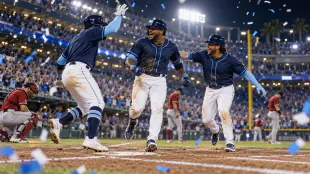 Rays Beat Guardians 7-3 to Secure World Series Place

 Veteran Character Actor Richard Riehle Dies at 78
 Hardik Pandya Meets Fan Who Walked 2,390 Kilometres Across India
 Erling Haaland Buys Villa at Abu Dhabi’s Jacob & Co Beachfront Living

 Analysts Stay Positive on Vedanta After Hindustan Zinc’s Strong Quarter
 World Gold Council Sees Digital Gold Market Tripling by 2031

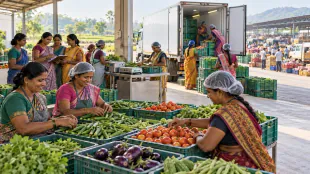 Industry Groups Outline Four Steps to Help Women Farmers Reach Markets

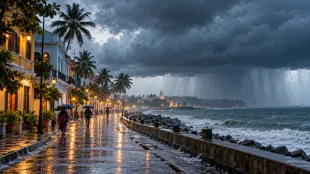 Tamil Nadu and Puducherry Face Return of Very Heavy Rain

 Tamil Nadu Adds 25 State-Funded Workdays for Eligible Rural Households

 Tonbo Imaging IPO Draws Nearly 136 Times the Shares Offered
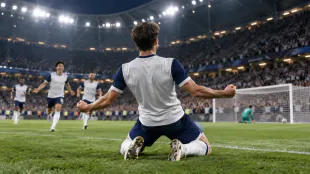 James Maddison Leads Tottenham to First League Victory of Season

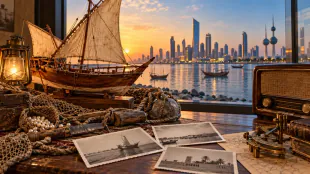 October 20 Milestones Trace Decades of Kuwait’s Development
 Spain Housing Dispute Puts Landlords at Centre of Election Debate

 Qatar Prime Minister Opens Eighth Global Security Forum
 US Midterms Put Control of Congress and Key States at Stake
 QNB and Qatar Airways Forge Worldwide Digital Payments Alliance
 Alaraby Television Network Earns Five GEMA Award Nominations
 UN says 19 mn Afghans facing acute food insecurity by April
 An unhappy republic: France's troubles extend beyond the street
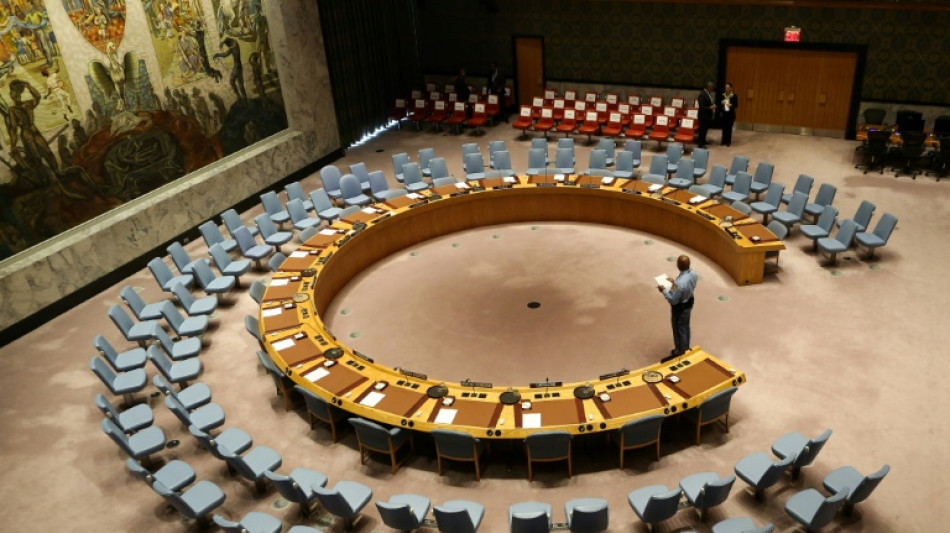
The long-simmering debate over UN reform -- and particularly over the role of the Security Council, which does not represent today's world and which failed to prevent Russia's invasion of Ukraine -- has suddenly become acute.
Recently Ukrainian President Volodymyr Zelensky, in a blistering call for the UN to exclude Russia from the Security Council, asked bluntly, "Are you ready to close the UN" and abandon international law. "If your answer is no, then you need to act immediately."
And after the Security Council failed to prevent the brutal invasion of his country, he said in a separate address to Japanese lawmakers, "We have to develop a new tool" capable of doing so.
Created in 1945 with a vision of guaranteeing world peace and preventing a World War III, the United Nations conferred disproportionate power on the five permanent, veto-wielding members of the Security Council -- the US, Russia, China, Britain and France -- in a way that allows them to protect their own interests while keeping a heavy hand in world affairs.
Thus, since 2011, Moscow has exercised its Security Council veto some 15 times in votes regarding its ally Syria.
But the veto power also guarantees that Moscow can never be removed from the Council, since the UN Charter's Article 6 allows the General Assembly to exclude a member only ... upon the recommendation of the Security Council.
In that vein, the US and Britain invaded Iraq in 2003 without UN approval -- and without suffering any consequences for their permanent seats on the Security Council.
Beyond the veto question, and the lack of international balance among Security Council members -- no African or Latin American country holds a permanent seat -- the Council grants a near-monopoly on some issues to Washington, London and Paris.
The division of roles among the 15 Security Council members is uneven, according to the ambassador of one of the current 10 non-permanent members. The latter group, elected for two-year terms, is "given the bureaucratic jobs."
"We don't think it's a fair division of labor," the ambassador said, speaking on grounds of anonymity.
The Council has been widely denounced for its current -- and recurrent -- paralysis, with even UN Secretary-General Antonio Guterres deploring its failures.
"There's a pretty fundamental problem there," US Secretary of State Antony Blinken admitted, a day after Zelensky's futile call for Russia to be expelled.
- 'Like cholesterol' -
To Bertrand Badie, a Paris-based international relations specialist, the United Nations is "like cholesterol": "There is the good," notably in the humanitarian aid the UN dispenses that saves lives around the world, and "there is the bad, with the Security Council."
But the ambassador, while conceding that there has been "intense criticism" of the world body, added: "Where would we be if we had none of that?" -- none of the "good" carried out by the UN.
Most proposals for reform call for the enlargement of the Security Council -- adding both permanent and non-permanent members.
But "positions are very polarized," the ambassador said, as to which nations might be added and which would enjoy veto power.
"The veto has to be a bit more disciplined," the diplomat said, adding that the point of it should not be "to block progress" but to "force the five permanent members to sit down and arrive at a solution acceptable to all."
At an informal meeting Friday on UN reform that included the five permanent members, the veto issue was again raised.
Among the ideas advanced: a French-Mexican proposal to limit its use in cases of "mass crimes," and a suggestion from Liechtenstein that would require any nation casting a veto to explain it before the General Assembly.
On Thursday, South African President Cyril Ramaphosa, whose country hopes someday to join the permanent members of the Security Council, said that "the entire peace and security architecture of the United Nations needs to be overhauled."
The Council, he said, needed to be "democratized" to allow the world body to "move beyond the paralysis brought about by a few member states."
Other potential permanent members of the Council include major world players India, Japan, Brazil and Germany.
But several experts say the chances of reform will remain slim so long as the permanent members refuse to accept any dilution of their power.
I.Saadi--SF-PST