-
 Faletau still in Tandy's plans despite being left out of Wales squad
-
Power outage hits Google Cloud services, disrupting UK banks

-
 Stock markets retreat as oil rises again
-
AI challenges maths by solving the unsolvable

-
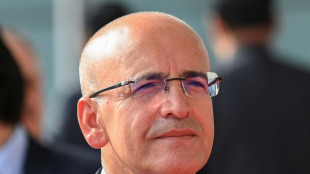 Those who profited from fund scandal 'identified': Turkish minister
-
Turkey troops to stay in Syria, Iraq 'until border security ensured', defence minister tells AFP

-
 At half a century, Senegal's Orchestra Baobab bets on new generation
-
Kulusevski a 'different man' after emotional Spurs return

-
 O'Connor, Sivakov join Seixas at Decathlon CMA CGM
-
Nawaz and Minhas lift Pakistan to 302-9 in England ODI

-
 Faletau left out of Wales squad for Nations Championship
-
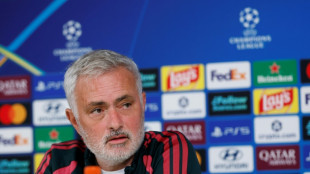
Mourinho warns no 'untouchable' stars at Real Madrid
-
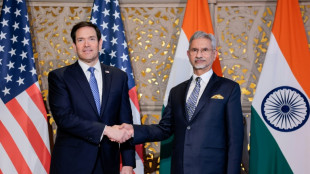 Rubio says India diversifying oil, trade deal 'very close'
-
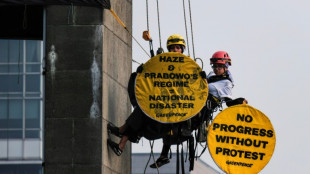
Indonesian anger builds over wildfires, toxic haze
-
 Kemi Badenoch Proposes Ending Childcare Benefit Cliff Edge
-
Late Okafor Penalty Earns Alvechurch FA Cup Replay

-
 More Than 52,000 West Midlands Families Use Tax-Free Childcare
-
Low-Cost Homemade Ideas Offer Alternatives for Halloween Costumes

-
 Commanders Fear Serious Knee Injury for Terry McLaurin
-
Christiane Amanpour Plans CNN Departure After 43 Years

-
 Rays Beat Guardians 7-3 to Secure World Series Place
-
Richard Riehle, Prolific Film and Television Actor, Dies at 78

-
 Veteran Character Actor Richard Riehle Dies at 78
-
Unverified Kim Jong Un Rumours Put Kim Yo Jong Back in Focus

-
 Hardik Pandya Meets Fan Who Walked 2,390 Kilometres Across India
-
Delhi Issues Dussehra Traffic Curbs and Diversions for October 20

-
 Erling Haaland Buys Villa at Abu Dhabi’s Jacob & Co Beachfront Living
-
iQOO Neo 12 Set for October 28 China Launch With 144Hz Display

-
 Analysts Stay Positive on Vedanta After Hindustan Zinc’s Strong Quarter
-
India Warns Unpaid Assessments Are Deepening UN Cash Strain

-
 World Gold Council Sees Digital Gold Market Tripling by 2031
-
Agrograde Introduces AI Optical Sorter for Arecanut Processing

-
 Industry Groups Outline Four Steps to Help Women Farmers Reach Markets
-
Paras Healthcare Raises ₹652.5 Crore From IPO Anchor Investors

-
 Tamil Nadu and Puducherry Face Return of Very Heavy Rain
-
Gold Remains Under Pressure as Energy Inflation Clouds Rate Outlook

-
 Tamil Nadu Adds 25 State-Funded Workdays for Eligible Rural Households
-
Brokerages See Eternal Extending Food Delivery and Quick-Commerce Gains

-
 Tonbo Imaging IPO Draws Nearly 136 Times the Shares Offered
-
Marco Rubio Travels to India as Trade Talks Reach Difficult Stage

-
 James Maddison Leads Tottenham to First League Victory of Season
-
Asian Technology Shares Slide as Investors Reassess AI Boom

-
 October 20 Milestones Trace Decades of Kuwait’s Development
-
Yan Diomande Finds Form Before Real Madrid Faces Former Club Leipzig

-
 Spain Housing Dispute Puts Landlords at Centre of Election Debate
-
Cali Biodiversity Fund Struggles After Raising Only $7,085

-
 Qatar Prime Minister Opens Eighth Global Security Forum
-
Qatar Amir and Singapore Prime Minister Expand Bilateral Cooperation

-
 US Midterms Put Control of Congress and Key States at Stake
-
Doha Debates Examines Who Should Set the Moral Rules for AI

Protester killed as Sudanese protest 3 years after anti-Bashir sit-in
A Sudanese protester was killed Wednesday as thousands rallied against last year's military coup on the anniversary of previous popular uprisings, most recently against autocrat Omar al-Bashir three years ago.
The 19-year-old was hit "by a bullet fired by coup forces" during the crackdown on the demonstrations in eastern Khartoum, the independent Central Committee of Sudan Doctors said.
His death brings to 94 the death toll from the crackdown on anti-coup protests since the October 25 military coup led by army chief Abdel Fattah al-Burhan, the committee said.
Security forces fired tear gas at demonstrators in the capital Khartoum, its twin city of Omdurman, and in Wad Madani to the south, witnesses and AFP correspondents said.
They also "stormed Al-Jawda hospital and fired tear gas inside, scaring patients and health workers and causing suffocation among some of them", said the doctors committee.
Sudan has been reeling from deepening unrest since its latest coup that has derailed a political transition period and hammered the economy of one of the world's poorest countries.
Pro-democracy activists had warned online of a people power "earthquake of April 6" -- a momentous day in Sudan's history that was key in bringing down earlier strongmen.
In 1985, the day saw the ouster of president Jaafar Nimeiri following a popular uprising. In 2019 it marked the start of a mass sit-in outside army headquarters, after months of protests, against Bashir's three decades in power.
"It is an important day... so we expect many to take to the streets despite the heat and Ramadan," the Muslim holy month when the faithful observe a daytime fast, said one Khartoum protester, Badwi Bashir.
"We just want to bring down the coup (leadership) and end the prospect of any future coups."
At dusk, volunteers were seen distributing water, juice, dates and other food as protesters sat to break their fast in Khartoum and neighbouring cities, AFP correspondents said.
- 'No to military rule' -
Sudan's latest putsch has "set fire to all aspects of life, turning our country into an arena of crises," said the civilian alliance Forces of Freedom and Change, or FFC.
Security forces had earlier sealed off key bridges and deployed around the presidential palace and army headquarters.
In Omdurman, protesters broke through barbed wire blockades and marched through streets leading to the parliament building, according to an AFP correspondent.
Protesters marched in the eastern state of Gedaref with banners that read "No to military rule" and "Away with the government of hunger", said one witness, Ahmed Salah.
Demonstrations were also held in several cities across the Darfur region, the central state of North Kordofan and the Red Sea city of Port Sudan, according to witnesses.
Five days after the start of the 2019 sit-in, generals bowed to the pressure on the streets to remove Bashir.
But the protesters stayed on to press for civilian rule, only to be dispersed in a crackdown in June that year by men in military fatigues that claimed 128 lives according to medics.
Sudan's civilian and military leaders later agreed on a transition of power, which promised greater international engagement for the country as well as foreign aid and investment.
But last October's coup upended those plans, leading to the current wave of protests.
- Partnership 'failed' -
"We have to defeat the coup," FFC spokesman Jaafar Hassan said last week.
"We have tried a partnership with the military, and it failed, ending in this coup, and we shouldn't do this again."
Burhan said last Saturday he would only "hand over power to an honest, elected authority, accepted by the all the Sudanese people".
The United States on Wednesday warned against "the use of any violence" and demanded Sudanese authorities "keep their word and hold accountable those responsible for abuses."
Since the coup, Sudan's already ailing economy has suffered severe blows, as Western donors cut crucial aid pending the restoration of a transition to civilian rule.
Prices of food, fuel and basic commodities have soared and crime has spiked. Violence has intensified in remote areas, particularly the restive Darfur region, the UN says.
Burhan last week threatened to expel UN special representative Volker Perthes, accusing him of "interference" in the country's affairs after Perthes warned of the deepening crisis in Sudan during a UN Security Council briefing.
B.Mahmoud--SF-PST