New Tesla factory another win for business-friendly Texas

 Faletau still in Tandy's plans despite being left out of Wales squad
 Stock markets retreat as oil rises again

 Those who profited from fund scandal 'identified': Turkish minister

 At half a century, Senegal's Orchestra Baobab bets on new generation

 O'Connor, Sivakov join Seixas at Decathlon CMA CGM

 Faletau left out of Wales squad for Nations Championship

 Rubio says India diversifying oil, trade deal 'very close'

 Kemi Badenoch Proposes Ending Childcare Benefit Cliff Edge

 More Than 52,000 West Midlands Families Use Tax-Free Childcare

 Commanders Fear Serious Knee Injury for Terry McLaurin

 Rays Beat Guardians 7-3 to Secure World Series Place

 Veteran Character Actor Richard Riehle Dies at 78

 Hardik Pandya Meets Fan Who Walked 2,390 Kilometres Across India

 Erling Haaland Buys Villa at Abu Dhabi’s Jacob & Co Beachfront Living

 Analysts Stay Positive on Vedanta After Hindustan Zinc’s Strong Quarter

 World Gold Council Sees Digital Gold Market Tripling by 2031
 Industry Groups Outline Four Steps to Help Women Farmers Reach Markets

 Tamil Nadu and Puducherry Face Return of Very Heavy Rain

 Tamil Nadu Adds 25 State-Funded Workdays for Eligible Rural Households

 Tonbo Imaging IPO Draws Nearly 136 Times the Shares Offered

 James Maddison Leads Tottenham to First League Victory of Season

 October 20 Milestones Trace Decades of Kuwait’s Development

 Spain Housing Dispute Puts Landlords at Centre of Election Debate

 Qatar Prime Minister Opens Eighth Global Security Forum

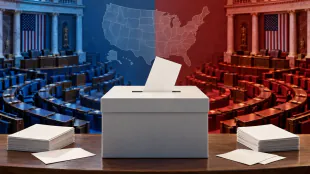 US Midterms Put Control of Congress and Key States at Stake

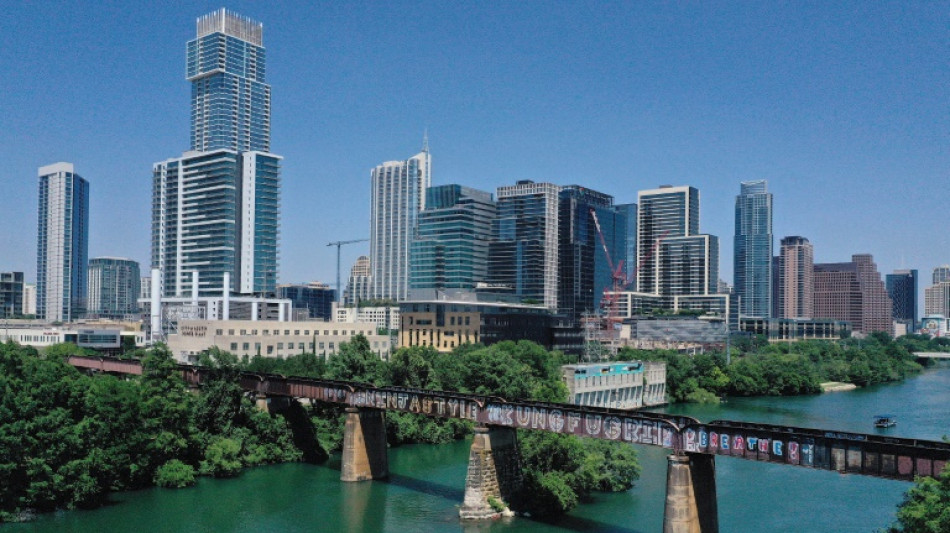
Tesla's unveiling this week of a new auto factory in Austin has highlighted corporate America's growing affinity for Texas compared with California and other states seen as less business-friendly.
The state, bigger than France in land mass and second among US states to California in population, has become the location of choice for Tesla CEO Elon Musk's new "Gigafactory."
The new factory will be officially presented at what Musk has dubbed a "Cyber Rodeo" on Thursday, with up to 15,000 visitors.
Last year, Tesla moved its corporate headquarters from Silicon Valley to Austin. And Tesla is far from alone in picking the Lone Star state as its corporate seat.
Texas Governor Greg Abbott has spoken of the state's commitment to "economic liberty." In practice that means Texas is one of just a handful of US states with no individual income tax, or a corporate income tax.
The state also is aggressive about offering subsidies to attract businesses and new jobs.
- The 'new California' -
In a country often described as riven between red (conservative) and blue (progressive) ideologies, Texas and California are in many ways prototypical of a divided country.
Texas has pushed ahead with myriad hardline policies on divisive social issues.
These include heavy restrictions on abortion rights and on parents who seek health services for transgender children -- policies that led New York Times columnist Frank Bruni to recently question whether Texas was the most "meanspirited" state in the nation.
Despite these controversies, big business has continued to flock to Texas.
The state has long prospered from its legacy as a petroleum powerhouse, but the Austin area has become a major center for technology, while Houston is known as a biomedical center and as home to a major NASA site.
Lee Ohanian and Joseph Vranich of the Hoover Institution, a conservative think tank at Stanford University, have hailed the Texas model of lower taxes and limited regulation in comparison with the California approach.
"Texas has become the new California, and California is becoming the new Rust Belt, losing businesses and people to states that offer more opportunities and a better, more affordable life," they wrote in an August 2021 column that noted that Texas has now seven times the number of capital investment projects compared with California.
The state is home to dozens of Fortune 500 companies, including others that have, like Texas, relocated to the Lone Star State. These include Oracle and Hewlett Packard, which moved in 2020.
Other companies that are based in other states are also picking Texas as home to key operations.
Aerospace giant Boeing, which is based in Chicago, is considering relocating some of its remanufacturing capacity from Seattle to Texas, an industrial source told AFP.
- Human capital -
Beyond its business climate, Texas is home to several top schools, including Rice University in Houston and the University of Texas at Austin, both ongoing sources of young, diverse and skilled labor.
Moreover, Texas' greater affordability in terms of lower rental costs, accessible cost of living and more physical space makes the state an appealing option for recent graduates.
In the third quarter of 2021, the median price for a home was $233,593 in Austin and $274,136 in Dallas. That compared with $1.2 million in San Francisco and $647,605 in Westchester County, New York, according to National Association of Realtors.
"Why Texas?" asked Abbott in a recent fireside chat.
"From education, agriculture, space, technology, and more, Texas offers everything families, growing businesses, and individuals need to succeed," Abbott said, pointing to attributes that include "our world-class business climate and diverse workforce that make Texas the best place to live, work, and raise a family."
S.Barghouti--SF-PST