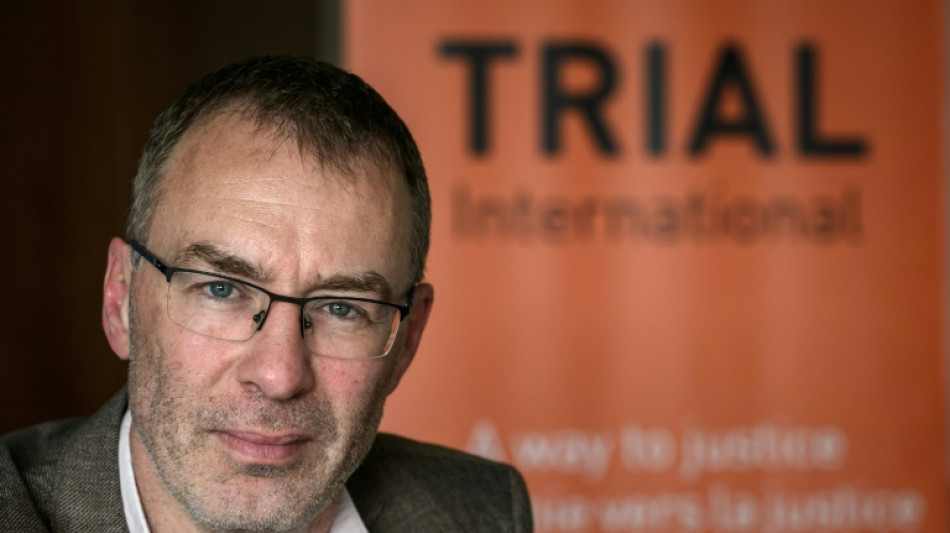
There will be accountability for Ukraine crimes, eventually: expert

 Faletau still in Tandy's plans despite being left out of Wales squad
 Stock markets retreat as oil rises again

 Those who profited from fund scandal 'identified': Turkish minister
 At half a century, Senegal's Orchestra Baobab bets on new generation

 O'Connor, Sivakov join Seixas at Decathlon CMA CGM
 Faletau left out of Wales squad for Nations Championship
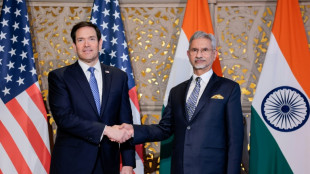 Rubio says India diversifying oil, trade deal 'very close'
 Kemi Badenoch Proposes Ending Childcare Benefit Cliff Edge

 More Than 52,000 West Midlands Families Use Tax-Free Childcare

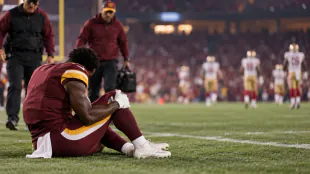 Commanders Fear Serious Knee Injury for Terry McLaurin
 Rays Beat Guardians 7-3 to Secure World Series Place

 Veteran Character Actor Richard Riehle Dies at 78

 Hardik Pandya Meets Fan Who Walked 2,390 Kilometres Across India
 Erling Haaland Buys Villa at Abu Dhabi’s Jacob & Co Beachfront Living

 Analysts Stay Positive on Vedanta After Hindustan Zinc’s Strong Quarter
 World Gold Council Sees Digital Gold Market Tripling by 2031

 Industry Groups Outline Four Steps to Help Women Farmers Reach Markets

 Tamil Nadu and Puducherry Face Return of Very Heavy Rain

 Tamil Nadu Adds 25 State-Funded Workdays for Eligible Rural Households

 Tonbo Imaging IPO Draws Nearly 136 Times the Shares Offered

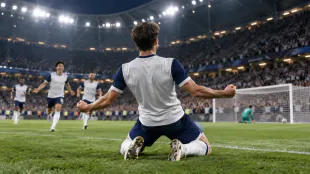 James Maddison Leads Tottenham to First League Victory of Season

 October 20 Milestones Trace Decades of Kuwait’s Development
 Spain Housing Dispute Puts Landlords at Centre of Election Debate

 Qatar Prime Minister Opens Eighth Global Security Forum

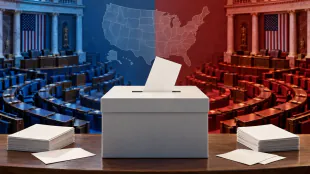 US Midterms Put Control of Congress and Key States at Stake

Shocking images of bodies strewn in Ukrainian streets clearly indicate war crimes, but legally proving that and ensuring accountability is tricky, according to a top international justice expert.
The calls for war crimes investigations and trials over Moscow's conflict in Ukraine have intensified after horrific photographs emerged of corpses in roads and in mass graves in Bucha, near Kyiv, after Russian troops retreated from the devastated town.
The Kremlin has denied responsibility and suggested the images are fake or that the deaths occurred after Russian forces pulled out of the area.
Philip Grant, who heads the TRIAL International NGO that works to ensure accountability for international crimes, said that, while powerful, such images alone cannot legally prove war crimes have occurred and who is responsible.
"Images in themselves rarely count as the defining evidence," he told AFP in an interview.
"They can reveal important elements, but they will not reveal the full story," he said.
Grant said it was important to be "cautious" when interpreting events, pointing to past examples of manipulation and misinterpretation.
There was, for instance, the dramatic misreporting that a massacre occurred during the 1989 Timisoara uprising in Romania, and Soviet efforts during the Nuremberg trials to pin its own 1940 Katyn massacre of Polish officers on Nazi Germany.
- 'Clear-cut' -
At the same time, Grant said, investigators should "exercise sound judgement" with what they can see.
In the case of the Bucha images, "it looks pretty clear-cut that war crimes have been committed," he said.
But the images alone do not make it possible to "attribute that responsibility to a specific person or to a specific group."
Even if it was determined that "Russians did it," he said, "that's not accountability. We need to know who ordered that."
"Is it (Russian President) Vladimir Putin? Is it the commander on the ground? Is it a rogue unit?"
"In terms of criminal liability," he said, "it's too early to say who should end up in court for those crimes."
That process can be long and complicated, he acknowledged.
As the International Criminal Court, the UN Human Rights Council and a growing number of countries begin sending war crimes investigators to Ukraine, they will have their work cut out for them, Grant said.
- Is it a crime? -
The first step is to "make sure you have a crime".
"It might look obvious, but it's not always," he said, pointing out that in war, unlike in civilian life, killing people can be lawful.
A soldier killed in battle is not considered a crime, but if that soldier is killed after being wounded or taken prisoner, it is.
And if you find a mass grave with soldiers killed in combat, "that is not a crime," Grant said.
But "if you find in the mass grave a family, civilians, that is probably a crime."
After determining a crime has been committed comes the even more complicated task of figuring out who is legally responsible.
With war crimes, you can have "many circles" of accountability, Grant said, from the perpetrator, to superiors who may have ordered the crime, or failed to exercise control over soldiers involved.
- Top-level liability -
"The levels go all the way up to the top," he said.
In cases where evidence points to top-level criminal liability, the main challenge is "getting access to the suspects," Grant said.
If the Ukraine investigations "point to criminal responsibility of Putin, you would need to put your hands on the person."
"That's not going to be something easy," he said, but "it is possible."
Importantly, there is no statute of limitation for war crimes.
Those involved could be held accountable even decades after the fact, as with former concentration camp guards and officials still being put on trial for crimes committed during World War II.
Grant said for Ukraine, even lower-level commanders and civilian authorities "could be liable for crimes committed for a long time to come."
"Putin is 69," he pointed out. "That leaves a little bit of room, but there are others."
"There are probably hundreds of people in the security apparatus who could at some point be held accountable, not even talking about the field soldiers."
F.Qawasmeh--SF-PST