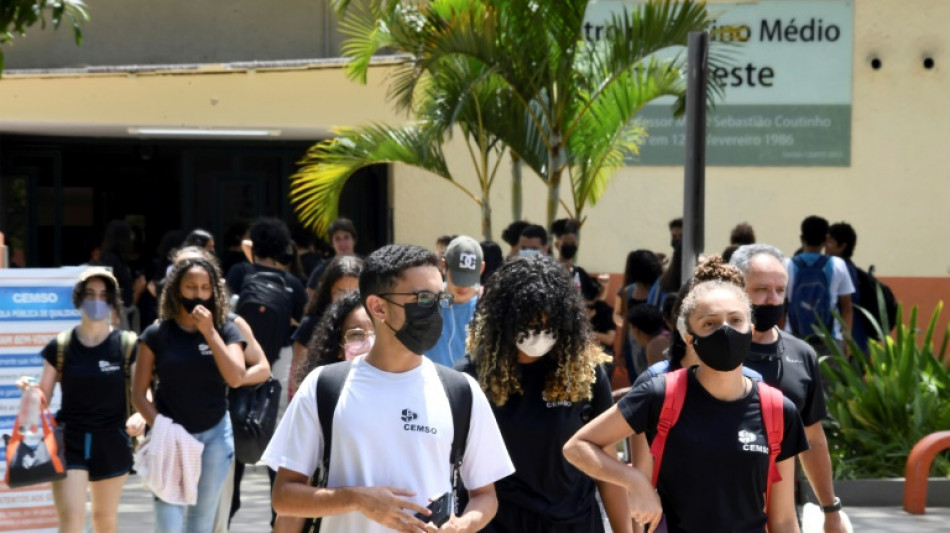
Young voters blase on Brazil's elections

 Faletau still in Tandy's plans despite being left out of Wales squad

 Stock markets retreat as oil rises again

 Those who profited from fund scandal 'identified': Turkish minister

 At half a century, Senegal's Orchestra Baobab bets on new generation

 O'Connor, Sivakov join Seixas at Decathlon CMA CGM
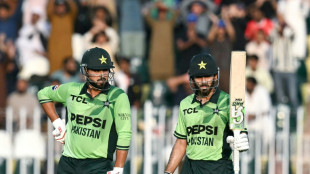
 Faletau left out of Wales squad for Nations Championship
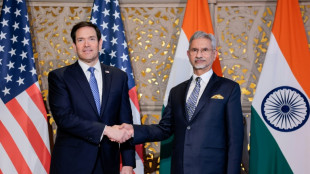 Rubio says India diversifying oil, trade deal 'very close'
 Kemi Badenoch Proposes Ending Childcare Benefit Cliff Edge

 More Than 52,000 West Midlands Families Use Tax-Free Childcare

 Commanders Fear Serious Knee Injury for Terry McLaurin

 Rays Beat Guardians 7-3 to Secure World Series Place

 Veteran Character Actor Richard Riehle Dies at 78

 Hardik Pandya Meets Fan Who Walked 2,390 Kilometres Across India
 Erling Haaland Buys Villa at Abu Dhabi’s Jacob & Co Beachfront Living

 Analysts Stay Positive on Vedanta After Hindustan Zinc’s Strong Quarter

 World Gold Council Sees Digital Gold Market Tripling by 2031

 Industry Groups Outline Four Steps to Help Women Farmers Reach Markets

 Tamil Nadu and Puducherry Face Return of Very Heavy Rain

 Tamil Nadu Adds 25 State-Funded Workdays for Eligible Rural Households

 Tonbo Imaging IPO Draws Nearly 136 Times the Shares Offered

 James Maddison Leads Tottenham to First League Victory of Season

 October 20 Milestones Trace Decades of Kuwait’s Development

 Spain Housing Dispute Puts Landlords at Centre of Election Debate

 Qatar Prime Minister Opens Eighth Global Security Forum

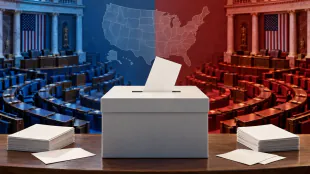 US Midterms Put Control of Congress and Key States at Stake

Not only is this the year Brazilian teenager Rodrigo Kutz turns old enough to vote, the almost-16-year-old gets to cast his first ballot in a clutch presidential election.
Only thing is, he couldn't care less -- like a lot of young Brazilians, who could make up a key voter demographic in the October contest... if only they were interested.
A deeply divided Brazil is heading for a clash of the titans in six months' time, likely to face a stark choice between polar opposites: far-right incumbent Jair Bolsonaro and his nemesis, leftist ex-president Luiz Inacio Lula da Silva.
But "I don't like either of them," says Kutz, a high school student in the capital, Brasilia.
"Maybe a younger candidate would make more sense to me. I hope there will be other options next time around."
Brazil is one of just nine countries where 16-year-olds have the right to vote in national elections.
They also have the right not to. Voting is mandatory in Brazil, but only for 18-and-ups.
With a month to go for voters to register, 16- and 17-year-olds look set to participate at the lowest rate in 30 years.
Just 850,000 have registered so far, down 60 percent in a decade.
At the last elections, in 2018, 1.4 million voters from the youngest demographic turned out.
"My parents have been telling me I should vote, but I'm not really into politics," says Eduardo Proenca, 16.
"I just see politicians fighting over which one's the least awful. It doesn't really inspire me."
- Neglected demographic -
There is not much that is youthful or new about the 2022 race, which looks set to pit the 67-year-old who has led Brazil for the past four years against the 76-year-old who led the country from 2003 to 2010.
But figures ranging from pop superstar Anitta to the electoral authorities themselves are trying to get young voters more involved.
"You wanna ask me for a picture when you meet me someplace? If you're over 16, I'll only take a picture if you've got one of your voter registration card," Anitta, a vocal Bolsonaro critic, tweeted recently.
The Supreme Electoral Tribunal has meanwhile launched a social media campaign with a diverse crowd of hip young models telling teens, "Bora votar" -- slang for "Let's go vote."
"Young people need to get involved to decide our future," the tribunal's top judge, Edson Fachin, told AFP by email.
"The worst vote is the one that doesn't get cast."
But the cheerleaders of democracy are up against the apathy of young voters alienated by years of seemingly bottomless corruption scandals and a pandemic-battered economy that has left them out, said political scientist Marco Antonio Teixeira of the Getulio Vargas Foundation.
In 2020, at the height of the crisis, some 30 percent of Brazilian youths were neither employed nor in school.
Brazilian political parties have also done a bad job involving the next generation, Teixeira said.
"They're very hierarchical spaces dominated by the leadership and traditional political families. They're completely passive when it comes to young people," he said.
- 'Extremist views' -
Eighteen-year-old Marco Antonio May will have to vote under Brazilian law -- but doesn't want to.
"If it were up to me, I wouldn't go," he says.
"I don't see politicians worrying much about us (young people). Brazil has two dominant candidates who usually have extremist views on everything, and I just find that uninspiring."
The two front-runners have been trying to reach out to young voters, especially Bolsonaro.
The president called on "parents and grandparents" to help get teens out to vote against Lula, urging them to explain to kids "where Brazil was going" when it was governed by the ex-steelworker and his hand-picked successor, Dilma Rousseff (2011-2016) -- a period that ended with Brazil's economic boom going catastrophically bust amid a tsunami of corruption scandals.
But Bolsonaro is trailing in the polls, and fares even worse among young voters.
Lula leads him by 29 percentage points among 16- to 24-year-olds, according to a recent poll from the Datafolha institute, which put the gap between the candidates at 17 percentage points for the electorate as a whole.
F.AbuZaid--SF-PST