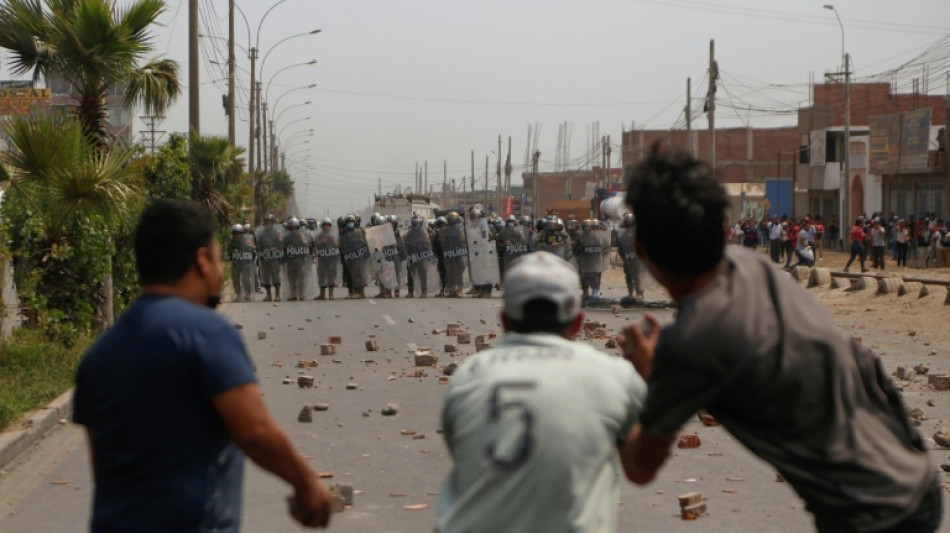
Peru ends Lima curfew aimed at quelling protests

 Faletau still in Tandy's plans despite being left out of Wales squad

 Stock markets retreat as oil rises again

 Those who profited from fund scandal 'identified': Turkish minister
 At half a century, Senegal's Orchestra Baobab bets on new generation

 O'Connor, Sivakov join Seixas at Decathlon CMA CGM
 Faletau left out of Wales squad for Nations Championship
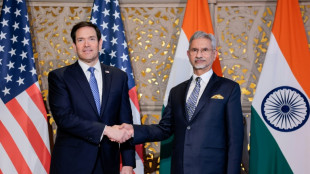 Rubio says India diversifying oil, trade deal 'very close'
 Kemi Badenoch Proposes Ending Childcare Benefit Cliff Edge

 More Than 52,000 West Midlands Families Use Tax-Free Childcare

 Commanders Fear Serious Knee Injury for Terry McLaurin

 Rays Beat Guardians 7-3 to Secure World Series Place

 Veteran Character Actor Richard Riehle Dies at 78
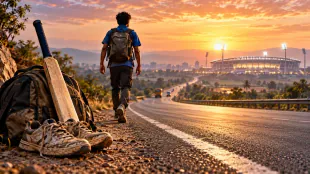 Hardik Pandya Meets Fan Who Walked 2,390 Kilometres Across India
 Erling Haaland Buys Villa at Abu Dhabi’s Jacob & Co Beachfront Living

 Analysts Stay Positive on Vedanta After Hindustan Zinc’s Strong Quarter
 World Gold Council Sees Digital Gold Market Tripling by 2031

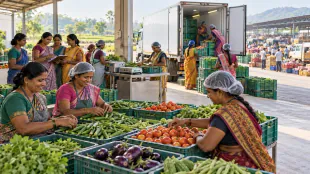 Industry Groups Outline Four Steps to Help Women Farmers Reach Markets

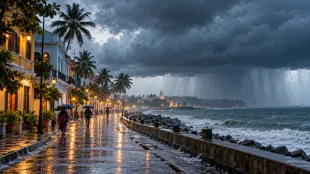 Tamil Nadu and Puducherry Face Return of Very Heavy Rain

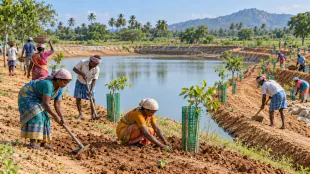 Tamil Nadu Adds 25 State-Funded Workdays for Eligible Rural Households
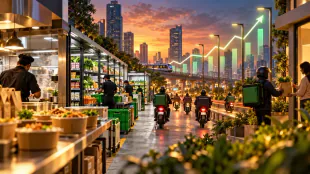
 Tonbo Imaging IPO Draws Nearly 136 Times the Shares Offered

 James Maddison Leads Tottenham to First League Victory of Season

 October 20 Milestones Trace Decades of Kuwait’s Development

 Spain Housing Dispute Puts Landlords at Centre of Election Debate

 Qatar Prime Minister Opens Eighth Global Security Forum

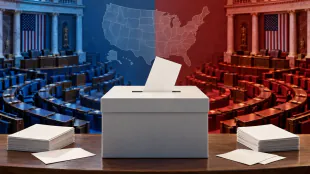 US Midterms Put Control of Congress and Key States at Stake

Peruvian President Pedro Castillo on Tuesday announced the end of a curfew in the capital Lima aimed at containing protests against rising fuel prices following crisis talks with Congress.
"We will with immediate effect remove this immobility (curfew). We call on the Peruvian people to be calm," said the leftist leader, alongside Congress president Maria del Carmen Alva.
Police and soldiers patrolled the largely empty streets of the capital earlier Tuesday after Castillo announced the curfew shortly before midnight on Monday for Lima and the neighboring port city of Callao.
It was due to last until midnight on Tuesday as authorities attempted to curtail protests against rising fuel and toll prices amid growing economic hardship.
But news of the curfew's end was met with cheers by hundreds of protesters outside Congress and in other parts of the capital, AFP journalists noted.
"The people did it!" said opposition legislator Alva on Twitter.
Shops and schools were closed and bus services mostly suspended but many workers, at hotels or hospitals for example, ignored the shut-down, which was widely criticized on social media.
The measure took many in Lima by surprise, given that the most violent protests in recent days took place far from the capital.
Many had no choice but to take a taxi or walk to their place of work.
"It was a very late and improvised" announcement, complained Cinthya Rojas, a nutritionist who waited patiently for one of the handful of buses still running to get to work at a hospital east of Lima.
A hotel employee told AFP she had to pay the equivalent of $8, a small fortune on her salary, for a taxi to work.
Some tourists had difficulty finding food, with restaurants and supermarkets closed, but domestic and international flights continued as normal from Jorge Chavez airport, its concessioner said.
Residents of some Lima neighborhoods beat pots and pans at their windows in protest against the lockdown at noon.
- Soaring food prices -
"The measures taken, like those taken yesterday, are not against the people but in order to save the lives of compatriots," said Castillo, balked by the first social protests of his eight-month-old presidency.
He had said the curfew move was "to reestablish peace" after countrywide protests amidst biting food inflation.
"There was information from a source that there were going to be acts of vandalism today. That is why we have taken this step," Defense Minister Jose Gavidia said earlier on Tuesday.
While Lima was under curfew, protests continued and roads were blocked in several smaller cities elsewhere in Peru.
Like much of the rest of the world, Peru's economy is reeling from the damages wrought by the coronavirus pandemic.
The country's Consumer Price Index in March saw its highest monthly increase in 26 years, driven by soaring food, transport and education prices, according to the national statistics institute.
In an attempt to appease protesters, the government over the weekend eliminated the fuel tax and decreed a 10 percent increase in the minimum wage from May 1.
But the General Confederation of Workers of Peru (CGTP) -- the country’s main trade union federation -- considered the measures insufficient and took to the streets again Monday in Lima and several regions in Peru's north.
Some protesters set fire to toll booths on highways, looted shops and clashed with police.
Others burned tires and blocked the north-south Pan-American highway, the country's most important artery for people and goods.
The disruptions halted public transport and closed schools on Monday.
"Social protest is a constitutional right, but it must be done within the law," Castillo, a 52-year-old former rural school teacher, pleaded during his brief TV appearance late on Monday.
- 'Authoritarian measure' -
Two-thirds of Peruvians disapprove of Castillo's rule, according to an Ipsos opinion poll in March.
Castillo's announcement of a curfew came a week after he escaped impeachment by Congress, where opponents accuse his administration of a "lack of direction" and of allowing corruption in his entourage.
It also coincided with the 30th anniversary of a coup staged by ex-president Alberto Fujimori, jailed over his regime's bloody campaign against insurgents.
"The measure dictated by President Pedro Castillo is openly unconstitutional, disproportionate and violates people's right to individual freedom," tweeted lawyer Carlos Rivera, a representative of Fujimori's victims.
Political analyst Luis Benavente told AFP the curfew was "an authoritarian measure" that revealed "ineptitude, incapacity to govern."
A large proportion of Lima's 10 million residents work in the informal sector, as street sellers and other traders, meaning the curfew left them without income for the day.
A Copa Libertadores football match between Peruvian Club Sporting Cristal and Brazil's Flamengo, which had been thrown into doubt, would go ahead as scheduled on Tuesday night in Lima, regional governing body CONMEBOL said on Instagram.
U.Shaheen--SF-PST