War crime, crime against humanity, genocide: What's the difference?

 All-rounder Minhas stars as Pakistan crush England in tri-series
 Bavuma hits 179, Rabada strikes as South Africa dominate
 Allrounder Minhas stars as Pakistan crush England in tri-series
 Albania PM blames 'hybrid war' for week of unrest

 Bavuma hits 179 to lead South African fightback
 Solid GM results overshadowed by latest jump in commodity costs

 Houthi attacks undermine Saudi Arabia's economic ambitions
 French PM vows 'massive' police deployment for new demonstrations

 Power outage hits Google Cloud services, disrupting UK banks
 AI challenges maths by solving the unsolvable

 Turkey troops to stay in Syria, Iraq 'until border security ensured', defence minister tells AFP

 Kulusevski a 'different man' after emotional Spurs return

 Nawaz and Minhas lift Pakistan to 302-9 in England ODI

 Mourinho warns no 'untouchable' stars at Real Madrid
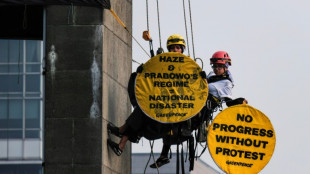 Indonesian anger builds over wildfires, toxic haze

 Late Okafor Penalty Earns Alvechurch FA Cup Replay

 Low-Cost Homemade Ideas Offer Alternatives for Halloween Costumes

 Christiane Amanpour Plans CNN Departure After 43 Years

 Richard Riehle, Prolific Film and Television Actor, Dies at 78

 Unverified Kim Jong Un Rumours Put Kim Yo Jong Back in Focus

 Delhi Issues Dussehra Traffic Curbs and Diversions for October 20

 iQOO Neo 12 Set for October 28 China Launch With 144Hz Display

 India Warns Unpaid Assessments Are Deepening UN Cash Strain

 Agrograde Introduces AI Optical Sorter for Arecanut Processing

 Paras Healthcare Raises ₹652.5 Crore From IPO Anchor Investors

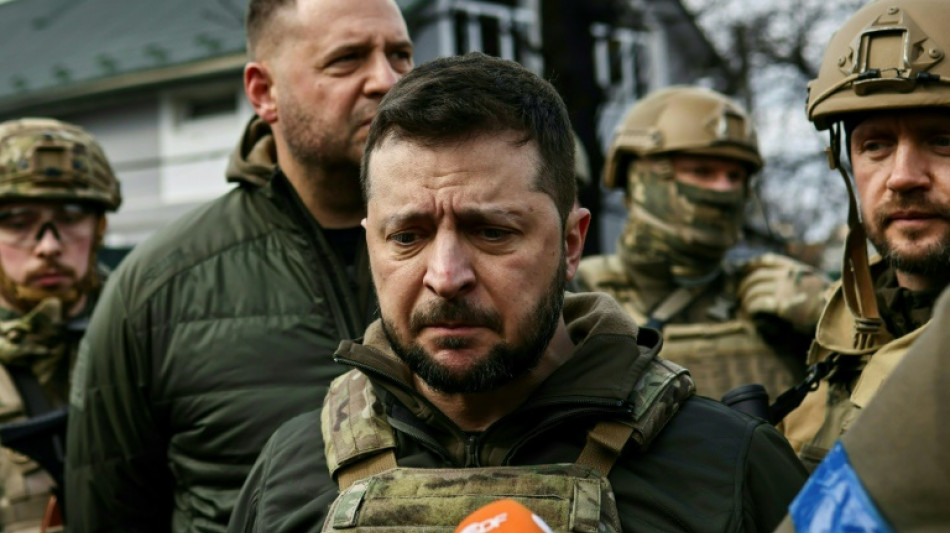
Russia is accused of war crimes in Ukraine, with the claims growing louder following the discovery of dozens of bodies in areas recently retaken from Russian forces near the capital Kyiv.
Ukrainian President Volodymyr Zelensky has accused Moscow of attempted "genocide" over the findings and labelled the bloody siege of the southern port of Mariupol a "crime against humanity".
We take a look at the different categories of the most serious crimes known to man, which the International Criminal Court (ICC) in The Hague was set up to prosecute.
Neither Russia nor Ukraine are parties to the ICC but Ukraine has accepted the court's jurisdiction for alleged crimes committed on its soil since Russia's invasion of Crimea.
The ICC's chief prosecutor opened a probe into possible war crimes in Ukraine on March 3.
- What is a war crime? -
War crimes are serious violations of international law against civilians and combatants during an armed conflict.
The parameters of what constitutes such a crime are set out in Article 8 of the 1998 Rome Statute that established the ICC.
It defines them as "grave breaches" of the 1949 Geneva Conventions covering more than 50 scenarios, including killing, torture, rape and the taking of hostages as well as attacks on humanitarian missions.
It also covers deliberate attacks on civilians or "towns, villages, dwellings or buildings which are undefended and which are not military objectives" as well as the "deportation or transfer of all or parts of the population" of an occupied territory.
- What is a crime against humanity? -
The notion of such a crime was first laid down on August 8, 1945, and codified in article 7 of the Rome Statute. It involves "a widespread or systematic attack directed against any civilian population" including "murder" and "extermination" as well as "enslavement" and "deportation or forcible transfer."
Crimes against humanity can occur in peacetime and include torture and rape and discrimination, be it racial, ethnic, cultural, religious or gender-based.
- What is genocide? -
Genocide as a legal concept dates back to the Nuremburg trials of Nazi war criminals, with Polish-Jewish lawyer Raphael Lemkin coining the term to describe the Nazi extermination of six million Jews.
The crime of genocide was formally created in the Genocide Convention of 1948 to describe "acts committed with intent to destroy, in whole or in part, a national, ethnical, racial or religious group".
Genocide is a "very specific international crime" which is difficult to prove, says Cecily Rose, professor of international law at the University of Leiden in the Netherlands, noting that it demands proof of the "mental motivation" behind it.
- Newcomer: crime of aggression -
The ICC added a crime of aggression to its remit in 2017 to includes attacks on "the sovereignty, territorial integrity or political independence" of another country.
The offence aims to ensure that political and military leaders be held accountable for invasions and other major attacks but cannot be used against the dozens of ICC members that have not recognised the court's jurisdiction for the crime.
The ICC also cannot indict the leader of a country that is not a member of the ICC for the crime of aggression.
Legal experts say that bringing such a case against Russia may require the establishment of a special tribunal.
Z.Ramadan--SF-PST