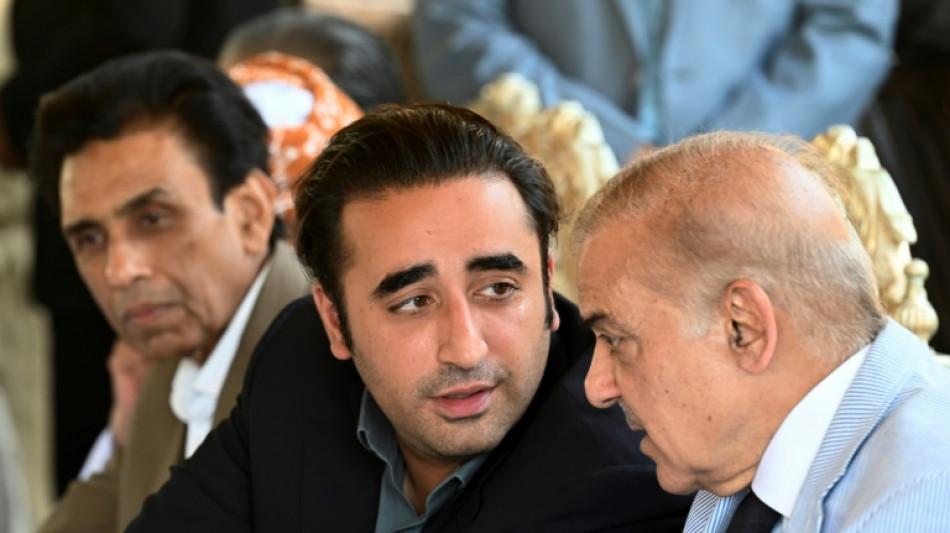
Pakistan constitution wrangle drags on in court

 All-rounder Minhas stars as Pakistan crush England in tri-series

 Bavuma hits 179, Rabada strikes as South Africa dominate
 Allrounder Minhas stars as Pakistan crush England in tri-series

 Albania PM blames 'hybrid war' for week of unrest

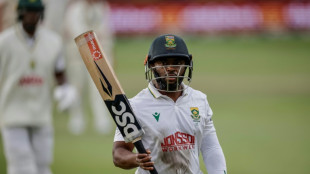 Bavuma hits 179 to lead South African fightback

 Solid GM results overshadowed by latest jump in commodity costs

 Houthi attacks undermine Saudi Arabia's economic ambitions

 French PM vows 'massive' police deployment for new demonstrations

 Power outage hits Google Cloud services, disrupting UK banks

 AI challenges maths by solving the unsolvable

 Turkey troops to stay in Syria, Iraq 'until border security ensured', defence minister tells AFP

 Kulusevski a 'different man' after emotional Spurs return

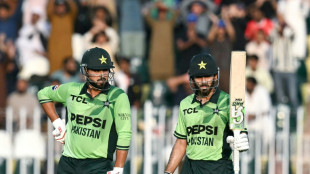 Nawaz and Minhas lift Pakistan to 302-9 in England ODI

 Mourinho warns no 'untouchable' stars at Real Madrid

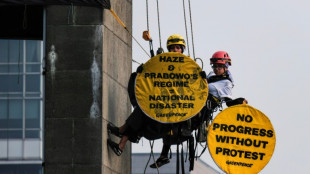 Indonesian anger builds over wildfires, toxic haze

 Late Okafor Penalty Earns Alvechurch FA Cup Replay

 Low-Cost Homemade Ideas Offer Alternatives for Halloween Costumes

 Christiane Amanpour Plans CNN Departure After 43 Years

 Richard Riehle, Prolific Film and Television Actor, Dies at 78

 Unverified Kim Jong Un Rumours Put Kim Yo Jong Back in Focus

 Delhi Issues Dussehra Traffic Curbs and Diversions for October 20

 iQOO Neo 12 Set for October 28 China Launch With 144Hz Display

 India Warns Unpaid Assessments Are Deepening UN Cash Strain

 Agrograde Introduces AI Optical Sorter for Arecanut Processing

 Paras Healthcare Raises ₹652.5 Crore From IPO Anchor Investors

Pakistan's supreme court was to sit Tuesday for a second day to rule on the legality of political manoeuvres that led Prime Minister Imran Khan to dissolve the national assembly and call fresh elections.
The court must decide if the deputy speaker of the assembly violated the constitution by refusing to allow a no-confidence vote against Khan at the weekend.
The move allowed Khan to get the presidency -- a largely ceremonial role taken by a loyalist -- to dissolve parliament and order an election, which must be held within 90 days.
Had the vote taken place, Khan was certain to have been booted from office.
President Arif Alvi upped the ante Tuesday by issuing a letter to the opposition saying if they didn't nominate a candidate for interim prime minister, the process would continue without them.
Khan has already nominated former chief justice Gulzar Ahmad for the role.
Pakistan has been wracked by political crisis for much of its 75-year existence, and no prime minister has ever seen out a full term.
There had been high hopes for Khan when he was elected in 2018 on a promise of sweeping away decades of entrenched corruption and cronyism, but he has struggled to maintain support with soaring inflation, a feeble rupee and crippling debt.
The opposition had expected to take power on Sunday after mustering enough support to oust him, but the deputy speaker refused to allow the vote to proceed because of alleged "foreign interference".
Khan said the opposition had gone too far by colluding with the United States for "regime change".
The cricket star-turned-politician says Western powers want him removed because he won't stand with them against Russia and China, and the issue is sure to ignite any forthcoming election.
Washington has denied any interference.
It is unclear when the court will rule on the issue -- or if Khan would even accept its decision -- but there is precedent.
In 1988, Muhammad Khan Junejo appealed to the supreme court after the assembly was dissolved by then-president General Zia-ul-Haq, who had taken power in a military coup years earlier.
The court agreed his government had been dissolved unconstitutionally, but ruled that since elections had been announced anyway it was best to move on.
In 1993, it ruled president Ghulam Ishaq Khan had also illegally dissolved the assembly, then with Nawaz Sharif as prime minister.
Although the government resumed business, it lasted less than two months before being dissolved again.
The supreme court is ostensibly independent, but rights activists say previous benches have been used by civilian and military administrations to do their bidding throughout Pakistan's history.
The military appears to be keeping out of the current fray, but there have been four coups -- and at least as many unsuccessful ones -- since independence in 1947, and the country has spent more than three decades under army rule.
R.Halabi--SF-PST