
Pakistan's top court adjourns as constitutional crisis rages

 Top NBA Draft pick Dybantsa to miss opener with ankle sprain

 Italy sends troops, toughens security laws after Milan clashes

 Alberta separatists vow to fight on, risking turmoil for Canada

 Two men re-arrested for suspected spying for Iran in airbase scare: UK police

 Guatemalan man gets 30 years for truck smuggling deaths of 53 migrants

 'Clayface' gets under the skin of the superhero genre

 Zelensky, US envoys hold Oslo talks as Ukraine claims US missile holdup

 All-rounder Minhas stars as Pakistan crush England in tri-series

 Bavuma hits 179, Rabada strikes as South Africa dominate
 Allrounder Minhas stars as Pakistan crush England in tri-series

 Albania PM blames 'hybrid war' for week of unrest

 Bavuma hits 179 to lead South African fightback

 Solid GM results overshadowed by latest jump in commodity costs

 Houthi attacks undermine Saudi Arabia's economic ambitions

 French PM vows 'massive' police deployment for new demonstrations

 Power outage hits Google Cloud services, disrupting UK banks

 AI challenges maths by solving the unsolvable

 Turkey troops to stay in Syria, Iraq 'until border security ensured', defence minister tells AFP

 Kulusevski a 'different man' after emotional Spurs return

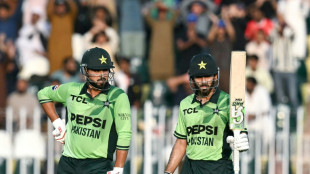 Nawaz and Minhas lift Pakistan to 302-9 in England ODI

 Mourinho warns no 'untouchable' stars at Real Madrid

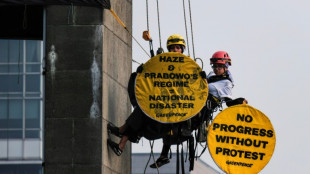 Indonesian anger builds over wildfires, toxic haze

 Late Okafor Penalty Earns Alvechurch FA Cup Replay

 Low-Cost Homemade Ideas Offer Alternatives for Halloween Costumes

 Christiane Amanpour Plans CNN Departure After 43 Years

Pakistan's Supreme Court adjourned Monday without ruling on Prime Minister Imran Khan's shock decision to dissolve parliament and call a snap election, sidestepping a no-confidence vote that would have seen him booted from office.
The court, which will sit again Tuesday, received a slew of suits and petitions from the government and opposition after the deputy speaker of the national assembly refused Sunday to allow debate on a no-confidence motion against Khan's administration.
Simultaneously, Khan asked the presidency -- a largely ceremonial office held by a loyalist -- to dissolve the assembly, meaning an election must be held within 90 days.
According to the constitution, the prime minister cannot ask for the assembly to be dissolved while he is facing a no-confidence vote.
Farooq Naek, a lawyer representing petitioners seeking to overturn the assembly dissolution, told the supreme court it wasn't in the "power and ambit" of the deputy speaker to reject the no-confidence motion.
"It was a constitutional irregularity coupled with 'mala fide'," he said, a legal term meaning "bad faith".
The opposition had expected to take power on Sunday after mustering enough votes to oust Khan, but the deputy speaker -- a member of the cricketer-turned-politician's party -- refused to allow the motion to proceed because of alleged "foreign interference".
An alliance of usually feuding dynastic parties had plotted for weeks to unravel the tenuous coalition that made Khan premier in 2018, but he claimed they went too far by colluding with the United States for "regime change".
- Washington denial -
Khan insists he has evidence -- which he has declined to disclose publicly -- of Washington's involvement, although local media have reported it was merely a briefing letter from Pakistan's ambassador following a meeting with a senior US official.
Western powers want him removed because he won't stand with them on global issues against Russia and China, Khan said.
Washington has denied involvement.
On paper, and pending any court decision, Khan will remain in charge until an interim government is formed to oversee elections.
A notice Monday from President Arif Alvi to Khan and opposition leader Shehbaz Sharif said they should agree on a new interim prime minister, but Sharif declined to cooperate.
"How can we respond to a letter written by a person who has abrogated the constitution?" he told a press conference Monday.
Fawad Chaudhry, information minister in the outgoing cabinet, tweeted that Khan had proposed former chief justice Gulzar Ahmad for the role.
- 'Constitutional crisis' -
Khan appeared to have wrong-footed the opposition with his weekend manouvres.
"Khan's 'surprise' triggers constitutional crisis," thundered The Nation newspaper Monday, while its rival Dawn called it "A travesty of democracy" above a front-page editorial.
The supreme court is ostensibly independent, but rights activists say previous benches have been used by civilian and military administrations to do their bidding throughout Pakistan's history.
It is unclear when the court may rule on the issue -- or if Khan would even accept its decision -- but there is precedent.
In 1988 Muhammad Khan Junejo appealed to the Supreme Court after the assembly was dissolved by President General Zia-ul-Haq, who had taken power in a military coup years earlier.
The court agreed his government had been dissolved unconstitutionally, but ruled that since elections had been announced anyway it was best to move on.
Khan was elected after promising to sweep away decades of entrenched corruption and cronyism, but has struggled to maintain support with inflation skyrocketing, a feeble rupee and crippling debt.
Some analysts said Khan had also lost the crucial support of the military, but it is unlikely he would have pulled off Sunday's manoeuvres without its knowledge -- if not blessing.
There have been four military coups -- and at least as many unsuccessful ones -- since independence in 1947, and the country has spent more than three decades under army rule.
"The best option in this situation are fresh elections to enable the new government to handle economic, political and external problems faced by the country," said Talat Masood, a general-turned-political analyst.
As the opposition scrambled to react, Khan taunted them on Twitter.
"So why the fear of elections now?"
V.AbuAwwad--SF-PST