More Ukrainians move west as Russia turns focus to Donbas

 Top NBA Draft pick Dybantsa to miss opener with ankle sprain
 Italy sends troops, toughens security laws after Milan clashes

 Alberta separatists vow to fight on, risking turmoil for Canada

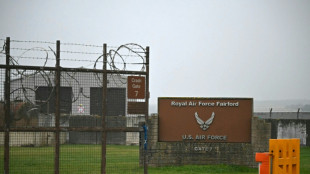 Two men re-arrested for suspected spying for Iran in airbase scare: UK police

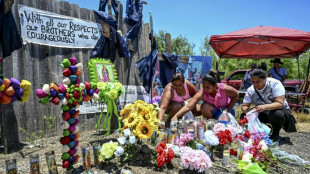 Guatemalan man gets 30 years for truck smuggling deaths of 53 migrants

 'Clayface' gets under the skin of the superhero genre
 Zelensky, US envoys hold Oslo talks as Ukraine claims US missile holdup

 All-rounder Minhas stars as Pakistan crush England in tri-series
 Bavuma hits 179, Rabada strikes as South Africa dominate

 Allrounder Minhas stars as Pakistan crush England in tri-series
 Albania PM blames 'hybrid war' for week of unrest

 Bavuma hits 179 to lead South African fightback
 Solid GM results overshadowed by latest jump in commodity costs

 Houthi attacks undermine Saudi Arabia's economic ambitions
 French PM vows 'massive' police deployment for new demonstrations

 Power outage hits Google Cloud services, disrupting UK banks
 AI challenges maths by solving the unsolvable
 Turkey troops to stay in Syria, Iraq 'until border security ensured', defence minister tells AFP

 Kulusevski a 'different man' after emotional Spurs return

 Nawaz and Minhas lift Pakistan to 302-9 in England ODI

 Mourinho warns no 'untouchable' stars at Real Madrid
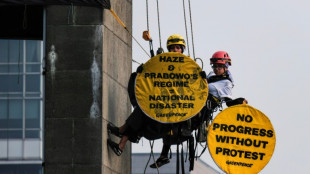 Indonesian anger builds over wildfires, toxic haze

 Late Okafor Penalty Earns Alvechurch FA Cup Replay

 Low-Cost Homemade Ideas Offer Alternatives for Halloween Costumes

 Christiane Amanpour Plans CNN Departure After 43 Years

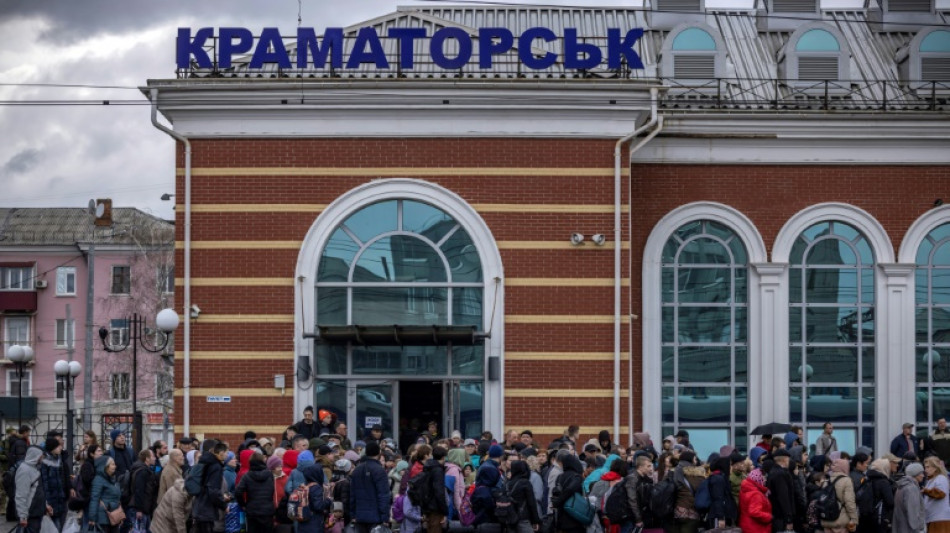
Hundreds wait for a train to take them west out of the path of the Russian advance at the station in Kramatorsk, the de facto capital of Ukrainian-controlled territory in Donbas.
"It's been like this since the end of last week. Almost 2,000 people a day are boarding trains west for Lviv or elsewhere," says Nasir, a humanitarian volunteer helping with the operation.
"It used to be two trains a day. Now it's four," he adds.
"The situation is bad. Lots of people have already left. The men are staying, our families are leaving," says Andriy, whose wife and two children are taking shelter from the rain under the awning of a fast-food hut with their bags at their feet.
Sofia, his teenage daughter standing around with three friends also making their way west, admits she is "a bit sad" to be leaving.
"I'm sending my children to the west like everyone else, to my brother-in-law's village" away from the frontline, says Andriy, holding on to his youngest child's hand.
- Next Mariupol? -
Since Russia announced its intention to concentrate its efforts on the "liberation" of Donbas, the traditional mining region in the east of Ukraine, residents have lived in fear of a major military offensive.
Authorities in Kyiv say they expect the situation to get worse as Russian troops seek to encircle Ukrainian forces arranged since 2014 along the frontline between Donetsk to the south and Lugansk in the east, the capitals of the two pro-Russian, breakaway "republics" of the same name.
The de facto capital of the rump region still under Ukrainian control, Kramatorsk sits between the pincers of the Russian army, which has just taken the city of Izyum, to the north-west of the city.
"According to the latest reports, Russia is moving its troops to the east and we will soon be surrounded," says Viktoria, a medic.
"We hope our army will hold out. This could be the next Mariupol," she says, a reference to the southern Ukrainian port, which has been pounded by the Russian army.
"Frankly, there has not really been a war in Kramatorsk so far," Viktoria says.
Sat in the Don river basin, more than 150,000 people lived in Kramatorsk before the war. Relatively spread out, the city has so far only been targeted sparingly by Russian attacks.
The roads in the city are deserted and the situation calm, for now.
"The bombing could start at any moment," says Andriy.
"People say something terrible is coming here," says Svetlana, who has accompanied a friend to the station. Her children have left, she says.
But she has to stay behind with her husband, she adds, to look after the grandmother of the family.
- 'Time to go' -
On the right of the platform, are the families with young children.
On the other end are older people and single women, including another Svetlana, sports bag over one shoulder and holding her Fox Terrier on a leash in the other hand.
The dog's paws tremble. "She is nervous. She knows something is happening," says Svetlana.
"Friends have found me an apartment in Rivne (in western Ukraine). We're really scared now. I waited until the last moment but now it's time to go."
A policeman in a black uniform with his gun by his side squeezes his daughter in his arms. "Our children are our treasures," he says.
The Rybalko family is waiting on a bench with their baggage on their laps. The boy is nibbling on some chocolate while their eldest daughter runs around their feet.
"Up until the very last moment, we wanted to stay, but with the kids it's too risky," says Tamara, one of the two grandmothers travelling with the family.
"They're saying the front will reach here. I can't quite believe it. My husband is staying here. He loves his home, his dogs and his garden too much."
The departure proceeds in an orderly fashion, the mood among the travellers caught between anxiety, sadness and resignation.
The train arrives, bound for Khmelnytsky, 14 hours and 800 km (497 miles) to the west, and passengers are helped on.
"In normal times it's four people per compartment. At the moment, it's eight, so 700 passengers in total," says the train conductor Sergiy Popatienko.
Within a few minutes, everyone is on board, leaving just enough time for a hug and a quick kiss goodbye.
"Why am I staying?" says Ivan, Tamara's husband. "My city will probably need me. I was born here. I've lived here. We're going to wait for these bad times to pass."
M.AlAhmad--SF-PST