Zelensky calls Russian troops murderers, outrage grows over 'war crimes'

 Top NBA Draft pick Dybantsa to miss opener with ankle sprain
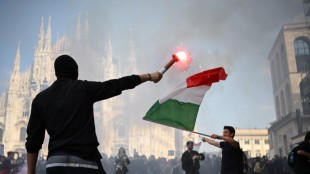
 Italy sends troops, toughens security laws after Milan clashes
 Alberta separatists vow to fight on, risking turmoil for Canada
 Two men re-arrested for suspected spying for Iran in airbase scare: UK police
 Guatemalan man gets 30 years for truck smuggling deaths of 53 migrants
 'Clayface' gets under the skin of the superhero genre
 Zelensky, US envoys hold Oslo talks as Ukraine claims US missile holdup
 All-rounder Minhas stars as Pakistan crush England in tri-series
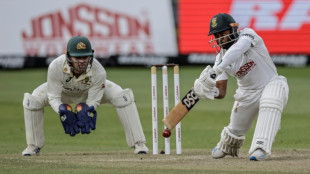 Bavuma hits 179, Rabada strikes as South Africa dominate
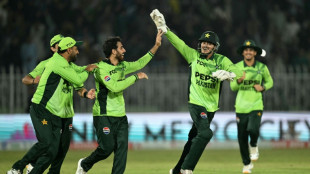 Allrounder Minhas stars as Pakistan crush England in tri-series
 Albania PM blames 'hybrid war' for week of unrest
 Bavuma hits 179 to lead South African fightback
 Solid GM results overshadowed by latest jump in commodity costs
 Houthi attacks undermine Saudi Arabia's economic ambitions
 French PM vows 'massive' police deployment for new demonstrations
 Power outage hits Google Cloud services, disrupting UK banks
 AI challenges maths by solving the unsolvable
 Turkey troops to stay in Syria, Iraq 'until border security ensured', defence minister tells AFP
 Kulusevski a 'different man' after emotional Spurs return
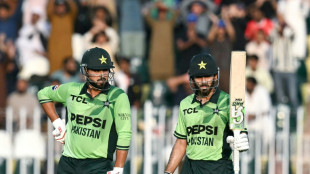 Nawaz and Minhas lift Pakistan to 302-9 in England ODI
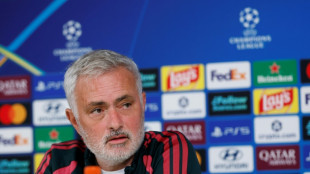 Mourinho warns no 'untouchable' stars at Real Madrid
 Indonesian anger builds over wildfires, toxic haze
 Late Okafor Penalty Earns Alvechurch FA Cup Replay
 Low-Cost Homemade Ideas Offer Alternatives for Halloween Costumes
 Christiane Amanpour Plans CNN Departure After 43 Years
Ukraine's President Volodymyr Zelensky called Russian troops "murderers, torturers, rapists, looters" on Monday after dozens of bodies were found near Kyiv, triggering global outrage and vows of tough new sanctions on Moscow.
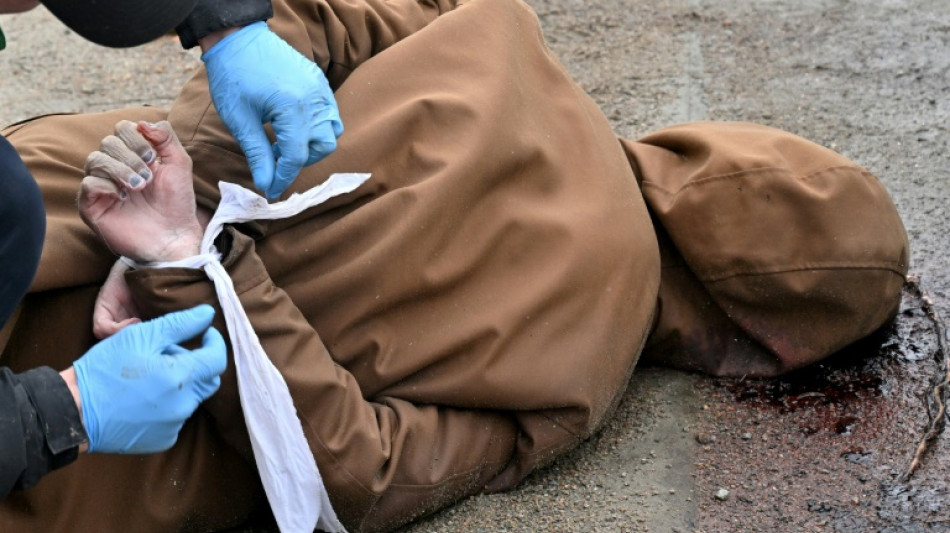
Local authorities said they had been forced to dig communal graves to bury the dead accumulating in the streets, including some found with their hands bound behind their backs, in scenes that sent shockwaves through international capitals more than a month into Russia's invasion.
Despite Russian denials of responsibility, condemnation was swift, with Western leaders, NATO and the UN all voicing horror at reports of civilian murders in Bucha, northwest of Kyiv, and elsewhere.
Zelensky was unsparing in his nightly video message, warning "concentrated evil has come to our land".
He described Russian troops as "murderers, torturers, rapists, looters, who call themselves the army and who deserve only death after what they did", speaking in Ukrainian.
Switching to Russian, he continued: "I want every mother of every Russian soldier to see the bodies of the killed people in Bucha, in Irpin, in Hostomel."
"I want all the leaders of the Russian Federation to see how their orders are being fulfilled."
Zelensky said he had created a special body to investigate killings in areas from which Russian troops have withdrawn around the capital, as Moscow refocuses its energies on southeastern Ukraine.
The scale of the killings is still being pieced together, but Ukrainian prosecutor general Iryna Venediktova said 410 civilian bodies had been recovered so far.
And Bucha's mayor Anatoly Fedoruk told AFP that 280 bodies were placed in mass graves because it was impossible to bury them in cemeteries within firing range.
Satellite imagery firm Maxar released pictures it said showed a mass grave located in the grounds of a church in the town.
Municipal worker Serhii Kaplychnyi told AFP that Russian troops initially refused to allow residents to bury the dead in Bucha.
"They said while it was cold to let them lie there."
Eventually, they were able to retrieve the bodies, he said. "We dug a mass grave with a tractor and buried everyone."
The UN said it was "highly concerned" by images emerging from the region, though it said it could not rule out that some of the dead were fighters or had died of natural causes.
- 'Putin... will feel consequences' -
Ukraine's Foreign Minister Dmytro Kuleba accused Russia of a "deliberate massacre", while Zelensky's spokesman, Sergiy Nikiforov, said the killings in Bucha "looks exactly like war crimes".
Russia's defence ministry pushed back, saying "not a single local resident" in Bucha suffered violence.
It accused Kyiv of bombarding its southern suburbs and falsifying images of corpses in "another production" for Western media.
Moscow's deputy ambassador to the UN said Russia had requested a UN Security Council meeting on Monday "in light of heinous provocation of Ukrainian radicals in Bucha".
AFP reporters in the town saw at least 20 bodies, all in civilian clothing, strewn across a single street, and images of the deaths have drawn global shock and calls for new measures against Russia.
US Secretary of State Antony Blinken called the killings "a punch to the gut", while NATO chief Jens Stoltenberg said the violence -- unseen in Europe for decades -- was "horrific" and "absolutely unacceptable".
German Chancellor Olaf Scholz said new sanctions would be decided "in the coming days."
"(Russian) President (Vladimir) Putin and his supporters will feel the consequences," he said, as his defence minister raised the possibility of an end to gas imports.
Other European officials, including Irish Foreign Minister Simon Coveney, said the EU "must respond strongly with tougher sanctions", while Zelensky said "there will definitely be a new package of sanctions against Russia".
But the Ukrainian leader warned that the worst could be yet to come as Moscow refocuses its attention on the south and east of the country, in a bid to create a landlink between occupied Crimea and the Russian-backed separatist statelets of Donetsk and Lugansk.
"Russian troops still control the occupied areas of other regions, and after the expulsion of the occupiers, even worse things could be found there, even more deaths and tortures," he said.
He also appeared in a taped message at the Grammys, urging people to "tell the truth about this war... support us in any way you can, any, but not silence".
- 'Something terrible is coming' -
Europe's worst conflict in decades, sparked by Russia's invasion on February 24, has already killed 20,000 people, according to Ukrainian estimates.
Nearly 4.2 million Ukrainians have fled the country, with almost 40,000 pouring into neighbouring countries in the last 24 hours alone, the UN refugee agency said.
In the eastern city of Kramatorsk, women, children and elderly people were boarding trains to flee the Donbas region.
"The rumour is that something terrible is coming," said Svetlana, a volunteer organising the crowd on the station platform.
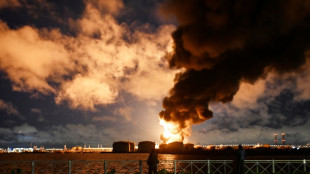
Russia has redoubled its efforts in Ukraine's south and east, including carrying out several strikes Sunday on the strategic Black Sea port of Odessa, which Moscow said targeted an oil refinery and fuel depots.
"We were woken up by the first explosion, then we saw a flash in the sky, then another, then another. I lost count," local resident Mykola, 22, told AFP.
In the eastern city of Kharkiv, seven people died and 34 were wounded after Russian forces struck a residential area on Sunday, local prosecutors said in a statement.
Britain's defence ministry said recent Russian air activity had been focused on southeastern Ukraine, adding that heavy fighting was continuing in the devastated and besieged southern city of Mariupol.
"The city continues to be subject to intense, indiscriminate strikes," the ministry said in an update on Twitter.
The UN's top humanitarian envoy Martin Griffiths is expected in Kyiv soon after arriving in Moscow Sunday in an attempt to halt the fighting.
And peace talks are scheduled to resume by video on Monday, though Russia's chief negotiator Vladimir Medinsky said it was too early for a top-level meeting between Zelensky and Putin.
He said Kyiv had become "more realistic" in its approach to issues related to the neutral and non-nuclear status of Ukraine, but a draft agreement for submission to a summit meeting was not ready.
Ukraine has proposed abandoning its aspirations to join NATO and declaring official neutrality, if it obtains security guarantees from Western countries.
It has proposed temporarily shelving the question of Crimea, annexed by Russia in 2014, and two breakaway territories in the Donbas that Russia has recognised as independent.
Medinsky said Russia's position on Crimea and the Donbas "remains unchanged".
burs-sah/reb
I.Matar--SF-PST